

This Popular Italian Appetizer Is A Poor Choice To Take Home As Leftovers
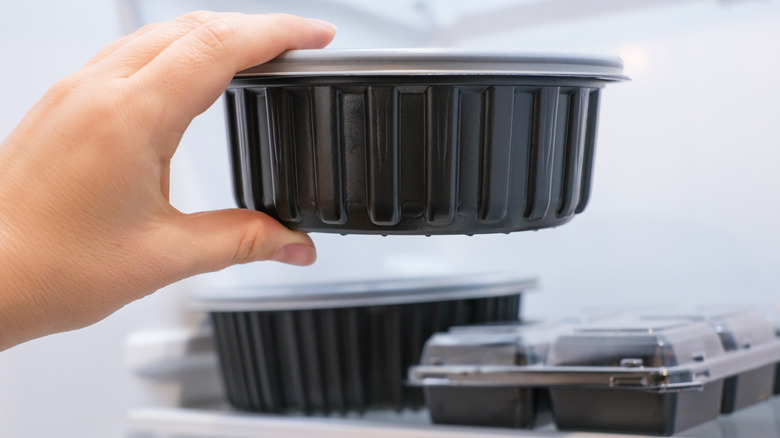
There's a certain satisfying comfort to reheated leftovers from a favorite restaurant. Cold pizza has a special texture that some people adore, and pasta sauce may even taste better the next day. However, there's one specific Italian dish that you shouldn't take home as leftovers or order for delivery. That tasty but persnickety food is fried calamari.
This fried squid appetizer may be one of the best things to get at restaurants like Olive Garden, but in the establishment is the only place you should be eating it if you want it at peak quality. The moment you put fried calamari in a box, the fried exterior becomes a soft, soggy mess. The longer it's in there for storage or delivery, the worse it gets. The squid is tough when cold, and if you try to reheat it, there's a good chance it becomes absurdly rubbery and hard to chew. Basically, once the fried squid leaves your plate, it'll never be the same again.
While a few people may actually enjoy this change in texture, most find it absolutely disgusting. One Reddit user stated, "Calamari could be the fastest dish that goes from amazing the second it hits your table, to get these rubber bands away from us 20 minutes later." Another calamari fan on Facebook said, "I have never gotten it home where it still tasted like it did out of the fryer. It def cannot be reheated."
Why fried calamari is a terrible takeout option
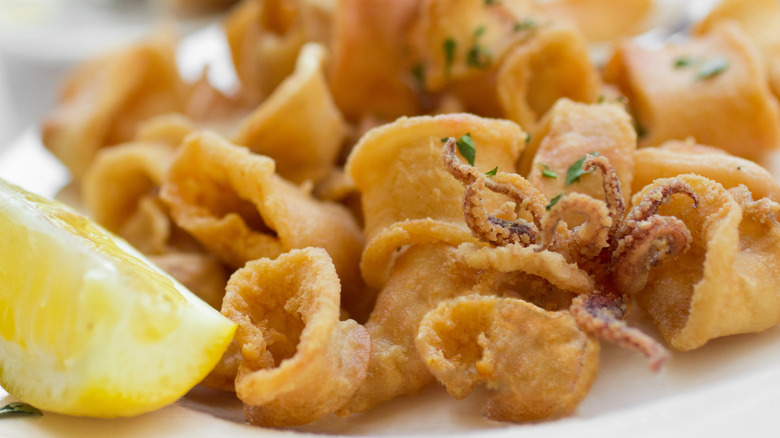
There are a few scientific reasons as to why crispy and crunchy food like fried calamari gets gross as leftovers. Over time, moisture remaining inside the squid begins to move outwards, and that means it goes right into the crunchy exterior. When hot calamari is put into a box, such as for delivery, there's also steam rising off of the food, and it creates a humid environment which softens the coating. If the calamari has been tossed in sauce or lemon juice, those have liquid as well, and it can absorb into the fried breading, leaving everything permanently soggy.
In trying to reheat calamari, the already-cooked squid easily becomes overcooked, which changes its texture. Squid is somewhat unique as a meat in that it's naturally very high in collagen. In squids, that collagen exists all through their muscle fibers. When you overcook calamari, the fibers contract and the proteins denature. What you're left with is a tough texture many compare to rubber.
Additionally, calamari is seafood, which means it can go bad after only a few days. If left out without refrigeration for a while, the time before you need to throw your leftovers out shortens drastically. Risking food poisoning for a less-than-crunchy leftover is a decision that is best avoided.
If you insist on taking calamari home, here's how to rescue it
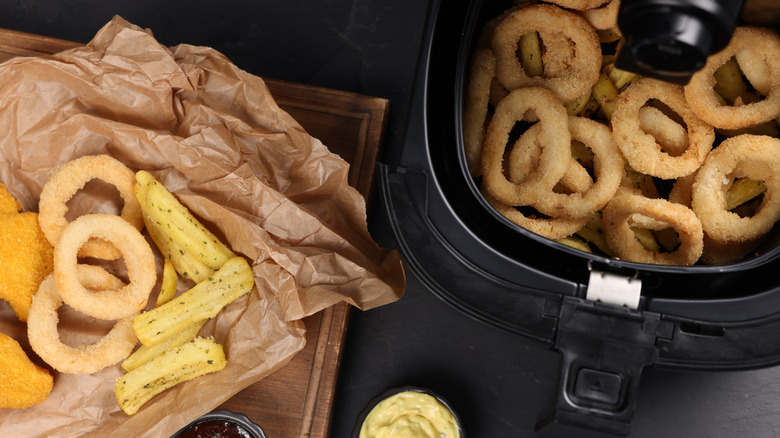
Maybe you don't want to waste food, or really want to order in. While getting calamari in a restaurant is the only sure way to get crispy squid goodness, there are a few ways to help revitalize your leftovers or takeout. You want get the exterior crunchy again without overheating the inside, so working with high heat is the way to go. For example, calamari is one of the more unique foods you can make in an air-fryer, and many swear by it. A brief air fryer zap gets the outside crispier quickly, but there are other options.
Place leftover or delivery calamari into a very hot, oiled skillet and toss until the outside is crunchy again. Others put it into a very hot oven briefly, similarly to how you revive leftover French fries. Just be careful not to do so until the oven is fully preheated and be careful to not burn or overcook. There are even those who like to put it in the microwave, but that won't give you anywhere near the same texture.
No matter what you do, it's safe to say that leftover fried calamari will never be as good as it is fresh. You're better off braving an actual restaurant for dinner if you're craving that specific crunchy seafood texture. If you're daring, you may even consider making fried calamari from scratch at home, that way it never sees the inside of a takeout box.