

The Unnecessary Step You Can Skip When Cooking Beef Stew
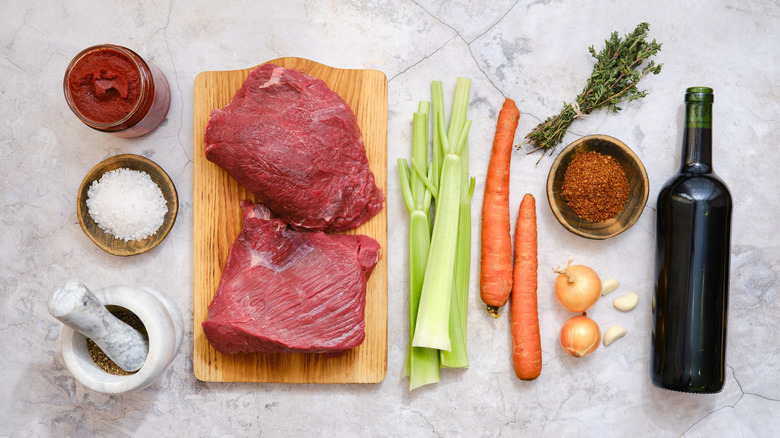
Whether you're stocking up on freezer meals, preparing a cozy meal for a crowd, or trying to warm up from the inside out during a cold snap, beef stew is a classic for good reason. Many recipes call for adding starch or flour either by dredging the raw beef before cooking, sprinkling it over the seared meat and aromatics, or stirring a slurry into the liquid.
However, according to chef George Ryle of Swaledale Butchers, starch and flour are often ingredients that you can skip entirely when making beef stew. "Heavy starch coats the palate. When that happens, the depth of the beef and wine is muted, and you end up adding more salt or acid to balance the dish," Ryle told The Takeout.
He added, "A good beef stew doesn't need raw starch if you cook it right. The richness comes from collagen and reduction." Cuts of beef with lots of connective tissue are full of a protein called collagen, which can lend a tough texture if the beef is cooked quickly. However, when cooked at a low temperature for a long period of time that collagen melts down into gelatin. "It naturally thickens the sauce and gives that full, savory texture you want," he explained. With enough cooking time, any liquids — like stock, wine, or the juices from the beef — will also thicken as water evaporates; concentrating the flavor. "Choose cuts rich in connective tissue such as chuck, shin, or oxtail," Ryle explained. Fatty brisket, bone-in short ribs, and shanks are also among the best cuts of steak for your next bowl of stew.
Expert-approved ways to thicken beef stew
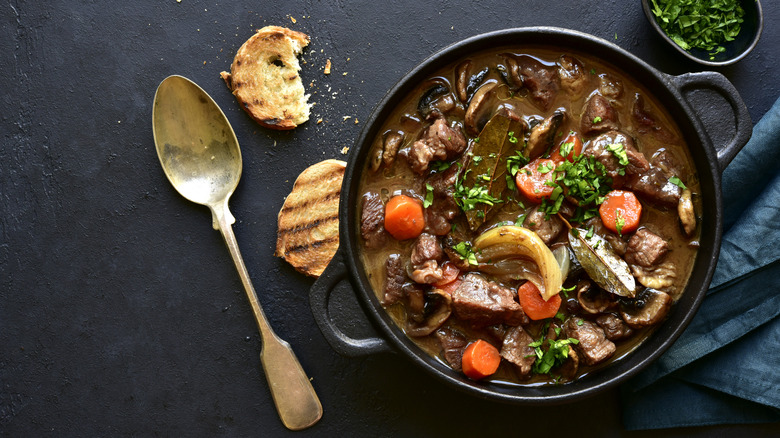
Even when you select a cut of meat with plenty of collagen, some beef stew recipes might still need to be thickened. That said, simply simmering may be enough to get it to the consistency you desire, especially with this tip from Ryle. "If the stew is still slightly thin, remove the lid for the final 45 minutes," he advised. If you've already cooked your stew for long enough and it still needs a texture boost, Ryle shared another hack: "Take a ladle of the softened potatoes and carrots, mash them into a paste, and stir them back in — this adds body without blurring the flavor."
Generally, Ryle prefers methods that don't require flour or starch, though he also said he understands why some recipes still call for these ingredients. "A classic roux or flour-dredged beef has its place," he shared. "It gives that familiar, velvety texture people associate with comfort food." However, he is firmly against using a cornstarch slurry. "It creates a slightly glossy, gelatinous texture that feels more like a takeaway stir-fry than a slow braise," he cautioned.