

10 Popular Brands You Didn't Know Are Owned By Hershey
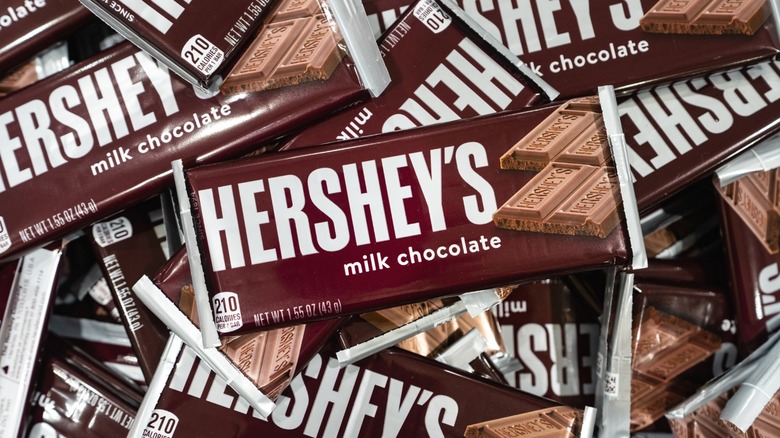
We live in an era of unprecedented corporate consolidation, which means there are plenty of brands owned by companies you wouldn't expect. For example, Chips Ahoy, Oreos, and Tate's Bake Shop are all owned by the same company, Mondelez, while Snapple is owned by Dr Pepper (which also owns Keurig, but that's another story). And that's not even going into Nestlé, which owns all the products you'd expect them to own and plenty more you don't. (Hot Pockets, Häagen-Dazs, Gerber...the list goes on.)
But what about Hershey? We know they're a market leader in chocolate, but what else do they have going on? More than you'd think, actually. As it turns out, Hershey operates over 90 different brands, many of which it bought and merged into itself at some point. This level of corporate consolidation has plenty of knock-on effects for both the economy and consumers, but it also lets us make fun little listicles like this, so who's to say if it's bad or not? Here are ten brands you probably didn't know were owned by the big H.
Dot's Homestyle Pretzels
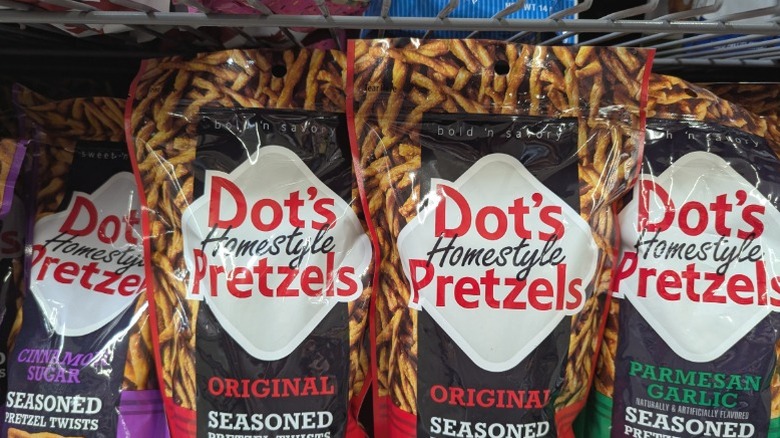
A perennial gas station favorite, Dot's specializes in buttery little pretzel twists, seasoned with the kind of addicting spice mix that nations would have gone to war over 500 years ago. The company was founded in 2012 by Dorothy Henke, a North Dakota woman on the verge of retirement who achieved great success with her secret pretzel recipe. The brand was acquired by Hershey in 2021 for $1.2 billion — a happy ending for Henke, although the factory she established near her hometown n Velva, North Dakota has since been closed.
Jolly Rancher
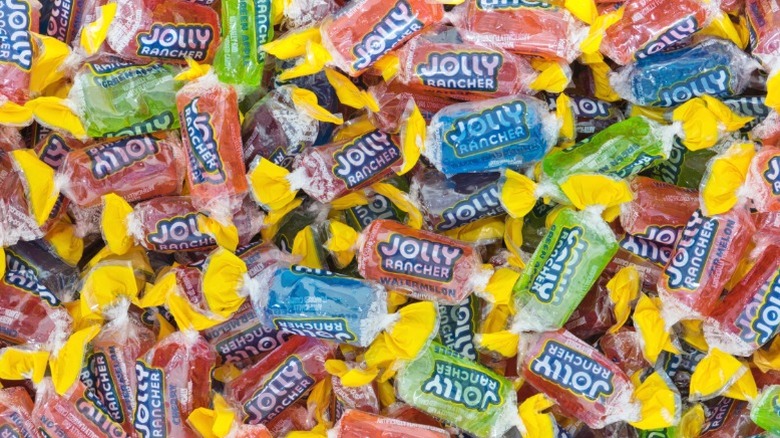
These cute, colorful hard candies fill bowls on the desks of middle school principals across the nation and certainly come closer to Hershey's confectionary mission than Dot's does. But fruit candies from a chocolate company? What a concept! Jolly Rancher was actually founded by a Colorado couple named Bill and Dorothy Harmsen, who started with an ice cream parlor before selling hard candies during the cold months. The company went to a couple different corporate owners before being acquired by Hershey in 1996.
Pirate's Booty
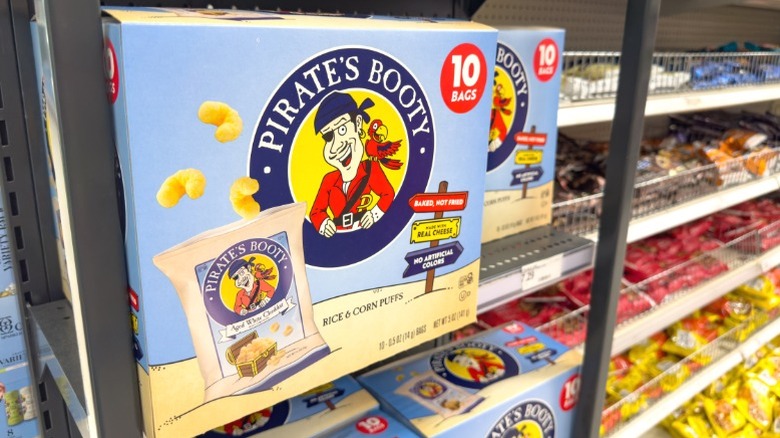
The name may make grade schoolers giggle, but there's no denying how satisfying a bag of properly cheesy, puffy Pirate's Booty can be. The brand was founded in 1987 by one Robert Ehrlich, who wanted to create a healthier, cheesier alternative to grocery store cheese puffs. A cheese puff he created in his garage grew into a thriving business, which was first sold to B&G before being bought by Hershey in 2018. (For his part, Ehrlich has kept himself busy by trying to overthrow his town's mayor in 2025, without success.)
Good & Plenty
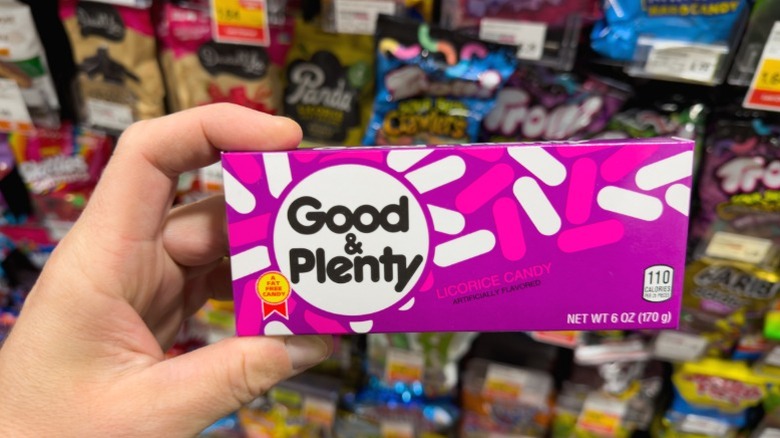
Good & Plenty is an oldhead candy if ever there was one, for better or worse. (In the words of comedian Chris Fleming, "This is a candy that predates women's suffrage, and it tastes like it.") This chewy licorice candy was first sold in 1893 by the Quaker City Chocolate and Confectionary Company, making it the oldest continually produced candy in America. (Necco Wafers paused production for two years, so they don't count.) Good & Plenty was bought by Hershey in 1996, in the same deal that got them Jolly Rancher.
Bubble Yum
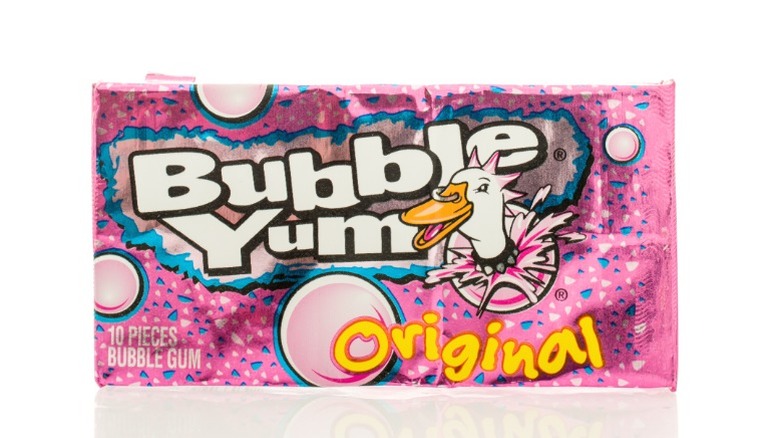
You probably know two things about Bubble Yum: it inexplicably has a duck as its mascot (his name is Floyd D. Duck, by the way), and there was a rumor floating around after its 1970s debut that it got its soft, yielding texture from spider eggs. The rumor was so persistent that its parent company at the time, Life Savers, took out full page ads refuting it. (Back then, that sort of thing actually worked.) After being sold to Nabisco in 1981, it eventually found a home at Hershey in 2000.
SkinnyPop
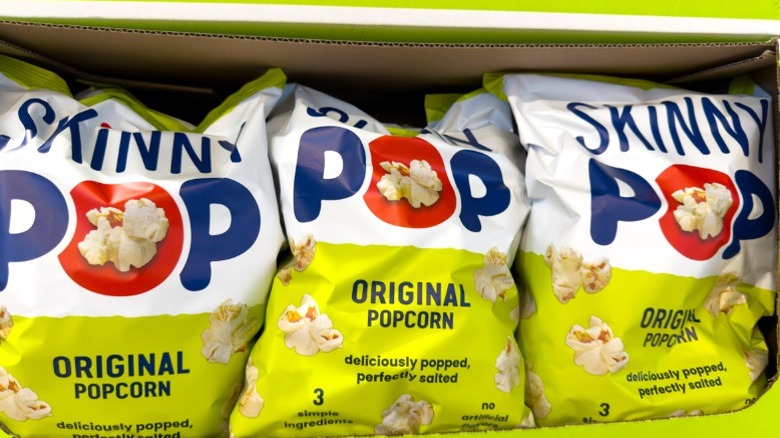
It may not be our favorite brand of popcorn — in fact, according to our cheese popcorn ranking, it comes in last — but enough people like this health-conscious brand to make it a worthwhile investment for Hershey. It was founded in 2010 by a pair of University of Michigan graduates from Skokie, Illinois, who eventually sold it to Amplify Snack Brands — which was itself sold to Hershey in 2017.
York Peppermint Pattie
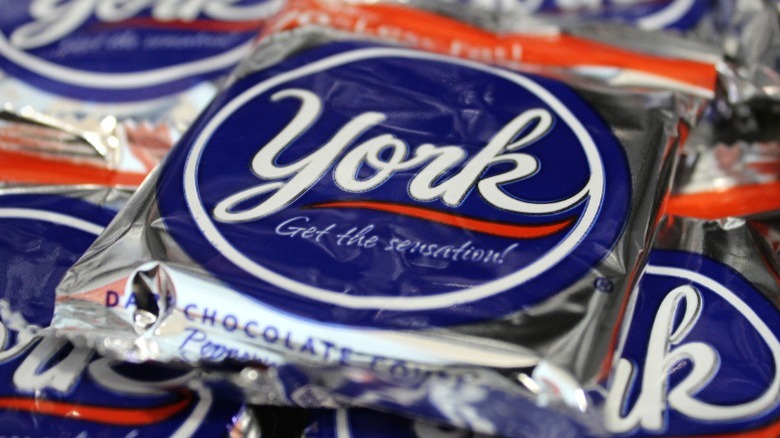
Perhaps we're somewhat naive, but when we see a big logo on a candy wrapper that says "York," we assume that it's owned by, you know, York. But nope: while these famous peppermint patties were once produced by a candy company based in York, Pennsylvania, they were eventually sold to Peter Paul, which merged with Cadbury and was then eventually acquired by Hershey in 1988. Good grief! (Yes, we know that's what Charlie Brown says, not Peppermint Pattie, but work with us here.)
Breath Savers
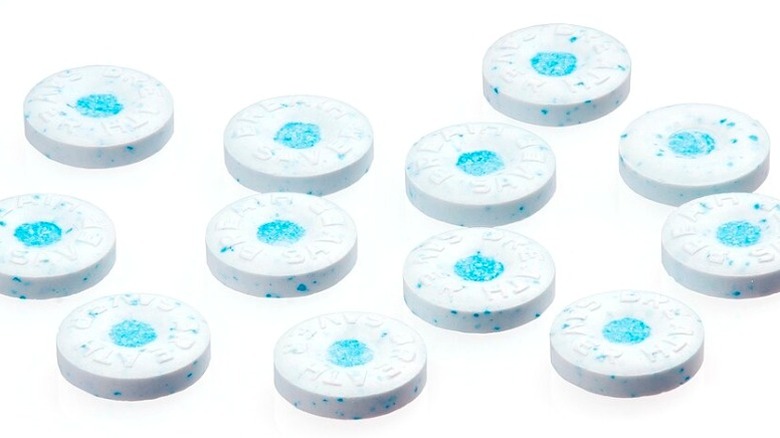
You might think from the name that this is Hershey's shameless attempt at knocking off Life Savers — but believe it or not, these were actually originally sold by Life Savers. These mints are artificially sweetened with sorbitol and aspartame, allowing you to freshen your breath in a diabetic-friendly way. Bought by Nabisco from Life Savers in 1981, they were eventually purchased by Hershey in 2000.
Twizzlers
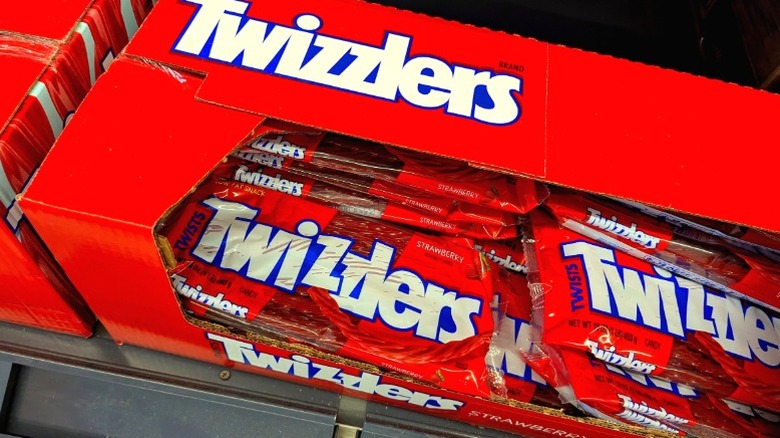
We suppose that Twizzlers have to be owned by somebody, but we don't know why it's so weird that Hershey owns it. Maybe it's because it's easier to imagine Twizzlers basically spawned overnight at the expensive snack counter in movie theaters. But, of course, that's not actually the case. Originally produced by Young & Smylie, one of the oldest candy companies in America (it was founded in 1849, although Twizzlers didn't come along until 1929), the company was eventually bought by Hershey in 1977.
Cadbury (sort of)
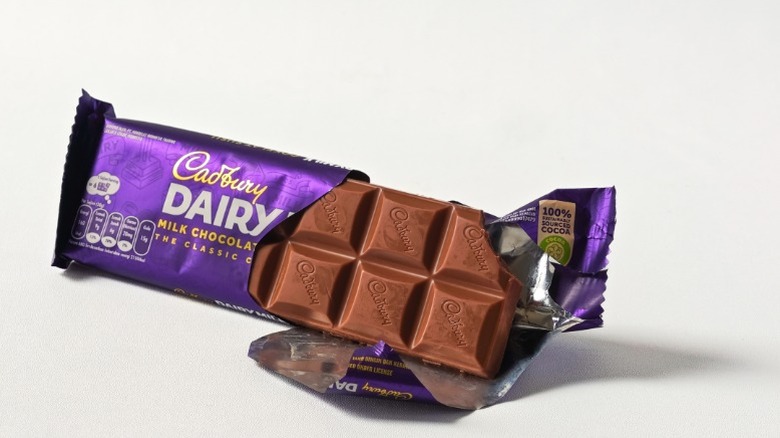
This one requires some explaining. Cadbury, that stalwart of British confectionary founded in 1842, is not actually owned by Hershey — they're currently owned by Mondelez. What Hershey actually owns is the license to sell chocolates in America under the Cadbury name. That's actually not such a good thing, as the company has blocked imports of the UK chocolate into America (although some still slip through the cracks) in order to protect the sales of their own product, which most agree is vastly inferior to the British version — in fact, we consider it the worst chocolate bar.