

The Most Popular Cheese In The US (It Isn't American Or Cheddar)

Say cheese? Yes, please! Americans love the deli staple, from mac and cheese to stuffed-crust pizza, to the more than a billion pounds of it stored by the government in caves. But there's one type that wins popularity contests in the United States, and it isn't American cheese. It's mozzarella, which, in 2024, Americans enjoyed to the tune of a hefty 12.5 pounds per person, according to the U.S. Department of Agriculture. The second most popular cheese was cheddar — a respectable 10.9 pounds per capita.
Why mozzarella, though? While mozzarella is delicious on its own, it's also an important ingredient in many dishes. If you've ever ordered a pizza with extra cheese, savored a perfect Caprese salad, or enjoyed mozzarella sticks, you know how versatile and satisfying this cheese can be. Beyond that, mozzarella is a milder cheese than other varieties, like sharp cheddar or rich blue cheese, making it easier to enjoy in larger quantities without the taste feeling overwhelming.
All-American ways to enjoy mozzarella
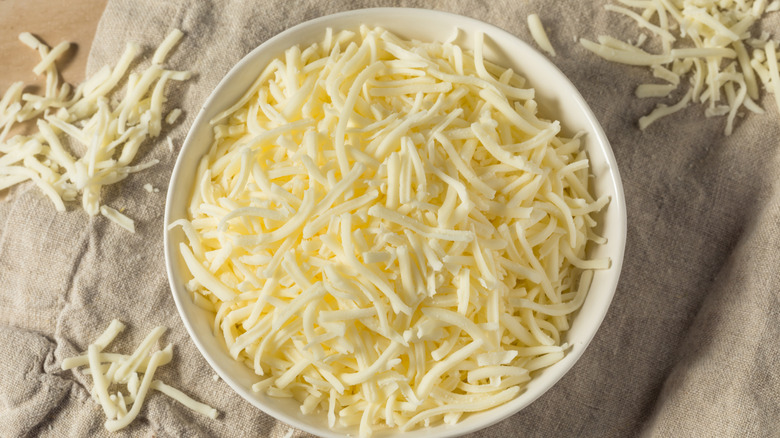
You probably already know that mozzarella cheese is originally an Italian variety, like its close cousin, burrata. In Italy, you can find multiple types of mozzarella, including versions made with buffalo milk, rather than cow's milk. But some of the most delicious and popular takes on mozzarella are distinctively American in origin. For instance, mozzarella sticks (the kind that are suitable for deep-frying) originated in the United States during the 1970s and '80s, after they were invented in Wisconsin.
Other mozzarella favorites are actually American takes on traditional Italian dishes. In the 1990s, Pizza Hut began stuffing its crust with mozzarella before baking the pies. The method of layering creamy mozzarella onto breaded chicken and tomato sauce to create chicken parmesan evolved in the United States as well. The dish is an Italian-American variation of the more traditional eggplant parmesan. When Italian immigrants came to America in the early 20th century, they found chicken was much cheaper and more accessible than it was in Italy, so they took the opportunity to adapt the dish into something new.