

The 12 Best Prohibition-Era Speakeasies You Can Still Visit Today
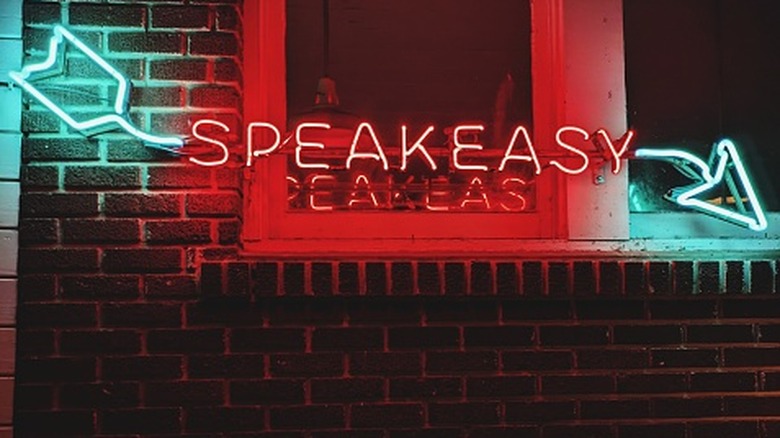
Nostalgia for the era of speakeasies is palpable across the United States. In cities like Chicago and New York, you can visit many themed bars that offer a chance to step back in time and imagine sipping bootlegged whiskey across from a famous writer or artist. While many of these spaces try to recreate the secrecy and glamour of a 1920s speakeasy, there are a few places around the country where you can experience the real deal.
The National Prohibition, or "Volstead Act," enacted in October of 1919 prohibited the manufacture, sale, and transportation of alcohol in the United States until it was repealed in 1933. While many saloons and breweries went out of business, others went underground, brewing and selling alcohol illegally. The term speakeasy comes from illegal drinking spaces in England and Ireland, where customers needed to keep quiet, or "speak easy." It gained popularity in the United States after nationwide prohibition went into effect and speakeasies started to appear around the country.
The hidden doors, secret passages, and passwords to gain entrance make speakeasies of today fun and alluring for modern customers. These activities mimic speakeasies of the past, which were hidden in businesses like barber shops or funeral homes with secret doors in bookcases or telephone booths. Get your hands on the password, and you may be able to visit these 12 prohibition-era speakeasies still in operation today.
1. The Green Mill (Chicago, IL)
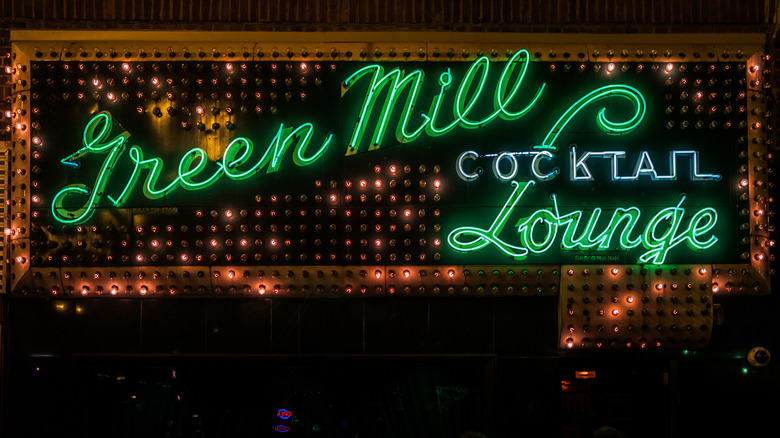
The Green Mill is a bar steeped in history since opening in 1907. Originally Pop Morse's Roadhouse, the name was changed to Green Mill Gardens in 1910, a reference to Paris' Moulin Rouge, also known as the Red Mill. During prohibition, The Green Mill was a huge jazz club with performers like Billie Holiday, Al Jolson, and Benny Goodman.
Jack "Machine Gun" McGurn, Al Capone's personal bodyguard, is said to have been a part owner. Allegedly, Capone had a standing reservation at a table situated so both entrance doors were visible, which remains in the bar today. There are also tunnels beneath the bar where liquor could be secretly brought inside. During renovations in the 1980s, the current owner ventured into the tunnels and found a room with WWII uniforms, lockers, and steam trunks.
Today, The Green Mill is a no-nonsense venue with old charm, as the bar was restored to keep its history at the forefront. It still operates as a jazz club with live music nightly and the Uptown Poetry Slam every third Sunday. Tuesday and Thursday nights are for dancing, and other nights guests get cozy in booths, lounge chairs, or at small tables to have a drink and enjoy the music. The bar doesn't take reservations, and it's cash only.
(773) 878-5552
4802 N Broadway, Chicago, IL 60640
2. Turf Club/Griff's (Twin Falls, ID)
Established in 1946, the Turf Club missed the height of speakeasies during the national prohibition of alcohol. However, after the 21st amendment repealed prohibition, Idaho passed laws that restricted the sale of individual drinks in a bar unless it was part of a municipality. Because of this, the Turf Club sold liquor under the counter and became the drinking and gambling spot for local ranchers. When Idaho banned slot machines in 1953, the Turf Club struggled to find other sources of revenue. After many attempts to lawfully remain open, it closed in 1963.
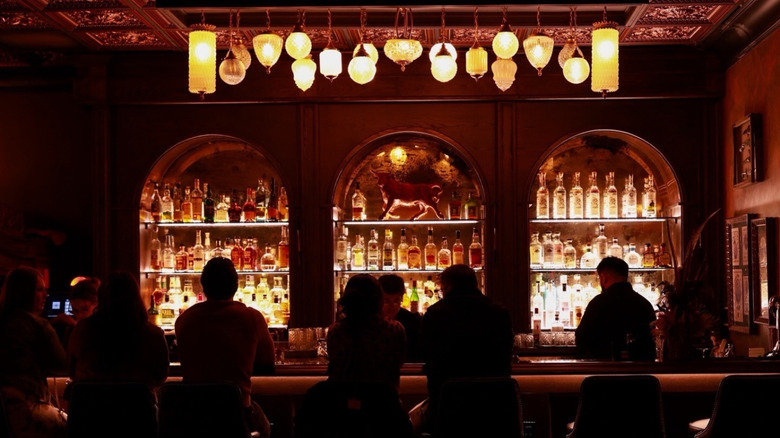
The Turf Club reopened in 1968 and today operates as a steakhouse with a seasonal menu. To honor its history and pay homage to its speakeasy roots, owners Robert and Mariann Griffith opened the Turf Club's hidden bar Griff's, which offers live music and requires a password for entry. The decor consists of dark, secretive vibes with cozy seating, and the menu includes dishes like roasted oysters with duck fat and black garlic scampi. The bar offers craft cocktails and features a cocktail club, with members enjoying an exclusive off-menu cocktail once a month.
(208) 734-2000
734 Falls Ave, Twin Falls, ID 83301
3. Neumann's Bar and Grill (St. Paul, MN)
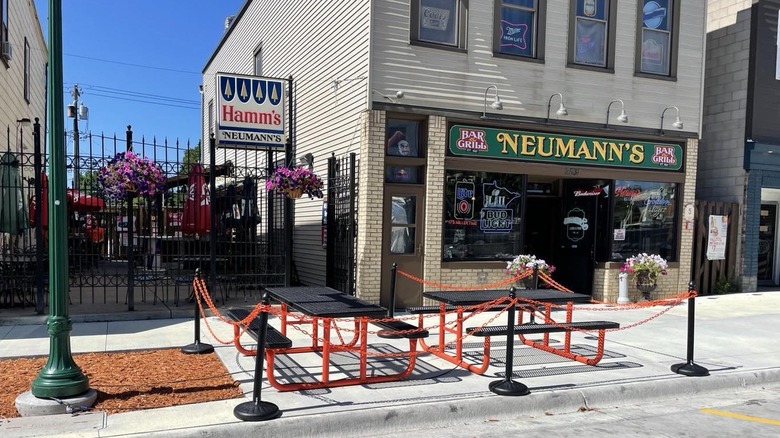
Neumann's Bar and Grill lays claim to being the oldest continually operating bar in Minnesota. Opened in 1887 to serve Hamm's beer, it started as a saloon along the newly extended Wisconsin Central Railway. During prohibition, the main bar sold beer while a small fishing bait shop was set up in the basement. The second floor became a speakeasy, with a keyhole in the door to see who was outside.
There were two telephones in the bar connecting the main bar to the speakeasy, so the upstairs bartender would know who was trying to enter before they reached the door. These features, along with other hidden safety measures, can still be seen in the bar today. Another unique aspect of Neumann's is the small aquarium built into the vestibule of the front window, which houses multiple bullfrogs. These frogs are beloved by customers and have been a part of the bar's story since around 1930.
Today, Neumann's remains a popular drinking establishment that has changed little over the years. The original bar and back bar built by Hamm's in 1887 remain, and the decor still features hunting trophies hung by the original owner and photos depicting the history. The menu consists of casual bar food, and it's a place where anyone can sit and enjoy a Hamm's and a healthy dose of nostalgia.
(651) 770-6020
2531 E 7th Ave, N St. Paul, MN 55109
4. Merchant's Café and Saloon (Seattle, WA)
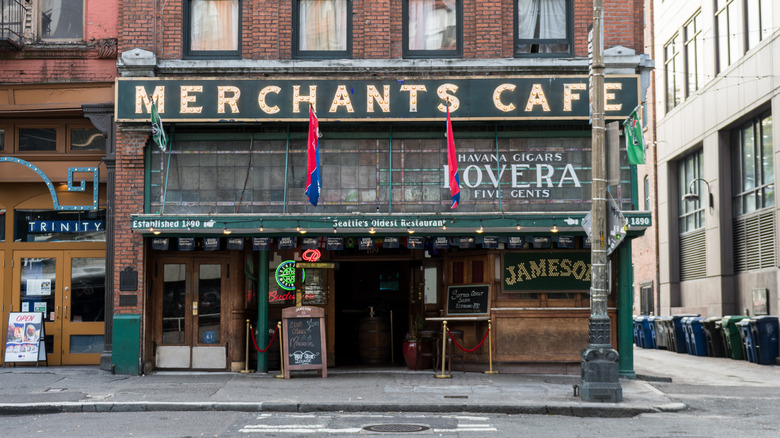
The Merchant's Café and Saloon claims to be Seattle's oldest restaurant. Built in 1890 after the Great Seattle Fire, the building housed a liquor store and café on the first level and a hotel on the second and third levels. Only two years later, the building became the Merchant's Exchange Saloon and the top two floors became a brothel. The women who worked there were known as "seamstresses" and their framed portraits were hung at the back of the café for customers as a menu of sorts.
In 1898, a new owner took over the building and began offering cash for gold dust. Franz Xavier Schreiner, or "FX," must have had a lucrative business in the gold exchange, because he was able to pay off the police to continue selling alcohol during prohibition. Alcohol sales and illegal gambling took place in the basement.
Today, the Merchant's Café is a popular tourist attraction, especially for travelers seeking a haunted experience. The café even offers a haunted tour where you can learn the history of the place and hear accounts of paranormal activity. The top two floors are now a boutique hotel, the first floor is a bar serving up classic food and drinks, and the basement — which housed the speakeasy — is another bar area. Current owners have kept the old charm of the building with its tin ceiling, original bar, and historic façade.
(206) 467-5070
109 Yesler Way Seattle, WA 98104
5. Townhouse (Venice, CA)
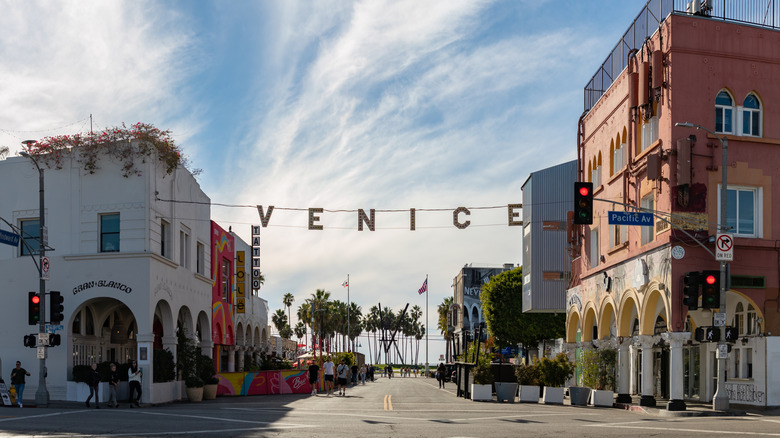
Townhouse is one of the oldest bars in the Los Angeles area. It was established in 1915 by Italian immigrant Cesar Menotti as Menotti's Buffet. When prohibition began in 1920, Menotti got creative, turning the main floor of his restaurant into a grocery store and opening a speakeasy in the basement. To get to the speakeasy, customers had to go through a trap door and ride down on a dumbwaiter operated by pulling a rope.
Once in the basement, customers could enjoy bootlegged liquor that Menotti procured from Canada, shipped to the nearby pier. The ships transporting the liquor had to stay at least three miles from the coastline, so Menotti would have them stop just before the boundary. Smaller boats would be sent out to retrieve the liquor, transporting the cargo to underground tunnels which ran beneath the city of Venice. These tunnels conveniently connected to the basement of Menotti's establishment where the liquor could be dropped off, ready to be mixed into a cocktail for those in the know.
Today, both levels of Townhouse operate as a bar, and the basement has been renamed the Del Monte Speakeasy. Customers frequent the space to order the popular Moscow Mule made with homemade ginger ale, and enjoy live performances from DJs, comedians, and bands.
52 Windward Ave, Venice, CA 90291
6. The Owl Bar (Baltimore, MD)
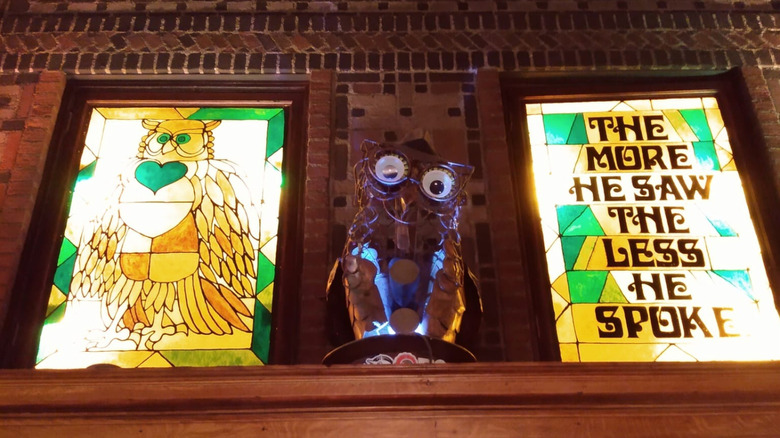
The Owl Bar is worth a visit for its history, Beaux-Arts style architecture, and impressive decor. It's located inside the Belvedere Hotel, a Baltimore landmark opened in 1903 visited by many of the most well-known and wealthiest people at the time. The most significant feature of the bar are the owls that sit atop the cash registers, serving an important purpose during prohibition. The owls' glass eyes glowed, and when liquor was available, their glowing eyes blinked. If no liquor was available or it was not a safe time to serve, the eyes kept their steady glow.
When prohibition was repealed in 1933 the owls disappeared, possibly taken in celebration of the return to legal drinking. The hotel was famous for its elaborate parties which could include exotic animals or an entire pond built on the roof. After its heyday, the hotel was sold multiple times, each a seemingly worse downgrade than the last, until it closed entirely.
It looked as though the history of the Owl Bar and its magnificent decor would be left to decay. Then in 1976, the property was purchased to be restored and reopened, and the owls were mysteriously returned. Today they have been restored to their rightful place at the bar, their eyes flashing to let patrons know they can safely order anything from the Owl Bar Lager to a seasonal cocktail like the Yuzu Nagomi.
(410) 347-0888
1 E Chase St, Baltimore, MD 21202
7. Pete's Tavern (New York, NY)
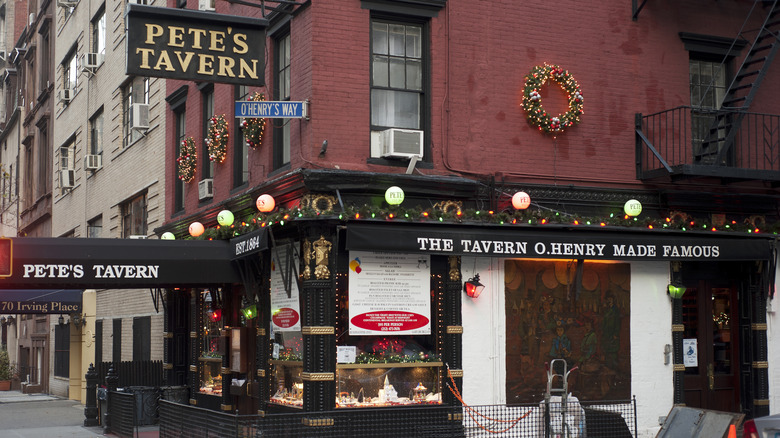
Pete's Tavern lays claim to being New York City's oldest continuously operating restaurant and bar since it was founded as the Portman Hotel in 1864. It became Pete's in 1922 when it was sold to Peter D'Belles. When prohibition hit, the tavern continued operating under the guise of a flower shop. Instead of purchasing flowers, customers would enter through a side door where they had to provide a signal and a password. If allowed entry, they would pass through a fake refrigerator door and into the bar.
Pete's has maintained much of its history over the years. The dark wood bar, ornately arched bar back, tin ceiling, tile floors, and booths are all original. The whole space allows you to feel like you've stepped back into the 19th century, and when the bar is decorated for Christmas, you might think you've fallen into a Charles Dickens novel. The menu features updated American bar food and classic cocktails, along with some old favorites from across the pond like fish and chips and Irish coffee.
(212) 473-7676
129 E 18th St, New York, NY 10003
8. The Mint (Sheridan, WY)
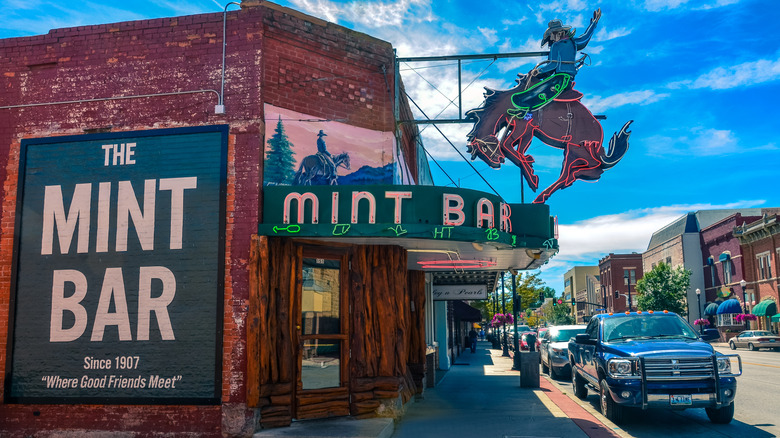
Beneath its iconic neon sign of a cowboy on a bucking horse sits an establishment that is as much museum as it is bar. Opened in 1907 during a surge in coal mining, The Mint started by serving beer, whiskey, and sarsaparilla. During prohibition, the bar took on a couple of aliases (a dress shop and real estate office) before opening as a pharmacy, cigar, and soda shop with a speakeasy in the back. Keeping with the theme, cowboys could stay on horseback and ride right into the bar to order drinks.
After renovations in the 1940s, the bar took on its current outdoorsy feel, featuring cedar-clad booths and lots of wood paneling. This included a wall of cedar shingles featuring brands of whiskey-based spirits burned into the wood during the renovation by a man named Tuffy. Tuffy was paid in shots of whiskey, and when the branding started to go sideways, he'd retire for the day.
The bar continued to make history as a popular filming location for Westerns from the 1930s through the 1950s. This history is captured throughout the bar with photos and newspaper articles that hang among taxidermy animals. Locals and tourists come for the company and the drinks but stay for the ambiance, with its treasure trove of artifacts that span the bar's 119-year history.
(307) 764-9696
151 N Main St, Sheridan, WY 82801
9. McGillin's Olde Ale House (Philadelphia, PA)
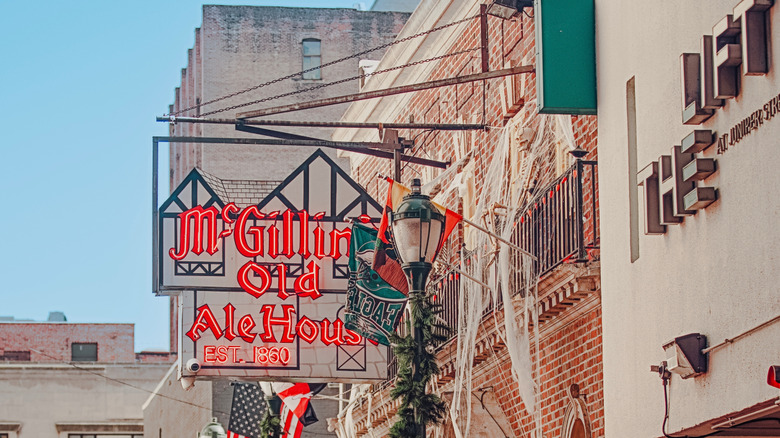
McGillin's Old Ale House has been open since 1860, making it one of America's oldest bars. Irish immigrants Catherine and William McGillin were the original owners of what was then the Bell in Hand Tavern, and quickly became known as "Ma" and "Pa." When Pa died in 1901, Ma took over as the proprietor until her death in 1937, changing the name to what it is today. Shortly after, the daughter took over and the bar stayed open.
During prohibition, Ma would lock the front doors of the bar, but customers would come through the side door and up to the second floor to sip strong "tea." Every year to celebrate the repeal of prohibition with the 21st Amendment, McGillin's serves a "marteani" to honor Ma's early business acumen.
The exterior brick façade with inlaid yellow windows is as inviting as the interior is stimulating, with plenty of vintage signs from old Philadelphia establishments that haven't stood the test of time. Guests can enjoy McGillin's Real Ale or McGillin's Genuine Lager along with classic pub food.
(215) 735-5562
1310 Drury St, Philadelphia, PA 19107
10. The King Eddy (Los Angeles, CA)
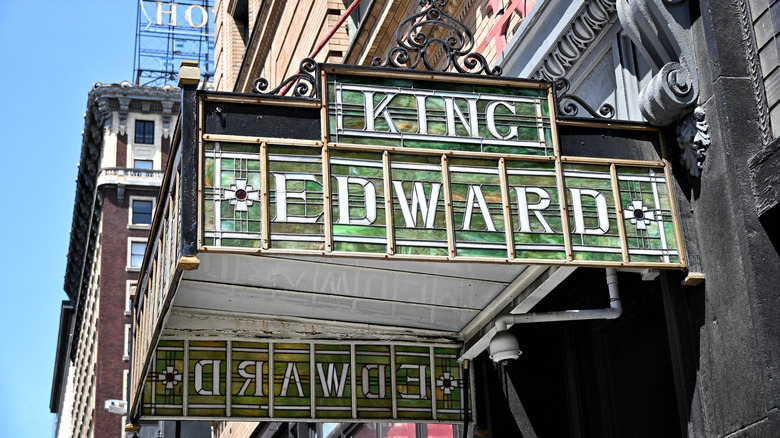
The King Eddy is a bar just across the street from Skid Row that has remained open through prohibition in the '20s, the end of the Red Car tram in the '50s, and the drug epidemic in the '80s and '90s. During prohibition, the King Edward hotel operated a basic speakeasy in the basement. The setup was simple, with drinks limited to whatever was available, often whiskey. A tunnel in the basement connected the bar to downtown, where the hotel could discreetly buy liquor.
Today, everything is out in the open at this dive bar. New owners have maintained the look and feel of the old bar regulars know and love, but have given it a good cleaning and added memorabilia to commemorate the past. The vibe is casual, and they hope to keep it as a place where people from all walks of life can grab a drink.
(213) 629-2023
131 E 5th St, Los Angeles, CA 90013
11. Ye Olde Tap Room (Detroit, MI)
Ye Olde Tap Room pretty much exists because of prohibition. Michigan was the first state to approve the 18th Amendment, with prohibition going into effect in 1916. Ye Olde Tap Room had opened its doors about a year before, knowing people would be looking for an illicit place to drink if prohibition went through.
As such, each floor of the tavern was dedicated to a different illegal act. The basement housed the speakeasy, and drinks were brought up to gamblers on the second floor by a dumbwaiter. The third floor was a brothel, which also had window seats where lookouts sat waiting to alert the rest of the establishment if the police came knocking.
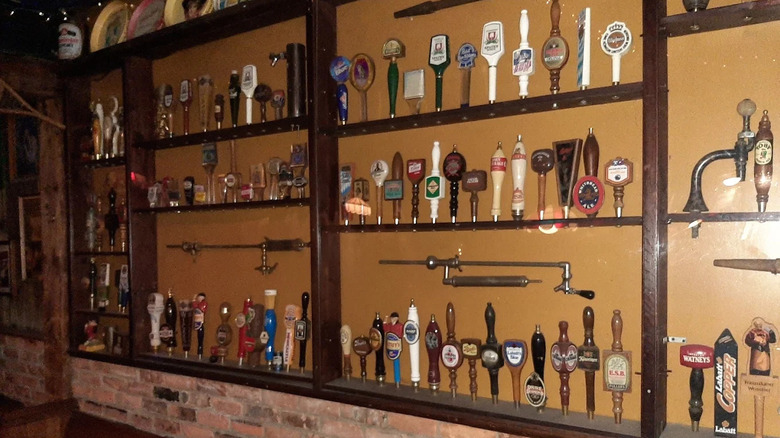
Today, the bar has the feel of any neighborhood drinking hole, that is if your locale has an immense beer selection with taps that span the globe. The speakeasy history stays alive with a yearly party to commemorate Michigan's ratification of the 21st Amendment and the repeal of prohibition.
(313) 824-1030
14915 Charlevoix St., Detroit, MI 48215
12. Bourbon & Branch (San Francisco, CA)
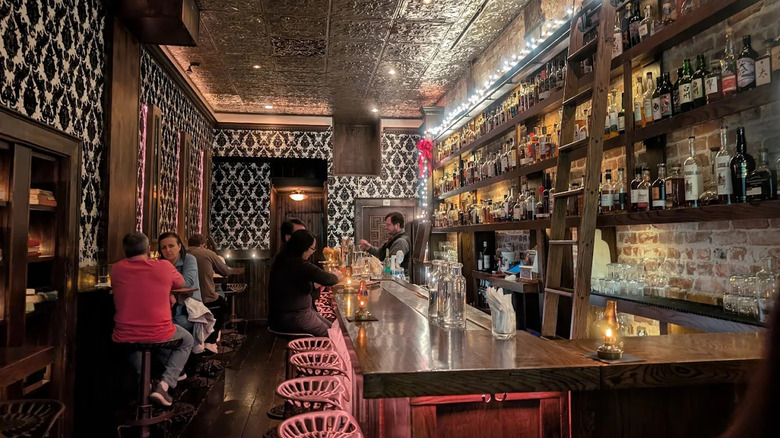
From 1923 to 1935, John J. Russel ran The JJ Russel Cigar shop out of what is now Bourbon & Branch. Well-dressed customers would knock at the cigar shop door and provide the password for entry. Once inside, they asked for a specific brand of cigar to trigger a trap door to open. They were then taken down a flight of stairs to the speakeasy in the basement. While enjoying the revelry of their illegal drinking, customers could rest easy knowing they could escape through any of the five tunnels that connected the underground bar to exits on the street.
The speakeasy vibes are alive and well at Bourbon & Branch today. Customers must use a password to enter through the unmarked door, then walk through a secret door disguised as a bookshelf. Once inside, guests must follow house rules, including no cell phones, and zero bartender requests for a cosmo. You'd be remiss doing so considering the bar's stellar mixology program. Reservations are needed for a table, but walk-ins can enjoy a sampling of the craft cocktail menu in the secret library surrounded by vintage books.
For an even more exclusive experience, make a reservation at the Wilson & Wilson, a speakeasy within the speakeasy. This space, which takes one to four guests at a time, offers a distinct menu compared with the main bar.
(415) 346-1735
501 Jones St, San Francisco, CA 94102