

Thinking About Ordering A Restaurant's Cheese Board? Keep This In Mind
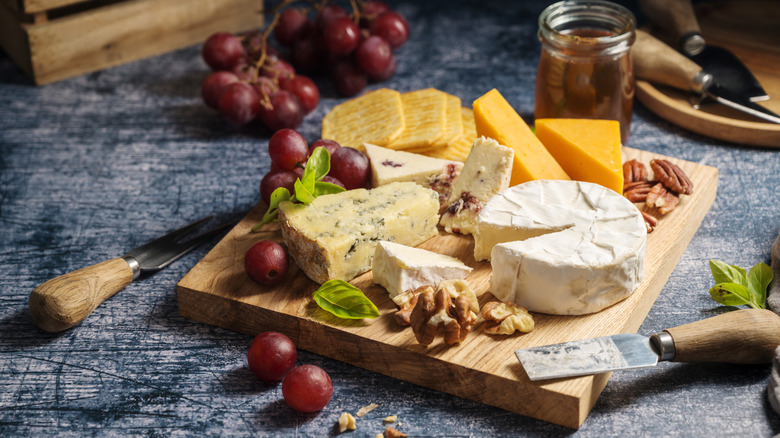
Back in ye olden days (here we're talking about the 18th century), a fancy dinner would often end with cheese. This habit was affected by continental dining practices, and, indeed, French cuisine today may still include a cheese course, either in lieu of or prior to le dessert. In the United States, however, a cheese board (since it's now de rigueur to serve everything on boards) is either an appetizer or something you have with drinks while making up your mind about where to go for dinner.
Is it really worth ordering a big plateful of cheese and crackers, though, when it's something you can easily make yourself? Well, ambiance is everything, which is why you're dining out in the first place. (You could pour that glass of wine at home, too.) Before you order, though, you should temper your expectations regarding the cheese selection. Aaron Menitoff, co-founder and co-CEO of a charcuterie delivery company called Boarderie, revealed that restaurant cheese boards won't necessarily be all that adventurous.
"Most restaurants are trying to make a cheese board that works for everyone at the table because it's a shared menu item. That usually means familiar cheeses that won't scare anyone off," explained Menitoff. This move, he told us, is typically a strategic one since restaurants need to make sure they are pleasing the maximum number of palates rather than catering to a select number of connoisseurs. He went on to say, "There's also a behind-the-scenes reality that more adventurous cheeses can be expensive, seasonal, fragile, or tricky to store. If a restaurant doesn't have a dedicated cheese program, sticking with crowd-pleasers is often the safest and most economical move."
When you should (and should not) order the cheese board
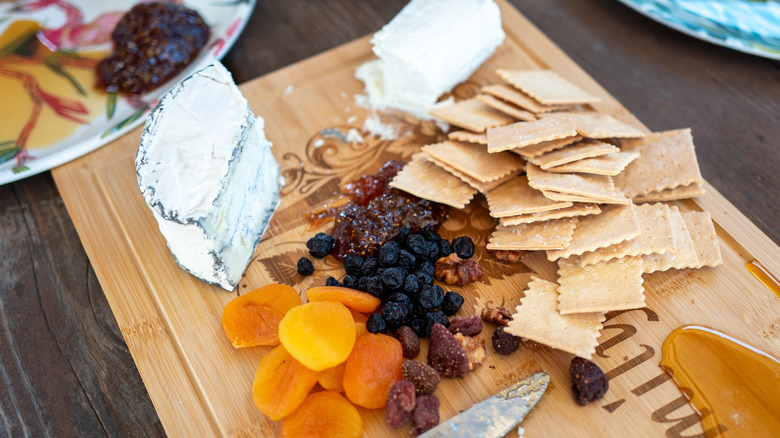
These middle-of-the-road cheese boards may be the norm, but there are some exceptions that would tempt even Aaron Menitoff to order the cheese plate at a restaurant. He feels the real worth lies in the careful thought that is put into a curated collection. That, and the chance to sample cheeses that you wouldn't necessarily purchase by the block. As Menitoff pointed out, "It's expensive to buy a wide variety of top-notch cheeses in small enough quantities on your own without having leftover cheese for weeks, which often goes bad without daily occasions to utilize it quickly. Restaurants offer a great way to taste a broad spectrum."
As to where you should seek out these extra-special cheese boards, Menitoff suggested chef-driven restaurants and European-style bistros. "In those settings, cheese isn't an afterthought; it's part of the restaurant's menu mix and identity. When cheese aligns with the restaurant's identity, you're far more likely to get a board that's balanced, intentional, and worth ordering," he opined. Wine bars and establishments known for their wine collections might also be worth checking out. According to Menitoff, "If the restaurant cares about wine, it usually cares about cheese."
Cheese boards that should be avoided, however, are ones marked "chef's selection" without any detail as well as those with a whole bunch of cheeses. Cheeses being served cold, like they just came out of the walk-in cooler, are also a red flag. "A good cheese board should feel intentional, not like a dumping ground for whatever's around," Menitoff cautioned.
How to curate your own cheese board
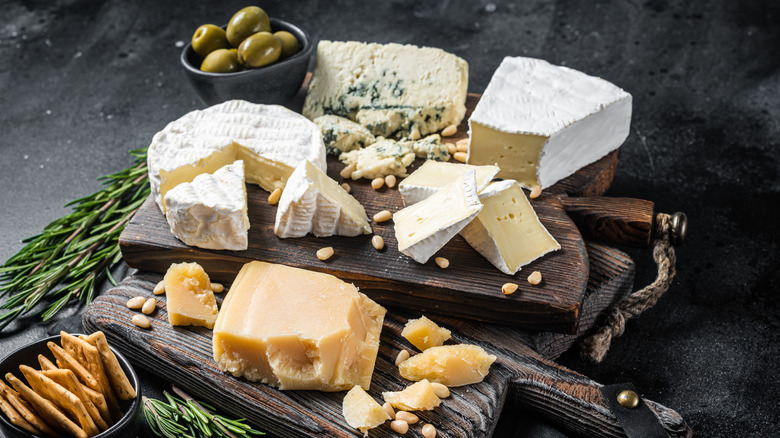
If you'd like to create your own cheese board, don't just shop the supermarket selection. Aaron Menitoff recommended specialty grocers, wine stores, and cheese shops. Farmers markets, too, might be happy hunting grounds if any cheesemakers are in attendance. People who are truly knowledgeable and passionate about cheese will be able to guide you to the right selections, including local or seasonal cheeses you may not be aware of.
You only need a few cheeses, too. "A smaller, well-curated selection with expert advice beats a massive cheese wall every time. [...] Think of a balanced variety, not variety for variety's sake," Menitoff declared. If you're going with three cheeses, he advised a soft-ripened one, an aged semi-hard one, and something strongly flavored. If you'd like to add a few more cheeses, try a blue one along with something aged and hard. Menitoff insisted, "Every cheese should earn its spot, providing a rich and varied experience. A great cheese board tells a story from first bite to last." As for how much cheese you need on a board, plan on about an ounce of each cheese per person.
And don't bother with a slate board. Menitoff dismissed them by saying, "They look great on Instagram, but they're not ideal for tasting." The reason for this is that slate retains cold, and serving the star ingredient chilled is a cheese board mistake that leaves you with flavorless cheese. The cold dulls both its flavor and smell. Wood boards, on the other hand, allow cheese to stay at room temperature. They also don't look as flashy, which is a good thing. As Menitoff reminded us, "The board should support the cheese, not compete with it."