

The Difference Between Pasture-Fed And Grass-Fed Beef
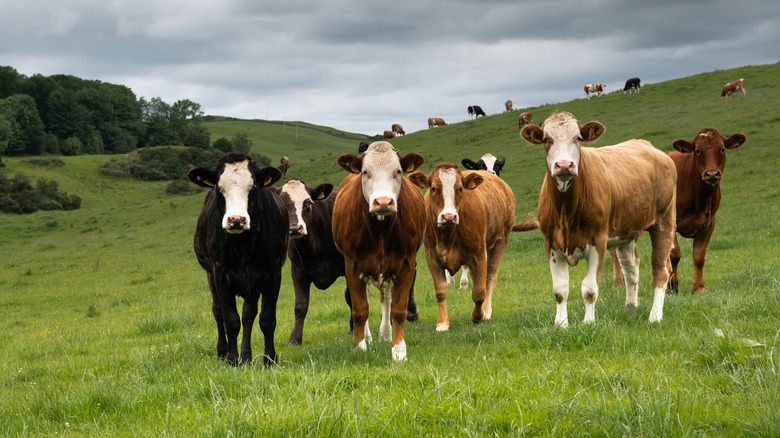
Meat labels can be very confusing — some indicate government-managed certification, others verify compliance through third-party organizations, and many are nothing more than marketing claims. Because of this, there's a lot of variety in the terms you'll see, and the differences and similarities aren't always obvious. The terms "grass-fed" and "pasture-fed" are good examples, as they both conjure the same image of cattle grazing in a field, surviving on a natural diet.
However, the two terms have distinct differences. Pasture-fed refers to where the cattle are being fed, which is out in the pasture. And while this does guarantee some amount of naturally foraged grass in their diets, it doesn't specify what else the farmers might be feeding them. Grass-fed, on the other hand, refers to what the cows are fed, but doesn't specify where. It could be fresh grass direct from the pasture, or it could be dried grass (otherwise known as hay) eaten indoors.
In the best-case scenario, the 100% grass-fed beef in your favorite fast food burger comes from cattle that are fed grass and have continuous outdoor access. However, the problem is that there's no guarantee. Currently, neither of these terms has an official USDA definition, and is instead treated as a voluntary marketing claim overseen by the USDA's Food Safety and Inspection Service (FSIS). This drastically reduces the reliability of grass-fed and pasture-fed claims.
Why FSIS claims aren't good enough
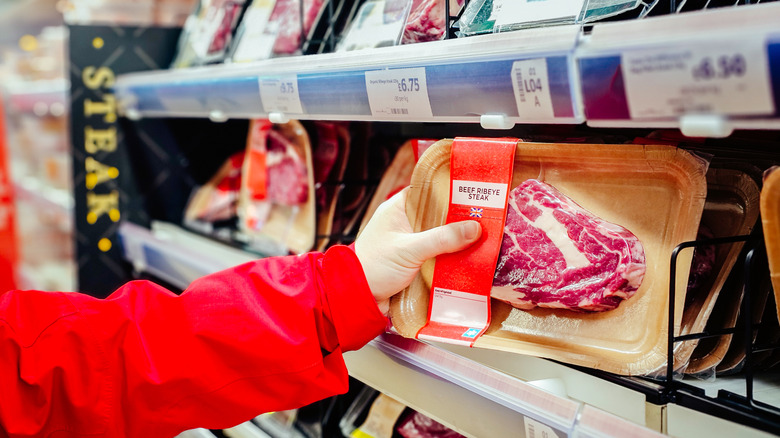
So how do these labels end up on the beef you're purchasing at the store? Because the USDA doesn't have an official definition for these terms, producers get to decide their own definitions. This means they submit documentation detailing their definition to the FSIS for approval, and then agree to stick to their own definition. The first big problem this creates is inconsistency, because the same terms can have slightly different meanings depending on the producer.
The other big problem is the lack of verification. The FSIS only works with written documentation and does not perform any inspections to confirm that the on-site conditions match the claims made in the documents. Because of this, the FSIS explicitly encourages the use of third-party certifications that have their own strict definitions and thorough verification processes. If you're interested in buying grass-fed and pasture-raised beef, the American Grassfed Association provides one of the most trusted third-party certifications in the United States. The certification guarantees antibiotic and hormone-free beef raised on a 100% grass diet with continuous outdoor access, all verified with independent inspections every 15 months.
What about organic beef?
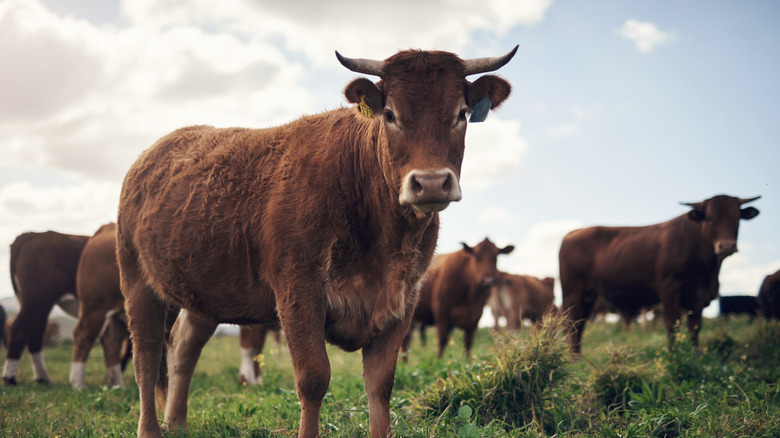
You may be wondering if organic beef is the same as grass-fed and pasture-fed beef. The term "organic" is managed directly by the USDA and comes with its own rules and verification processes, making it a reliable certification. For beef, it includes rules relating to feed, welfare, antibiotics, and growth hormones — but it does not require cattle to have a 100% grass diet or be 100% pasture-fed.
Instead, many types of feed are acceptable as long as they're organic and at least 30% of the diet is pasture-sourced. However, slaughter cattle are exempt from this pasture rule for the last third of their lives, allowing producers to "finish" the cattle on a 100% grain diet. This is done to boost weight gain and increase the fat content in the beef, creating more product and changing the taste of the meat. While the organic diet is not as strict as a grass-fed diet, the certification does guarantee a higher-than-average standard of animal welfare and is a good choice when you can't buy grass-fed.