

Eating Pretzels For Lent Goes All The Way Back To The Middle Ages
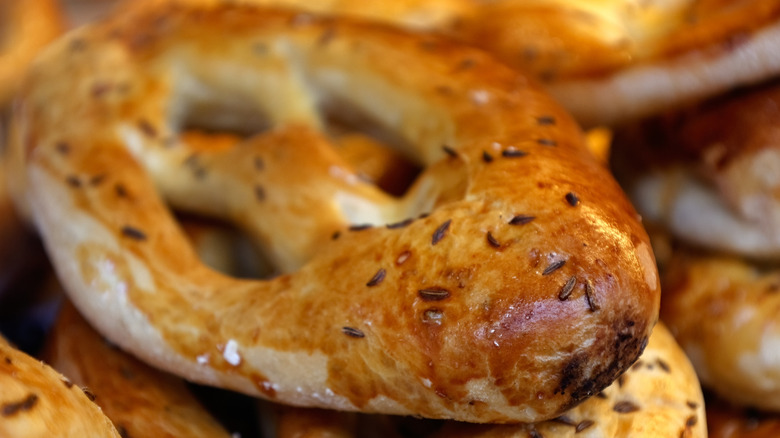
Lent is the 40-day period between Ash Wednesday and Easter Sunday (technically 46 days, but Sundays don't count). Nowadays it involves lots of self-reflection and temporarily giving up certain earthly pleasures and foods, although it varies across individual Catholic households. For some, it's a time for pretzels as well as soul searching. Those big, soft German-style pretzels show up during Lent as a treat or as a food to bring good luck for the year. That's not a modern tradition by any means, either. The practice may be nearly as old as pretzels themselves, as uncertain as those origins are.
As early as the 7th century BCE, pretzels were popular among folks observing Lent. Back then, church-dictated rules about fasting were much more intense than they are now. Rather than giving up specific foods you might enjoy, Catholics weren't allowed to eat meat, dairy, eggs, or anything else which came from an animal. Being restricted to this vegan diet meant the bread they consumed could only be made from little else besides water, flour, and a bit of salt. If you've ever made homemade pretzels (which can make you instantly popular), then you know that these are a soft pretzel's primary ingredients. As a filling food, pretzels became a useful way to stave off hunger while following fasting rules.
Pretzels evaded early fasting rules
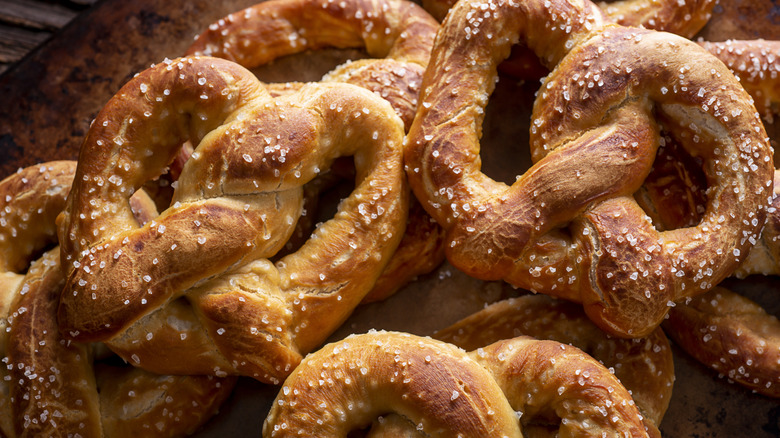
In that era of European history, those original Lenten pretzels had quite a lot of religious significance which was reflected in the pretzel's older names. It's said that monks would give pretzels to students who did well in their studies, and were called "pretiolas" or "little rewards." They may have also been called "bracellae" or "little arms," because the monks baking the pretzels thought its knotted dough symbolized a person's crossed arms in prayer. It would be another thousand years before German immigrants brought their pretzel recipes to America where they became the common street food we know them as today.
Regardless of what you're making them for, a traditional Lenten pretzel looks similar to a modern big pretzel; that water, sugar, and salt plus some yeast, brown sugar, and butter (if you're not observing Lent as strictly as they used to). Even if you've never made pretzels a part of your Lent (I spoke to one raised-Catholic friend who'd never heard of this) or if you don't participate in Lent at all, this is the ideal liturgical season to bake them. Just make sure to shape the dough into that crossed shape, as it's a common mistake with homemade pretzels not to.