

How Fast Food Chains Use The 'Decoy Effect' To Trick Customers Into Spending More
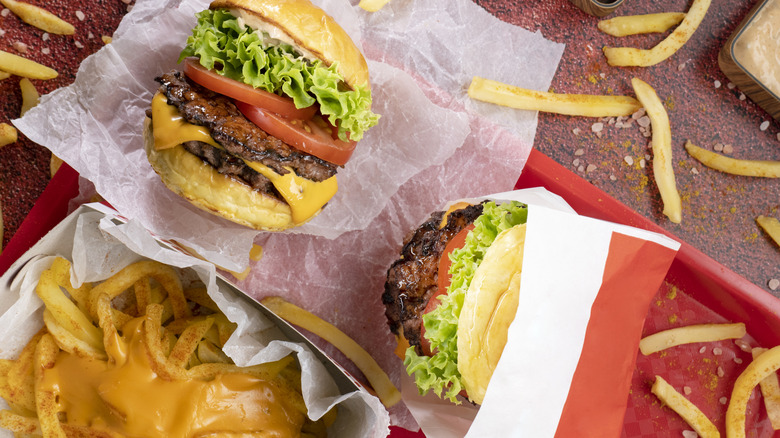
We think that a restaurant chain prioritizes customers' well-being, but the reality is that it reaps the most benefits from so-called "deals." Fast food establishments use the "decoy effect," a sneaky tactic employed by fast food chains to persuade customers to buy the most expensive item (and it's not the only tactic to achieve this — menu design can also make you spend more). Fast food restaurants present their customers with groups of three options for purchase, including a "decoy" option intended to nudge consumers toward a seemingly more appealing but actually more expensive alternative (aka the "target").
To be successful, the decoy must appear less attractive than the other two meal choices in price and/or value. Despite its low price, the cheapest option (the "competitor") seems undesirable because it appears to offer little value. Conversely, the target convinces customers it offers the best value, despite being the most expensive option. The decoy's presence strengthens this impression, pushing them to the target and helping them receive what they believe is the most bang for their buck.
To illustrate this idea, let's say you're at a fast food restaurant, which offers a burger for $5, a burger and fries for $8.50, and a burger, fries, and drink for $9.25. The decoy effect suggests the burger, fries, and drink combo would seem to be the obvious choice and best value because it has more items and it's less expensive per unit. But you are still choosing the most expensive combo, and increasing the restaurant's revenue.
Ultimately, customers fall for this fast food trick because we want to justify our spending habits. The illusion of a better value of price relative to other objects scratches that itch. And businesses not only recognize this, but they use the decoy effect to manipulate us.
How to defy this influential 'trick'

Because the decoy effect works subconsciously, it is hard for the consumer to know whether or not they are being manipulated. And while that manipulation benefits the restaurant, it may have a long-term negative effect on customers. Not only are they spending more and gaining less for their purchase, but they're also consuming more calories than they may have without the decoy effect's use, which can lead to poor nutrition and poor health
However, you aren't powerless before fast food chains. By learning how to identify the decoy effect, you can avoid falling for it altogether. As the decoy effect is primarily active in sets of three, noticing groupings of three on fast food menus can help you discern if a decoy is present. Choosing what you want to eat prior to reaching the counter or drive-thru speaker can also release you from the trick's clutch. If you're entering Taco Bell and already have the chili cheese burrito in mind, don't confuse yourself by looking elsewhere on the menu. This helps you only buy what you truly want, and counteracts the effect's long-term financial and nutritional strains.