

If You Notice This At A Restaurant, It's Time To Pay Your Bill And Leave
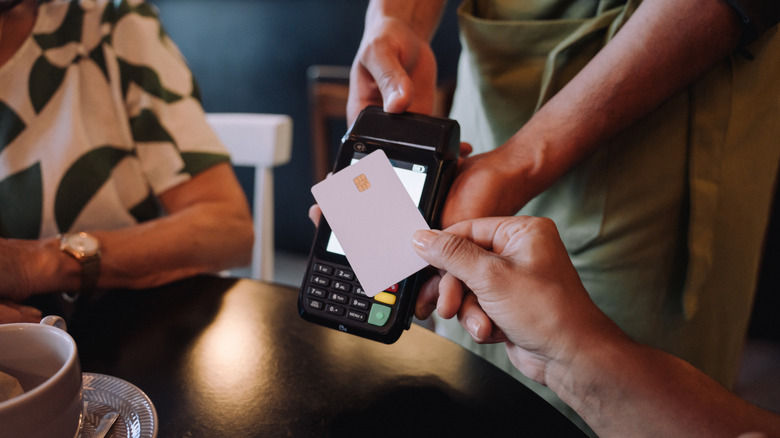
When you've struck that perfect balance between good food, on-point drinks, lively conversation, and attractive ambience, no one wants to dispel the magic by asking for the check at a restaurant. But while service industry professionals want you to thoroughly enjoy yourself every time you dine out, that doesn't mean you should treat the restaurant like the dining room in your house. At a certain point, it's time to go home, and if you pay just a bit of attention, you'll notice the staff giving you lots of cues for when you should call it a night.
To get an inside look, we spoke to Frankie Weinberg, author, distinguished professor of management at Loyola University New Orleans, and co-owner of Pomelo and Good Catch restaurants in New Orleans. "If the team is cleaning up around you, yes, that does often softly signal that closing time is near," Weinberg told The Takeout. He added, "Soft cues such as lights coming up, music shutting down, sweeping happening at tables in other sections, and check drops without being asked all signal that a restaurant is closing."
Tasks that fall into this category could also include wiping down tables and chairs, restocking bottles of wine, polishing glasses, rolling silverware, cleaning off menus, tidying waiter stations, organizing credit card receipts, or counting cash. Staff do complete many of these types of duties — known as sidework — throughout a shift, but if you see nearly everyone working on something like this at the end of the night, it's a good indication that you should ask for the check.
Recognize the humanity of restaurant workers
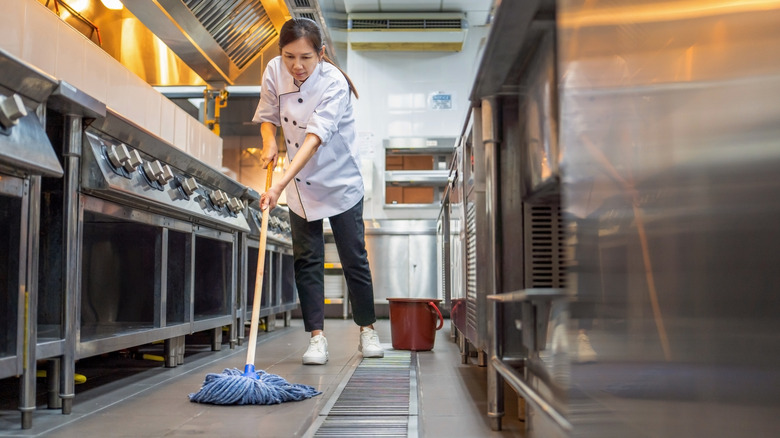
Staff at a restaurant aren't doing closing sidework to be rude. "It's a bit more nuanced than what some might perceive as passive aggressive behavior," Frankie Weinberg explained. "Restaurant staff work long shifts (often double shifts), and beginning nonintrusive cleaning steps as closing time nears allows staff to finish at a humane hour." Remember, even after the last guests leave, servers, bartenders, bussers, and cooks often work for another hour or so doing tasks that they can't finish when there are customers present, like stacking chairs, mopping the floors, and shutting off and cleaning kitchen appliances.
While an unpredictable workflow, late hours, and long shifts are often the norm in the service industry, it doesn't mean that customers should take advantage of that. "When guests linger far past the last call, the cost to staff can be meaningful: missed buses, late childcare pickups resulting in less precious time with family and a higher cost, and exhaustion that is likely to carry into the next day," Weinberg said.
However, front-of-house staff shouldn't make guests feel unwelcome even when they're trying to make sure the close goes quickly and they can get out at a reasonable time. "Restaurants often train their staff to offer these cues somewhat subtly," Weinberg explained. Doing something like flicking on bright lights or playing obnoxiously loud music isn't cool no matter what time it is.
Is it ever okay to stay at a restaurant beyond closing time?
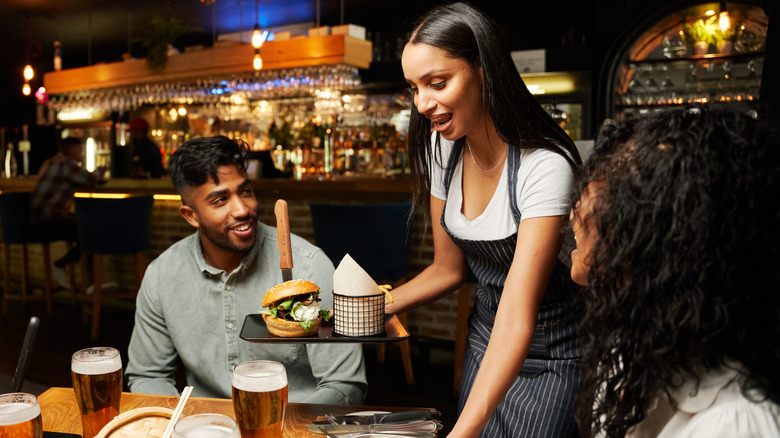
According to Frankie Weinberg, "It's typically okay to stay longer than posted hours if you had the last seating, you were served your food at a late hour shortly before closing, and you're taking a reasonable time to complete your meal." This is especially true when you make a reservation ahead of time because the staff has time to plan appropriately and make necessary accommodations. "The best practice is to understand the restaurant's hours before you arrive and to make arrangements that allow you to stick within those posted hours," he explained.
In some cases, it is okay to walk into a restaurant right before closing, like when there are still plenty of customers on a Saturday night. "Of course, it's also okay at times that the restaurant staff invite you to do so, although this should never be considered a go-to strategy," Weinberg said. "Front-of-house staff tend to err toward the side of seeming hospitable, even to their own detriment," he added.
Of course, service industry professionals take great pride in providing an outstanding experience to guests no matter what. At the same time, it's important that customers are being mindful of how long they're staying past closing time, avoiding rude restaurant behaviors, and respecting employees' time and effort. Compensating servers with a generous tip is always a much-appreciated way to show your gratitude for receiving good service even at an inconvenient hour.