

Ham Vs Turkey: Which Deli Meat Brings More Protein To Your Sandwich?
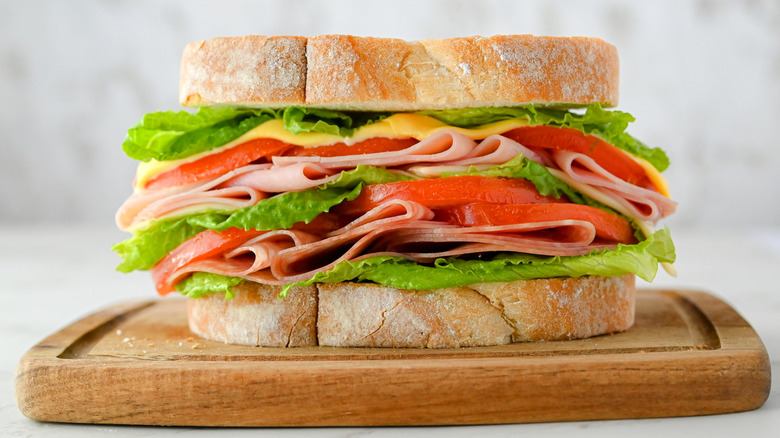
It seems like protein is on a lot of people's minds with the rise of incorporating protein powder, protein drinks, and even protein noodles into diets across the United States. And there's good reason to eat plenty of protein: It helps you stay full, gives you energy, and builds muscle. If you're also riding the protein wave, you'll want to know which cold cut sandwich filling — ham or turkey — is the better choice. While both beloved deli meats pack a protein punch, there is a narrow winner: turkey!
When it comes to which lunch meat to gobble up, a 2-ounce serving of Hillshire Farm's Ultra Thin Sliced Oven Roasted Turkey Breast has 10 grams of protein, while a 2-ounce serving of smoked ham from the same company has 9 grams. Even though choosing turkey over ham is an effective grocery swap to create a high protein shopping list, the difference is small enough that if you're not a fan of turkey, ham is a perfectly acceptable substitute.
Remember, though, that there are other nutritional considerations when it comes to deli meats, including calorie count, fat, and sodium. For instance, this ham has 610 milligrams of sodium and 3 grams of total fat per serving, while the turkey comes in lower with 600 milligrams of sodium and 2 grams of fat. The caloric content is the same, so the healthiest deli meat choice for you will be based on your own goals and taste preferences.
More ways to pile on the protein in your sandwich
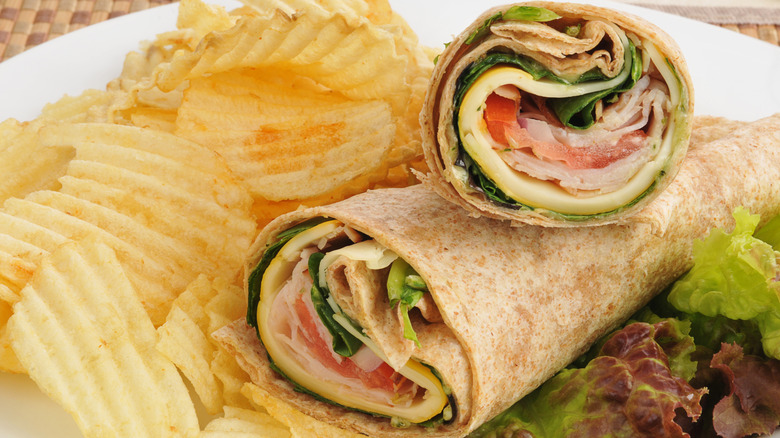
Whether you're a turkey fan or a ham lover, these deli meats aren't the only opportunity to bring protein into your sandwich of choice. Besides meat, there is protein in eggs, which have around 6 to 7 grams each, and cheese, which can have a ratio of over 7 grams per ounce. Firmer, aged cheeses like Swiss and gouda will have more protein than softer cheeses like mozzarella or cottage cheese. Sliced hard-boiled eggs can add texture and richness to a deli meat sandwich, while cheese brings a creamy tang.
You can even find protein in some spreads, particularly hummus and yogurt-based sauces, to add oomph to your condiments. You can also add protein to any sandwich through an unlikely source: the bread you use to make it with. While bread does not traditionally have an especially significant protein content (although some types of bread have more protein than others), high-protein breads are increasingly popular. These are commercially-made breads that have been enriched with protein and are available in whole grain, sourdough, and more. You can also find protein-enriched tortillas for a wrap. There are even recipes for protein bread and tortillas online if you'd like to try making your own.