

Are Sushi Rolls With A Lot Of Ingredients Really A Red Flag? Here's What An Expert Says
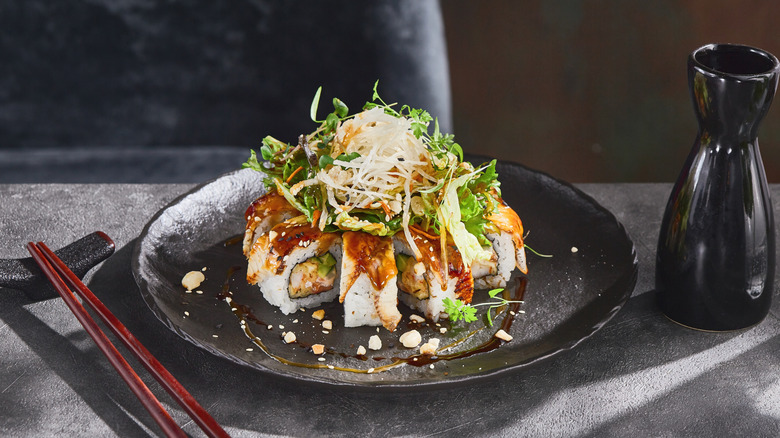
A Hurricane Roll can really deliver drama, topped with a thick layer of baked spicy crab and drenched in eel sauce and spicy mayo. It's one of the common specialty rolls on a sushi restaurant menu, part of a style in which the rolls are loaded with ingredients. They're showstopping on the table, but are all those fresh sprouts, jalapeno slices, crushed nuts, and tempura flakes actually a sign that the sushi isn't all that great? We turned to chef Andrew Oh of Momoya Soho to explain if all those extra ingredients are really red flags at a sushi restaurant. And the answer is: not exactly, but it does say something about the patrons.
"I would say that sushi rolls with a lot of ingredients are not necessarily 'red flags' but more of a preference to each individual," Oh said. "There might be a perception that bad fish can be associated with flavors that cover up the 'fishiness,' but in general, I think sushi rolls with loaded ingredients correlate more with what the audience wants in that particular location."
In a 2016 study of sushi preferences, Seamless/Grubhub reported some major U.S. cities absolutely lean toward certain styles. The data showed New Yorkers have a preference for spicy tuna rolls with crunch, Chicagoans love a negi hamachi roll (yellowtail fish with scallions), and the most popular sushi order in Miami is the salmon tempura roll. Coastal states often have their own varieties with local seafood, like Maine's local-caught lobster rolls and the Alaska Roll filled with smoked salmon, avocado, and cucumber.
Complicated sushi rolls aren't traditional; they belong to a whole new category
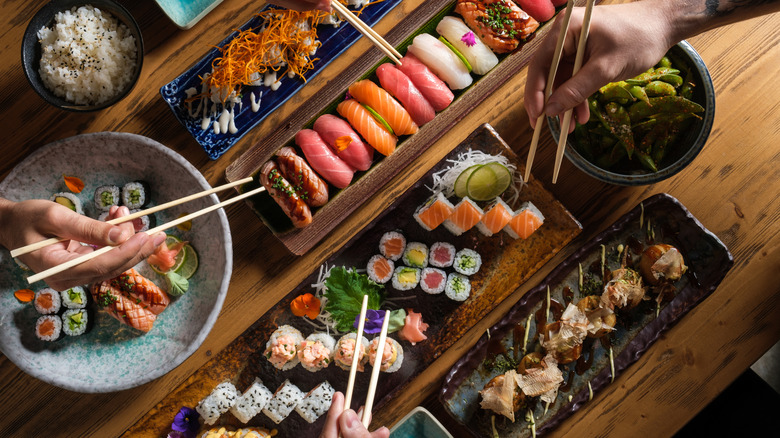
Traditional sushi is simple. The focus is on exquisitely sliced fish and perfectly made rice, not on all the extra fillings that come with specialty sushi rolls. The magic of all the garnishes is that you have another category altogether — one that is full of interesting flavor combinations and new, innovative presentations (like sushi nestled in an avocado). But the cultural essence behind sushi isn't quite the same when you pile on the toppings. "I think rolls with a lot of ingredients should be considered in the category of 'westernized sushi'," Andrew Oh said. "Traditional sushi is simple and conflicting flavors are not paired with each other so that the taste of each ingredient does [not] get lost."
Specialty sushi rolls might be the epitome of Japanese-American fusion, unless you count sushi bakes and sushi burritos. They're so popular that you'll find them at gas stations and grocers — in fact, America's top sushi seller is Kroger — yes, a grocery chain. Visit the closest sushi restaurant for the whole dining experience, though. Most likely, the only thing that the over-the-top sushi roll is hinting at is the taste preferences of the restaurant's regulars.