

The Delicious Way To Make Curry Without Coconut Milk
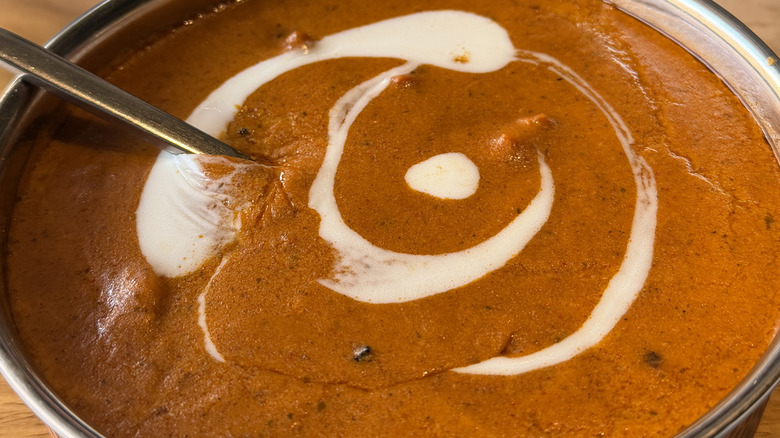
Curry is the kind of comforting, spicy, and filling food that many people can't get enough of — and a wide variety of versions exist in numerous cultures. Yet curries are pretty easy to make yourself with gravy bases or entirely from scratch. Some of the simplest curry recipes involve coconut milk to thicken the texture and give it flavor. But if you check your pantry and you're out of coconut milk or cream, that doesn't mean you're out of luck. Don't hesitate to use yogurt in your curry, instead, as it adds flavor and richness to the finished product.
Swapping in yogurt is incredibly easy because you can use it as a 1:1 substitute. Greek yogurt works well for thickness, but any yogurt made with whole milk works fine. You can even make yogurt in a slow cooker for a homemade vibe. Just make sure to add the yogurt at the end of cooking, because boiling it with acids and spices can make it curdle and split.
Keep in mind that, just as you can't always substitute curry powder for curry paste, you can't always swap yogurt for coconut milk. Yogurt lends curries a tangy, fermented flavor, which can be a little strong for some. While yogurt does lower the fat of coconut milk curries, it also doesn't work well for vegan curry-lovers. However, you may be surprised to know that yogurt has actually been a staple of curries for centuries, and some recipes specifically call for yogurt instead of coconut milk.
Using yogurt in curry is hardly a new hack
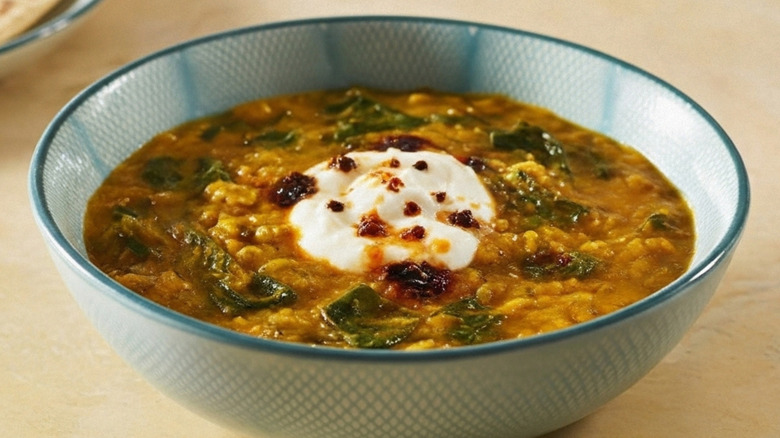
Curry has a long and curious history, going back to India and the Middle East. An Indian yogurt called dahi dates back to 6000 B.C., and was used in curries in the Rajasthan region. This tradition has carried on in kadhi curries, which feature a yogurt base using cow or buffalo milk. The yogurt tenderizes meat, and its cooling effect balances spicy dishes. As curry spread throughout the world over the centuries, incorporating yogurt became more widely known, especially in England, where chicken tikka quickly became popular.
While Greek yogurt can indeed thicken dishes, Indian yogurt is often used to thin curry and lend a creamy texture while adding nutrients. It contains a high percentage of your daily calcium intake, as well as iron and vitamin C. But some don't enjoy the sour flavor, driving them to seek alternatives.
If you're looking to swap in something other than yogurt, there are a few additional options that are also somewhat traditional. Peanut butter or blended cashews might work better for dairy-free Thai-style curries. Japanese curries often skip both coconut milk and yogurt, instead incorporating curry roux. If you're craving curry and are willing to get creative, you have plenty of options. For the most traditional Indian curry, though, yogurt is still where it's at.