

The Best Type Of Olive Oil To Use For Bakery-Worthy Sweets
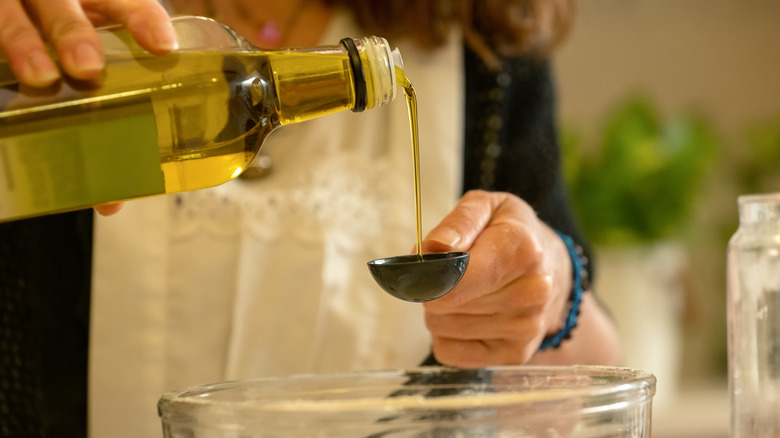
Everyone loves an unconventional baking swap. Once you've tried mixing mayonnaise into your chocolate cake and adding potato chip crumbs to your cookie dough, try adding a hint of sophistication to your bakes by swapping butter for olive oil. Olive oil isn't necessarily a one-for-one swap for butter (you might need to finagle the recipe slightly), but the technicalities shouldn't be your only concern. It's important to think about the way the flavors meld as not all olive oils taste the same, and some are better suited for desserts than others.
To learn more about incorporating olive oil when baking, we spoke to Paula Montenegro, the baker and recipe developer behind Vintage Kitchen Notes. According to Montenegro, you shouldn't necessarily use the same olive oil you'd use for a savory dressing or sauce. "For general baking, I look for neutral olive oils," she says. "They should be light and barely fruity, not too intense... We want the oil to complement, not overpower, other flavors."
Montenegro recommends late-season olive oils for baking. "Late-season or late-harvest olive oils tend to be mellower as the olives are fully ripe and not as bitter," she says. "I use them for fruity desserts and cakes." You might need to hunt around — or spring for the fancier stuff — if you're specifically looking for late-season oils, though. "They're a better fit for baking, but not always easy to find, as labels don't necessarily include that information," she admits.
How to use olive oil in your baked goods
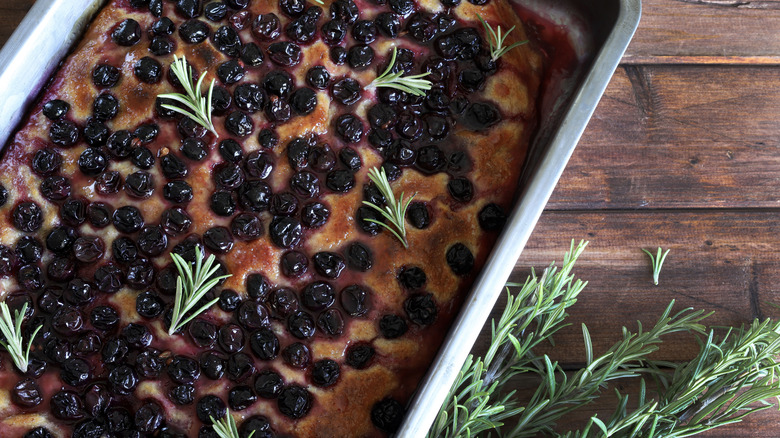
If you're wary of using olive oil in your bakes but want to give it a go, your best bet is to find a recipe that already includes it. Just pick your recipes carefully: You'll get the best results from recipes that call for melted butter or other types of oil. Don't expect a light, fluffy texture, either — olive oil cakes tend to be dense.
Consider your flavors carefully, too. If you're new to baking with olive oil, you may want to start with desserts with big, bold flavors, like a rich chocolate cake or vibrant lemon cake. With that said, you don't necessarily have to hide the flavor of the oil or stick to mellower varieties. "For a more defined olive oil flavor, look for early-harvest or what is sometimes known as varietal olive oil," Montenegro says. "They're usually labeled as premium, as the more intense the flavor, the better the olive oil is supposed to be." Montenegro shares that she likes using premium oils when making desserts like "olive oil cakes, chocolate mousse, and ice cream."
Ultimately, Montenegro explains, you should use your taste buds. "Taste the olive oil to know how sharp and bitter it is," she explains. "It's the simplest way to know if it will complement your baking recipe or is best left to use on savory dishes and salads. Just remember that olive oil should have personality, even if it's on the mellower side."