

11 Things To Avoid Eating On Valentine's Day
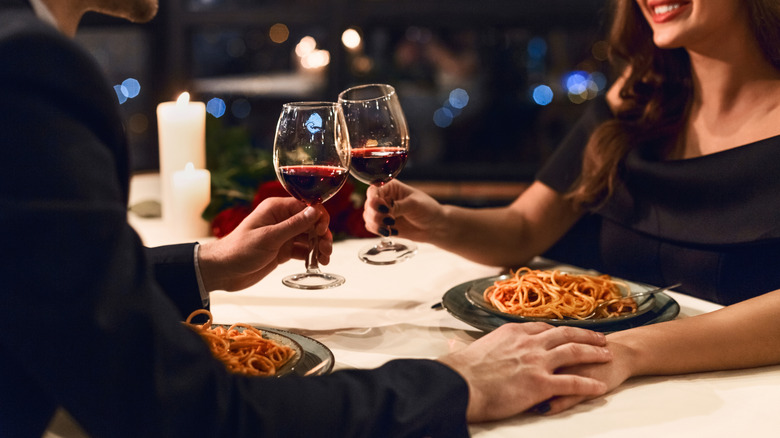
The ancient Romans celebrated the first version of Valentine's Day –– Lupercalia –– right around February 14, worshipping a god of fertility and reveling in animal sacrifice and randomized hookups. Hundreds of years later, Pope Gelasius I decided to dedicate the holiday instead to a saint named Valentine, who may or may not have existed and might have been martyred by a Roman emperor. But the origin of our modern Valentine traditions — including heart-shaped boxes of chocolates and expensive bouquets of roses — goes back to the Victorian era in England. (Although you can do better than just a box of chocolates for a gift, no?)
By the early 1900s, the company that would be Hallmark started selling the first mass-marketed Valentine's Day cards, and it's been a commercialized holiday in the U.S. ever since. However, it wasn't until the mid-20th century that it became a night for couples to eat out, sparked by modernization and the post-war American boom. Soon, Valentine's Day would represent one of the busiest nights of the year for restaurants. According to a 2023 Popmenu poll, about 40% of U.S. adults planned to eat out on February 14. The question then arises: What should they be eating? Or rather, what shouldn't they be eating, if they're looking to enjoy an undisturbed evening of lovey-dovey? Glad you asked, because we're here to help. Welcome to everything you should avoid eating on Valentine's Day. Table for one?
Beans are great for your gut, not Valentine's Day
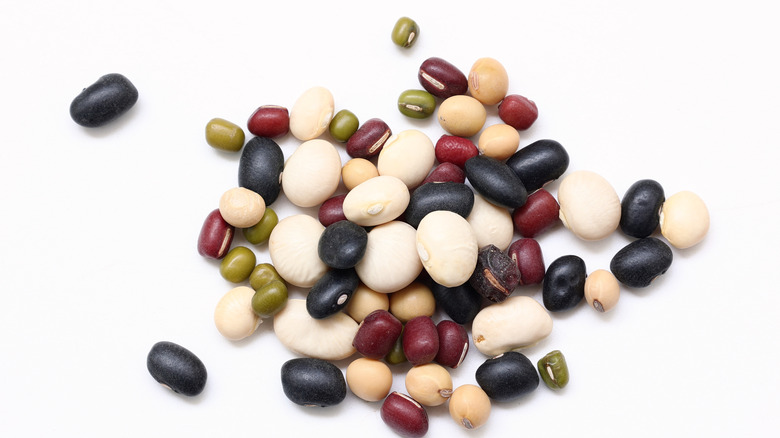
Avoiding beans on date night may, at first, seem like an obvious choice. We all know the rhyme about this magical fruit, the tooting, the feeling better from said tooting, etc. And science indeed backs up this cheeky lyric. But it's not that simple. A diet rich in beans and legumes boasts loads of health benefits, including your sexual health. Legumes like lentils, chickpeas, and kidney beans are teeming with magnesium and zinc –- nutrients that can boost testosterone levels in men. Beans and legumes provide wonderful overall benefits for women's heart and gut health, too, not to mention hormonal balance.
But we're focusing on one night here, Valentine's, not a general wellness plan or a winning ingredient for dinner parties. The gassiness from these veggies is no joke. (Unless you're one of those strange people who find farting funny.) When your body tries to break down the fiber and carbohydrates from these foods, it creates several byproducts, which, although healthy, can definitely cause bloating and flatulence. Therefore, for a single day only, it might be best to stay away from dishes like minestrone, three-bean salad, chilli, or pasta e fagioli. That is, unless you want an orchestra playing in your belly.
Broccoli is a friend to health but a foe to romance
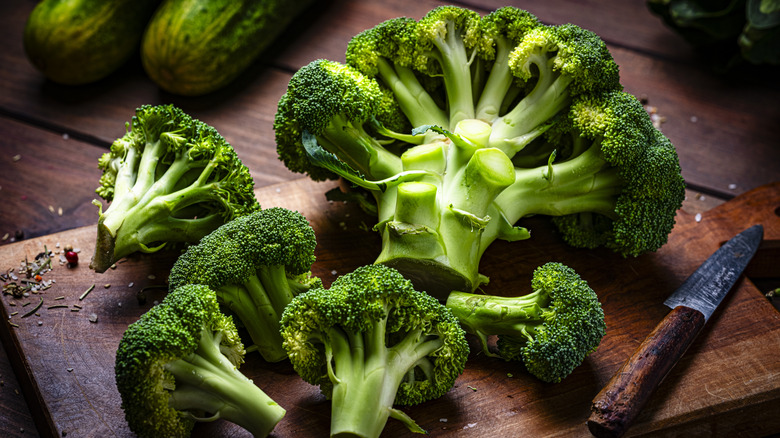
Here we have another battle between overall health and a night's gassy distraction. Broccoli is nearly always a welcome ingredient (especially in a dreamy pasta). It's also a nutritional super-green. Yep, broccoli isn't just a crucial vegetable; it's a cruciferous vegetable.
Cruciferous vegetables –- which include cabbage, bok choy, kale, cauliflower, and arugula — are great storehouses of antioxidants, vitamins, and minerals. They also contain sulforaphane, which can help prevent several types of cancer. So, to be fair, telling someone not to eat broccoli isn't just ill-advised; it might actually be irresponsible.
Except when it comes to sultry-saxophone Valentine's night. Just like with beans, broccoli is a prime candidate for an extended bout of gas. And we can thank some of our old friends for that: fiber and raffinose, carbohydrates that our bodies can't break down. Therefore, we break wind. So if you're thinking about a V-day serving of broccoli and cheese soup, beef and broccoli, or a seemingly harmless broccoli quiche, think about what those next few hours may look like. Perhaps save the cruciferous vegetable for a February 15 meal instead?
Garlic breath is a turn-on, said no one ever
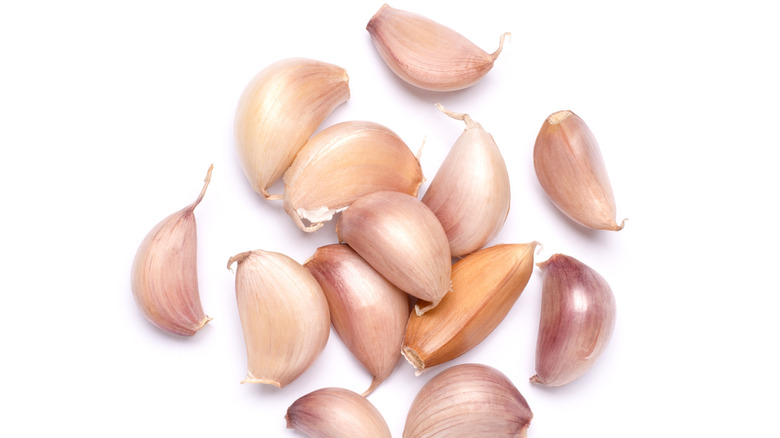
Let's travel from where gas occurs to the opposite end of our anatomy: the mouth. (And another example of our bodies reveling in messing with us.) So many nutritious things seem to come with weird downsides, and this time it's garlic on the chopping block. Garlic has a ridiculously amazing calorie-to-nutrition ratio: low on the former, high on the latter. Packed with great stuff like vitamin B6, vitamin C, and selenium, the pungent bulb has also shown it can help prevent colds, reduce blood pressure, and lower cholesterol.
So, of course, it has to give us date-destroying stank breath. Because we're not allowed to have nice things. Nice things like garlic bread, garlic knots, spaghetti aglio e olio, or any number of delectable garlic-based meals in the universe. All of which you should avoid on Valentine's night on account of unpleasant oral vapors.
Why the bad breath? Thing is, fresh garlic from the soil doesn't contain any of the compounds that cause malodorous breath. They only appear once the cloves are chopped or crushed, as they are when prepped for cooking. One of these compounds, allyl methyl sulfide, is more stubborn than the others. It can linger in your breath even after cleaning your mouth, wreaking havoc on any romantic advances.
But pasta and love just go together, right?
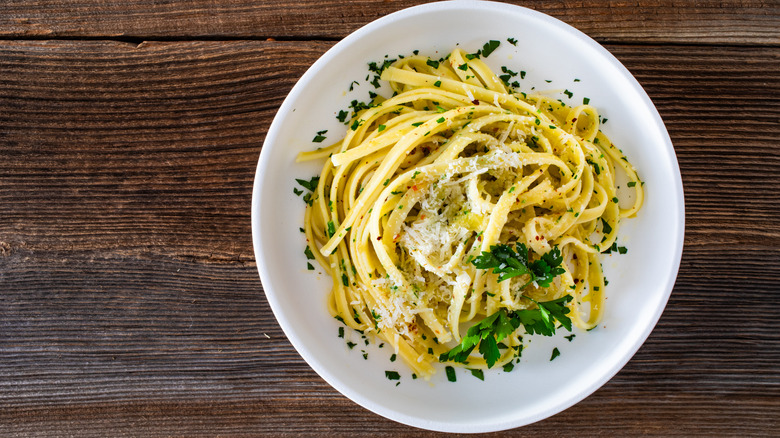
You may have heard that marathon runners always eat a big plate of pasta the night before a race. The thinking goes that loading up on carbohydrates –- the stuff ultimately fueling our bodies –- will give you a sustainable source of energy for the coming endurance test. And it's true, carbs are broken down into glucose as they get metabolized, which in turn floods our bloodstream and powers our vigor. It stands to reason that what's good for marathoners can't be bad for a couple on date night. However, there's always a but.
Here's the problem. Your classic white pasta from the supermarket or a gingham-tablecloth Italian joint has been stripped of its outermost layer of grain (otherwise it would be whole-grain pasta). When that happens, much of the fiber content is removed from the noodle, and the leftover carbs will be absorbed into your body very quickly. Too quickly. They just disappear into your bloodstream instead of being regulated and released as your body requires, resulting in a quick burst, then a crash. In short, white pasta can actually cause you to lose energy over time, rather than maintain it. Maybe you two can recreate the famous Lady and Tramp spaghetti-sharing scene with zoodles instead?
Sandwiches are messy and bloaty
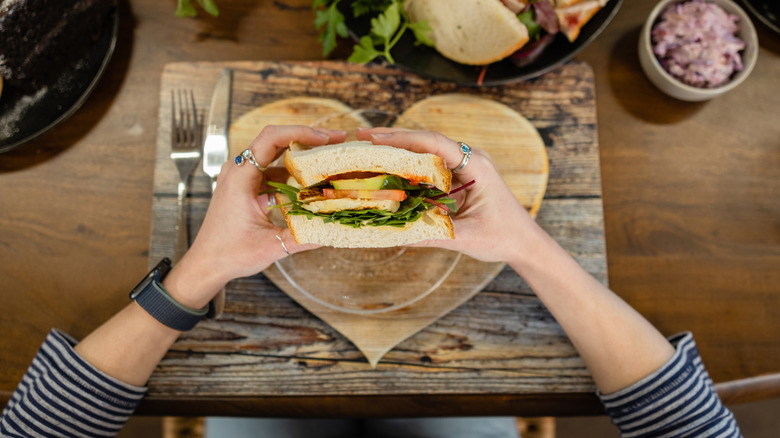
The sandwich has a lot of strikes against it as a date meal in general, not just on February 14. One is the mess factor. To properly enjoy a sandwich, you can't worry about a little spillage. Imagine having to dance around the juice from a Philly roast pork or tackling an Italian godfather while wearing a rain poncho. Anything that requires a grapple might be better for a solo lunch in front of no one. But hey, maybe you want to show off for your date by ordering the messiest sandwich possible and handling it with grace and aplomb. That would be impressive.
But there's another caveat to deal with when it comes to sandwiches on a date night: the bread. Just as with pasta, white bread (e.g., soft roll, Hero, sesame seed bun, baguette, etc.) is a processed grain that causes your body to sacrifice long-term energy for short bursts of zip –- doing you no favors on an amorous eve. Not to mention any gluten issue that may pop up to cause you discomfort and bloating. Really want to risk it?
Don't stake your Valentine's evening on steak
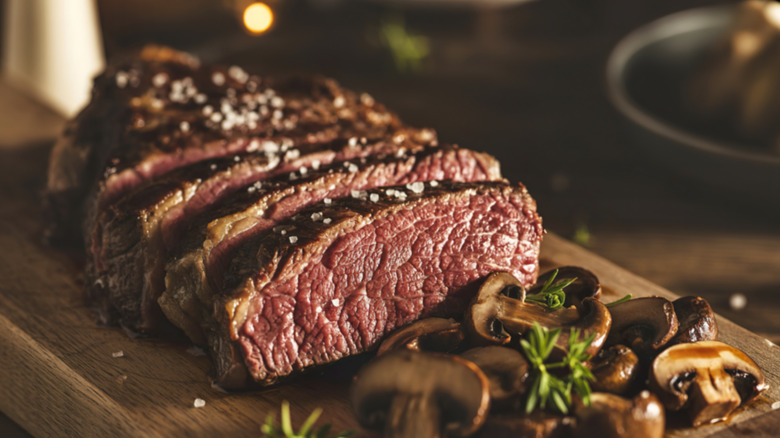
You want to recover from exercise faster? You want to build muscle mass? You want to lure a tiger into a fight against your quick-recovering muscle mass? Then steak is the way to go. Oh yes, a nice, juicy strip, ribeye, sirloin, or any other restaurant-quality cut will satisfy your appetite and infuse you with a great deal of protein. It doesn't hurt that steak is supercharged with leucine, an amino acid vital for building muscle. But there is an inevitable catch (hey, without catches this list wouldn't exist).
Protein provides less energy than carbs or even fat. Really, the only time we get energy from protein is when we're lacking the nutrients from other sources. The USDA suggests that around half of our daily calories should come from carbs, not protein, probably for this very reason.
Even if you know how to expertly order steak, here's the other thing to worry about: fun in the digestive system. By which we mean not fun. Red meat can bring with it a whole load of GI issues, like bloating, gas, discomfort, and acid reflux, because of how long it takes to break down. Let's just say if steak is on the menu, courtship might not be.
Avoid sluggishness from dairy
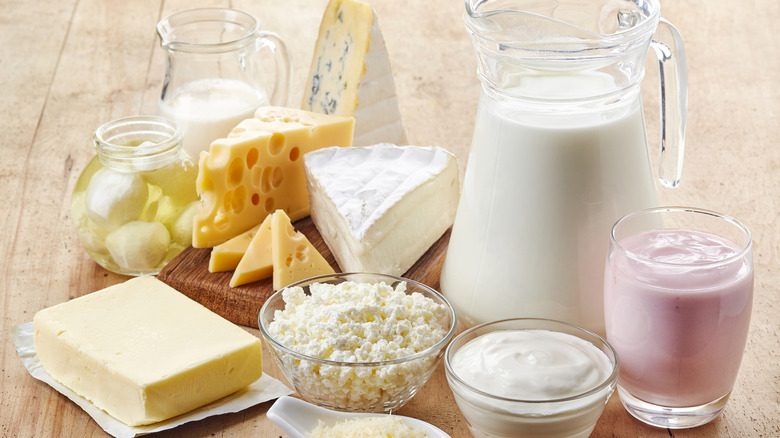
We're not implying that you would nurse a big glass of milk during your Valentine's Day meal, whether at home or in a restaurant. But you might want to order a cheese plate, some Turkish poached eggs over yogurt, or a few scoops of ice cream to lovingly feed each other spoonfuls of dessert.
Heck, you might even think the calcium burst will do you good. After all, calcium can strengthen your bones, activate your nervous system, control your blood pressure, and keep your teeth healthy. Plus, our bodies don't produce enough calcium on their own, so we need to go out there and consume it.
First off, there are plenty of foods with more calcium than milk. Second, and more relevant to this conversation, consuming dairy could lead to fatigue on Valentine's night. Many people develop dairy intolerances as adults, which can manifest as symptoms such as tiredness. This could be due to our immune system mistaking dairy proteins as not cool and fighting against them, tiring your body out and causing sluggishness. Some medical professionals even assert that restricting dairy would help many people with chronic fatigue. Thus, laying off dairy might also help a couple's night.
Don't let your romantic night get fried
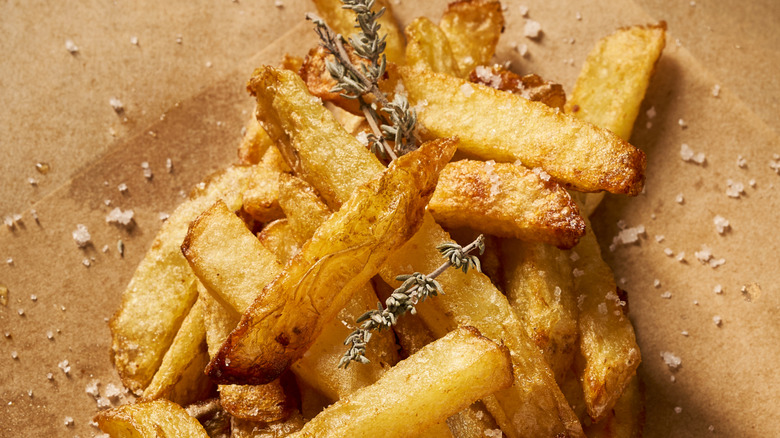
Unlike some of the other entries on this list, french fries are bad for both your overall health and any enchanting, passionate Valentine's experience. We all know that a diet heavy in fried foods can cause all kinds of long-term health issues, including an increased risk for heart disease, a weakened immune system, and chronic gut problems.
As for a seemingly harmless serving of french fries the night of? You might be looking in the short term at gas, bloating, acid reflux, and something that's anathema to anyone's love life: diarrhea. Because the fats and oils used in fried foods are difficult to digest, our body can start scrambling, causing all sorts of malfunctions. By the way, somebody might want to get this message across to people in Virginia, the state that consumes the most fries in the U.S.
If, come February 14, you're really in the mood for spuds, avoid the chips, eh? Instead, go for a baked potato or even mashed potatoes. But once you give those suckers an oil bath, you may not be in the mood to get into the jacuzzi later on.
The caffeine isn't worth the coffee runs
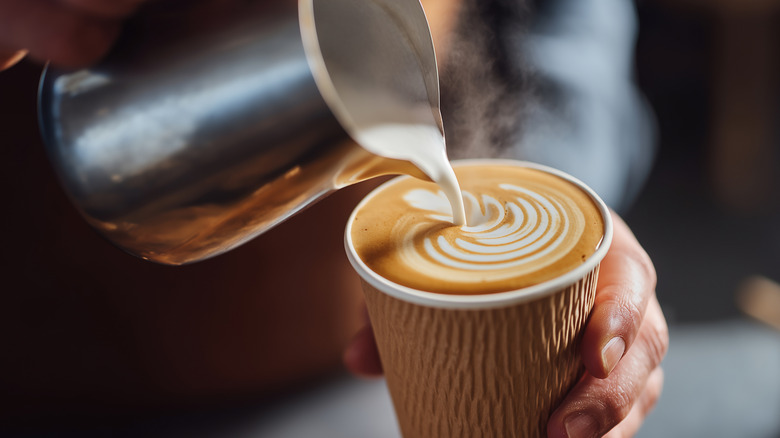
Whether it's an Irish coffee to accompany dessert, a cortado to top off the night, or just a pre-dinner cold brew, you might assume that caffeine would be nothing but advantageous on the most amorous night of the year. After all, once caffeine starts circulating in our system, it activates our nerves, boosts cortisol and adrenaline, and blocks brain receptors that trigger sleep. With all that said, coffee might just be the stimulant one needs to make Valentine's Day a memorable one. But here's the catch, Romeo and-or Juliet.
Coffee can indeed stimulate your energy. But it also stimulates your digestive system, potentially leading to all sorts of unwanted gastrointestinal distractions. The worst scenario is the dreaded diarrhea. A runs-ridden Valentine's night may make for a funny story you can tell your grandkids one day, but it can easily make for a disaster tale you never speak of again to any living soul. Even decaf can send you darting to the bathroom on account of chemicals –– like gastrin and cholecystokinin (everyone's favorite) –– that are independent of caffeine. And even though instant coffee is fancier than ever, it still runs the same risks on February 14.
Too much spice might not be nice
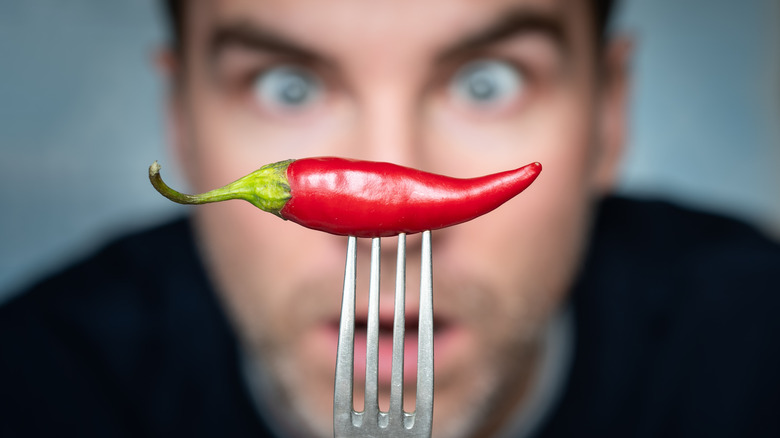
You might think a special night calls for some spicy food. Nothing wrong with a bit of heat to kick off the Valentine's festivities, right? Break out the hot sauce, ask for extra horseradish in your bloody mary, top off your sushi with a wad of wasabi ... so what if you'll be steaming out of your ears? Your senses will be alive, and your mojo will be ramped up. Shame that science always has to enter the picture and dampen our assumption parades.
Capsaicin, the element ever-present in spicy foods, is designed to wreak havoc on anything it comes in contact with. That's why you feel pain when spicy stuff hits your tongue and mouth. Just realize it reacts the same way when hitting your digestive tract. What can that cause? Only upset stomach, diarrhea, fiery indigestion, and, our old friend, rectal burning.
Oh, and food that has the spice turned to 11 –– with, say, cayenne or habanero –– may make you sweat. And sweating can, for some, lead to body odor. Not exactly an ideal situation for an intimate evening. Neither is having the bad breath that often comes with eating peppers, chiles, or hot spices. The chemicals from these pungent foods assimilate into your bloodstream and get into the lungs, causing you to exhale those smells well after you digested them. Call it the gift that keeps on taking.
Save the sweets for the nothings you whisper
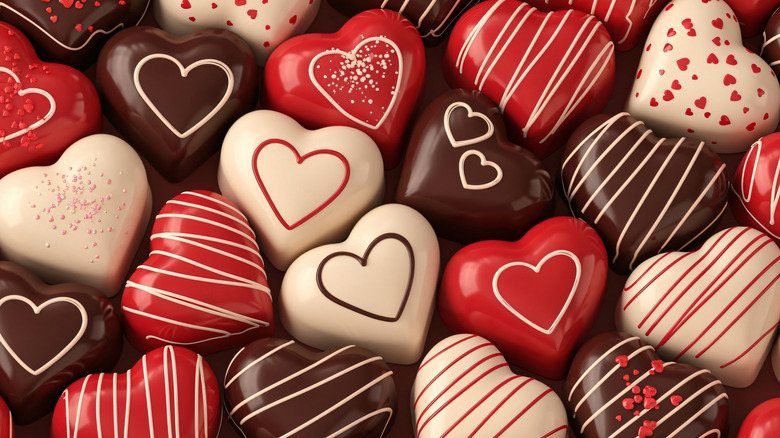
Is this list really going to end with a suggestion to avoid sweets on Valentine's Day? Have we all gone mad? Is nothing sacred in this world? It feels like sweets were practically invented for the holiday (although there are certainly some Valentine's candies to avoid). The Hershey's Kisses, the chocolate-covered strawberries, the gummies. Even conversation candies –– the heart-shaped ones with little messages –– have been supplying Valentine's since the late 19th century. So what gives, you ask? Why do you hate us?
Easy, don't shoot the messenger. Knowing is half the battle, and you should know that sugary confections might give you an immediate burst of energy –– aka the sugar rush –– at the expense of a loss of energy later on. Because of how quickly both simple carbs and added sugars are absorbed into the body, the burst of adrenaline not only doesn't last, but the wind-down may cause a big-time romantic roadblock: the crash. This means a double dose of drowsiness might be coming your way if you dip into the chocolate box too soon. Some advice: save it for the morning after.