

If Bison Are Protected Animals, How Come We Can Eat Them?
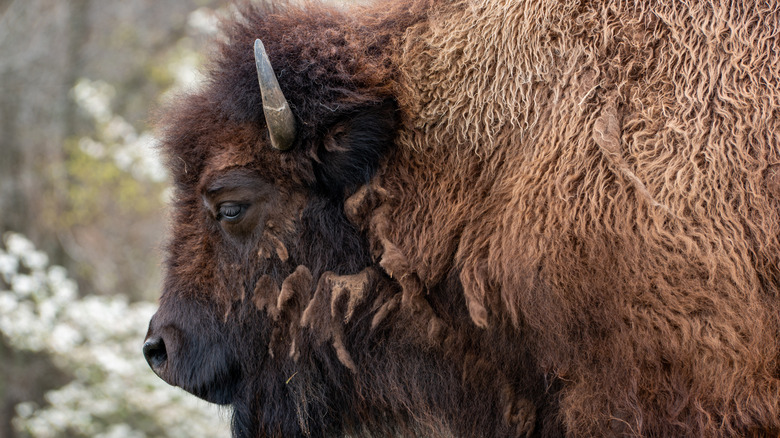
Last fall, I found myself facing a dilemma while sitting in front of a bowl of bison chili. I'd eaten this staple American food before, but I was now enjoying it at Dogwood Canyon Nature Park's restaurant right after admiring the reserve's protected bison herd. As I brought hot scoops of chili to my mouth, I thought about the baby bison that I'd just seen playing next to their massive parents. I pictured Takota, a rare white bison who stood out like a twinkling star. Was I being contradictory by supporting bison conservation while also eating their meat?
Unfortunately, the answer is neither simple nor straightforward, because bison have a complicated legal status. The majority of bison are livestock, and raised on privately-owned property, mainly for their meat. A smaller group lives in managed herds within confined reserves that may be private (like Dogwood Canyon) or federal (like Yellowstone National Park). The species as a whole is considered near-threatened, so killing them requires a license, and only a few states have made it legal to hunt them with a permit.
Protected bison aren't completely safe from culling, since some reserves allow controlled hunts to manage populations. Still, the bison that end up on our plates are typically livestock. Dogwood Canyon, for instance, doesn't use its own herd to make its delicious bison chili. Instead, it sources meat from a much larger herd spread across seven farms and private properties that Johnny Morris manages, a PR representative from the Johnny Morris Conservation Foundation (which includes Dogwood Canyon) stated over email.
Is it wrong to eat bison?
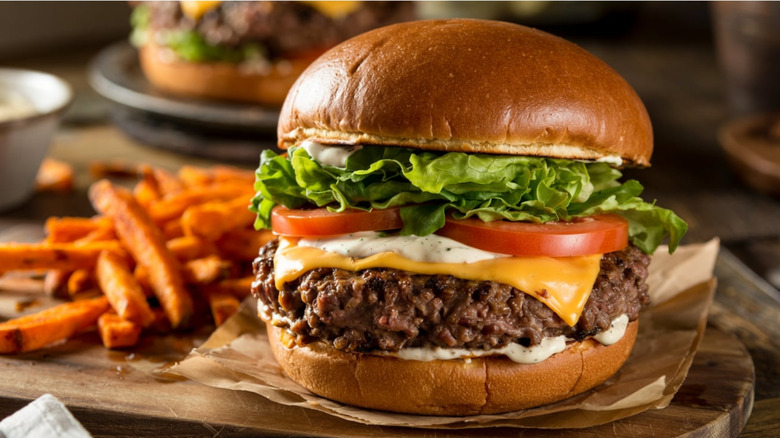
An estimated 60 million bison once roamed around Canada and the United States. Many Indigenous tribes depended on the animal for food, which is partly why American politicians encouraged tourists and settlers to slaughter entire herds. Dwindling bison numbers contributed to tribes being forced out of land that settlers then stole to raise cattle. By the end of the 19th century, wild bison numbers were down to an estimated 300 to 800 animals!
But settlers also played a part in saving the species from extinction. A handful of individuals enclosed bison in their land as a business venture. However, they soon faced high costs and ever-growing herds held in limited spaces. Selling bison meat (which isn't all too different from beef) was a way to tackle both of these issues. Eventually, settlers adopted the mammal into their diet. The tradition of eating bison in dishes like burgers continues today in much of the American West and parts of the Midwest.
Again, about 200,000 bison in the U.S. are livestock, and only around 11,000 are living in conservation areas. There are no truly wild bison left. Without meat farms, then, bison might not survive at all, which is why some people argue that consuming bison meat supports the species' conservation. In a perfect world, America's national mammal wouldn't need to be profitable to be deemed worthy of existence. While that becomes a reality, we have to accept that sometimes you can love an animal and eat it too.