

The Massive Mexican Chain Restaurant That Had Humble Denver Origins
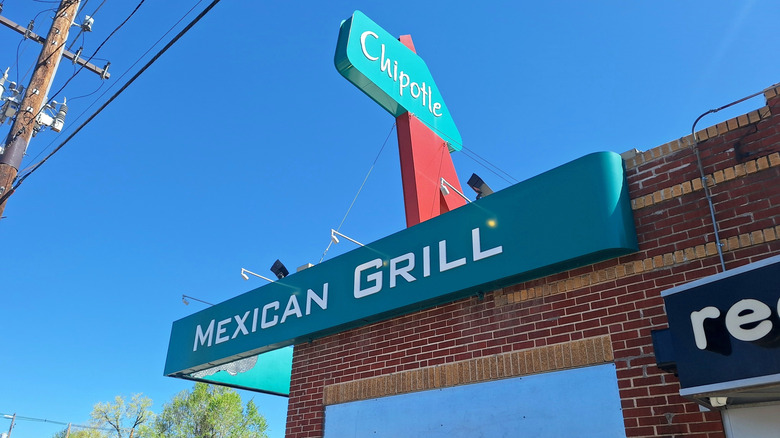
This former hole-in-the-wall hotspot used to exclusively serve giant burritos to mostly college students, but the location is now considered more of a Colorado landmark. If you ever find yourself in Denver, make sure you stop at 1644 E. Evans Ave. — the first of more than 3,900 Chipotle Mexican Grill locations.
It all started in 1993 when 28-year-old Steve Ells — who grew up in Colorado and graduated from the Culinary Institute of America – borrowed $80,000 from his father to open a grab-n-go custom burrito joint. His intentions were not to grow the fast-casual dining concept into what it is today, but rather to fill the void of fresh-tasting Mexican food in the area and eventually use the profits to open a local fine-dining restaurant. Ells aimed to sell 107 burritos a day to profit, but within one month, that number was closer to 1,000 out of the 850-square-foot location — enabling him to pay back his dad quicker than he thought. Ells once said in an interview, "Chipotle was widely successful and I thought, 'Well, I'll open one more.'"
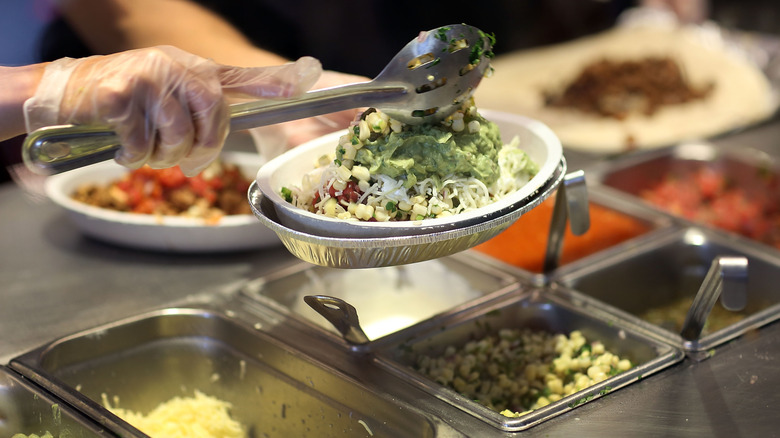
Two years later, with the cash flow generated from the first restaurant, Ells opened the second location only 20 minutes away. It was at this location, the infamous Chipotle assembly line was established. Customers also reacted positively to the transparency of the assembly line and open-air prep area that became Chipotle's signature setup. By 1998, there were nearly a dozen Chipotle locations throughout Colorado. Then, Ells' first real investor came along — a little fast food chain named McDonald's.
From burritos to billions
In 1998, when Steve Ells was considering testing the waters outside of Colorado with a Kansas City location, McDonald's became a vested interest in Chipotle for eight years, contributing an estimated $360 million. Within this time, the Mexican grill went from having 14 Colorado locations to over 500 across the United States (although there are two states still without a single Chipotle location). The menu expanded, too, offering bowls, tacos, salads, and of course, its promising guacamole that even tariffs can't dampen. McDonald's divested in 2006, and Chipotle went public with an estimated market valuation of approximately $700 million that soon grew to $1.85 billion by the end of that year.
However, in the mid-2000s, Chipotle's sales plummeted after an E. coli outbreak linked to the beef served at the restaurant in multiple states. The company lured customers back by reformulating food safety protocols and offering free burritos. It seemed to work because today, Chipotle is doing it all, with the company worth approximately $54 billion.
I remember passing by that first Denver location every day on my way home from class, occasionally stopping in to see if I could score an available table. In 2017, it finally received an overdue revamp, where it finally received the same assembly line setup and open-air prep area like the other locations. The basement space that once housed storage and an impromptu office for Ells now features prep tables, a walk-in cooler, and safer stairs. The coolest of all, the new design includes a wooden beam in the basement that reads, "Steve Ells '93," surrounded by the signatures of former employees.