

Babybel Cheese Is Getting A Makeover — Here's What's Changing
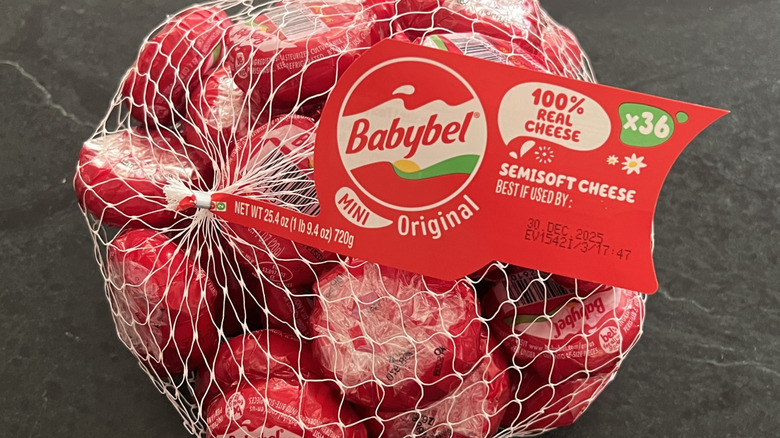
Babybel, that classic semisoft cheese dipped in wax and wrapped with a crinkly cellophane wrapper, is getting a slight costume change. The company recently announced in a press release that it's ditching that exterior plastic wrap in favor of recyclable paper packaging. The Bel Group, owner of the Babybel brand (as well as Laughing Cow and Boursin), says this is part of its goal to reach "100% packaging ready for recycling or compostable at home by 2030."
You likely won't see the paper wrap instantaneously, however. The plan is to roll out the new packaging throughout the United States, Canada, and Northern Europe first this year before the change extends to the rest of the world. That's not to say the current cellophane packaging isn't eco-friendly, as it's been a home-compostable component since late 2020. And before you panic, don't worry, the company has no plans on messing with the wax shell — you know that's really the most fun part about tearing into one of those Mini Babybel rounds when you're looking forward to snack time. You'll still be able to pretend play as Pac-Man afterwards.
Babybel's wax is also recyclable
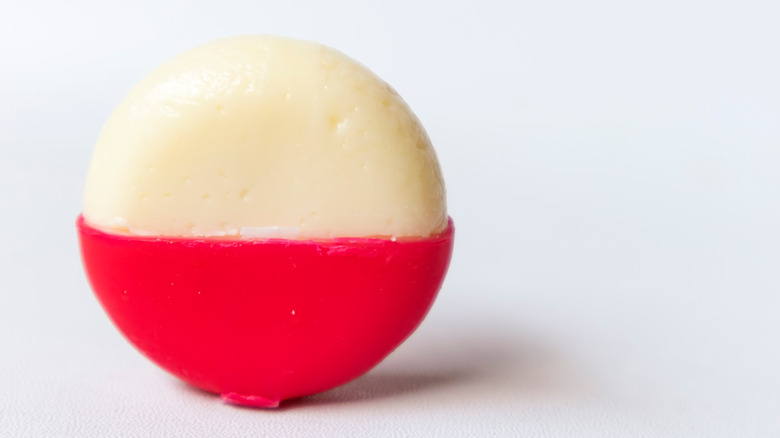
If you're wondering, yes, the paraffin wax exterior of a Babybel cheese is also recyclable, though you can't just chuck it into the recycling bin and call it a day. The brand is partnered with TerraCycle, a company that provides recycling services for items that your local municipality might not be able to handle. For example, TerraCycle can recycle used hot sauce packets from Taco Bell for you; all you need to do is sign up and request a free shipping label, gather your waste, and send it on its way. This extends to Babybel wax, too.
Of course, you can always be a little more creative and melt the Babybel wax to create sculptures (which has actually happened). Or, who knows, maybe you can use the wax to seal your envelopes with some cheese-scented panache. Either way, expect to see your Babybel packaging to change a bit in the next few years to fit sustainability standards. The semisoft cheese, however, will still be the same one you're used to.