

The Simple Mistake That's Ruining Your Chicken Noodle Soup And How To Avoid It
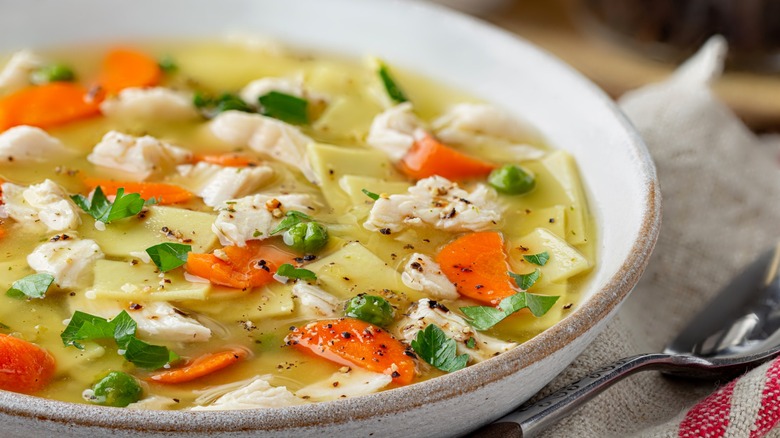
Whether you're quickly throwing it together after a long day or taking the time to elevate chicken noodle soup with extra mushrooms, one common mistake can turn the perfect sick day food into a disappointing bowl of mush. It's no secret to most home cooks that the ingredient giving body to the dish can easily be overcooked. Instead of enhancing an otherwise exceptional dish, those soggy noodles drag it into the gutter of unappetizing fare.
When The Takeout spoke with Stephanie Loaiza from Six Sisters' Stuff, she assured us that cooking noodles to perfection isn't difficult –- it just requires being mindful about adding them at the correct time. "For chicken noodle soup, which generally uses egg noodles, you'll want to add them as the very last step before serving," she said. "If you plan on eating the soup immediately, take the soup off the heat as soon as the noodles are cooked completely."
Unfortunately, this means you can't get distracted and walk away while the noodles are cooking to ensure they don't become overdone. And if you are making the soup in anticipation of the fam getting hungry later, you'll want to pull the soup off the heat a little early. "If you plan on letting the soup sit for a while before eating, slightly undercook the noodles, and they will finish cooking in the heat of the soup without getting soggy," Loaiza said. Of course, if you're making chicken noodle soup way ahead of time, you'll want to utilize a different approach.
Avoid soggy noodles when freezing chicken noodle soup
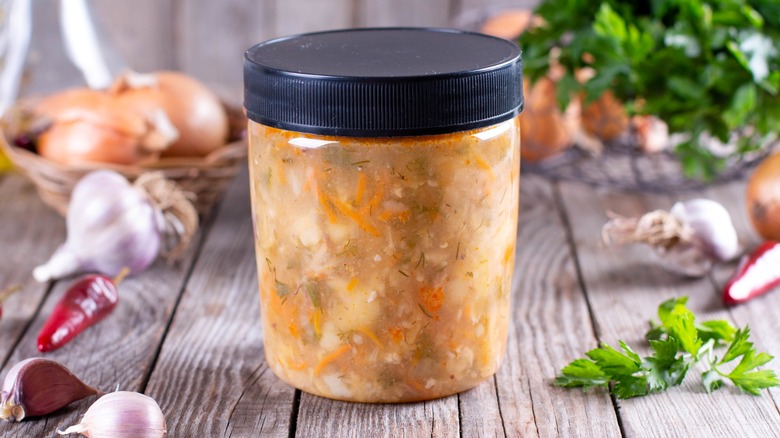
Even the best canned chicken noodle soup can't hold a candle to homemade. For that reason alone, it's nice to have some on hand in the freezer for those days when you want something tasty to fill your stomach, but can't muster the energy to do anything more than call DoorDash. Still, we're all aware by now that the freezer can be the enemy of texture, sometimes turning quality ingredients into sad, mushy representations of their former selves.
Stephanie Loaiza said that when prepping chicken noodle soup in advance, keep the noodles out of the soup to avoid a soggy outcome. "If you're making the soup well ahead of time (like the morning of) or plan on freezing it, cook the noodles separately and add them before serving for best results," she said. Preparing them on the side keeps their structure intact, but be warned: you'll sacrifice some flavor with this technique. "Keep in mind that if you cook the noodles separately, they won't soak up as much broth," Loaiza said.
All this talk about how to cook noodles with no mention of what kind to include? Well, it makes some sense, given that most folks don't stray from the standards. "The classic noodle for chicken noodle soup is generally a flat, wide egg noodle or curly egg noodle, for both the texture and how well they can soak up the broth," Loaiza said. Still, variety is the spice of life, and if flat starch isn't doing it for you, Loaiza had another suggestion to set your chicken noodle soup apart from others. "Another favorite is ditalini," she said, "Because it cooks evenly and you get a good serving of noodles with every spoonful."