

The Unexpected Dinner Leftover That Makes A Perfect Pie Crust In A Pinch
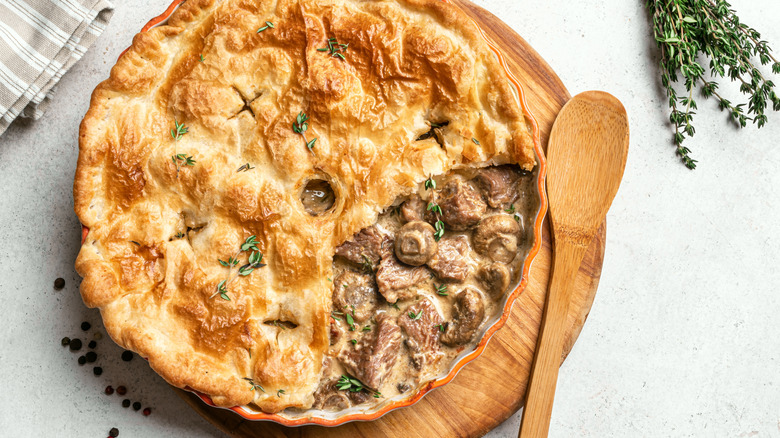
Let's say you're making a savory pie or quiche one fine afternoon and you suddenly notice you don't have any flour for a pastry crust! Are your dreams of pie-filled dinner dashed? Not quite. There's one ingredient you can use for a flour-free pie crust which you might already have stored as leftovers — rice. That's right, with rice you can make a nutritious, structurally sound, and gluten-free pie crust in just a few simple steps.
First, you either need to make 2 cups of rice or warm up about as much leftover rice. Brown rice is often good here as it's a healthier option than white rice. Then, mix it with a binder such as ¼ cup of Romano or Fontina cheese and perhaps an egg. You can forego a binder altogether and just use the rice, but it won't hold together as well. With a spoon, press the rice mixture down firmly into a pie tin to form a crust. At this point, you can parbake it at 350 degrees Fahrenheit for three minutes or until it holds its shape and starts to brown. In some cases, you may want it cooked longer for added firmness. If you're using fillings that are thick and unlikely to slip through the cracks, you may not need to parbake at all.
You can customize this crust with herbs, different cheeses, oils, and spices. This is best suited for savory dishes, so consider adding Tex-Mex seasonings for Midwestern fusion pies or olive oil if you're making a Mediterranean pie. No matter how you tweak this recipe, you just need to start with rice.
How rice can turn into a passable pie crust
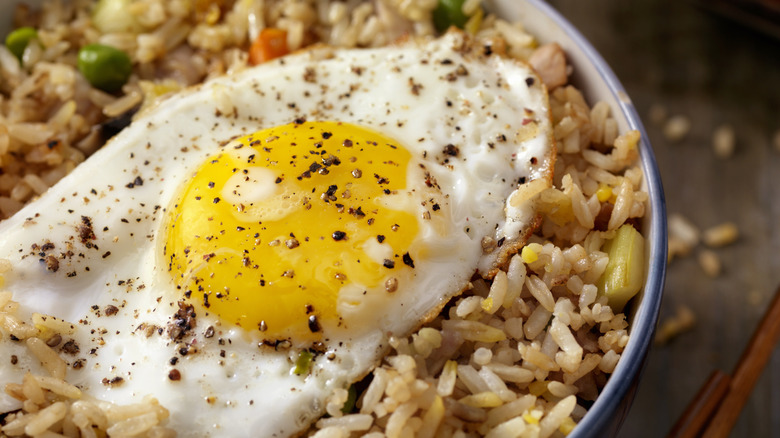
As it turns out, rice is a very useful baking ingredient, as evidenced by all the ways you can use leftover rice. Part of this is because it's high in starch, which is the substance that makes it stick together. The fat in eggs and cheese will cling to the rice, joining the crust together when baked. That's how you end up with a crisp, firm crust that holds together even when sliced into. If you don't parbake, the rice will still absorb some of the liquid, including any that seeps out of solid fillings during baking. (If you're unsure, it's safer to simply parbake the crust first.) The rice ensures you won't end up with a wet, loose mess falling apart on your plate.
Rice is a preferred ingredient for those with dietary issues. Rice and rice flour are both gluten-free, which means they're ideal as substitutes for those with gluten intolerances. Even for those without allergies or dietary struggles, rice offers tons of nutrients. If you go with brown rice, it gives you dietary fiber, iron, and B vitamins which aren't found as much in a normal pie crust. In fact, about the only downside of rice pie crust is that it's not stretchy and moldable like dough, so you won't be able to get the perfect pie crust crimp with this recipe. Regardless, you can still use it for a variety of dishes with ease.