

The US State That Produces The Most Cranberries Is Far Above The Rest
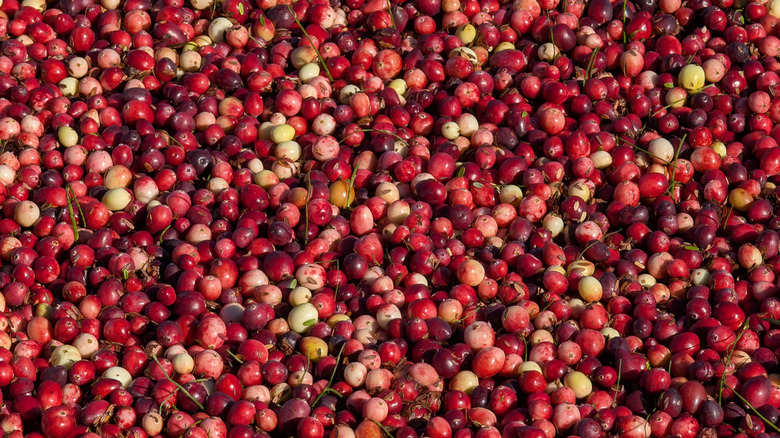
Even when it's not Thanksgiving, there are plenty of ways to enjoy cranberries. Apart from the famous cranberry sauce (and all the treats you can make with the leftovers), you can also enjoy the tart fruit in baked goods, juice, the candied snacks that remind you of grandma, and even cranberry ketchup for roasted meats. But where do all those cranberries come from? Well, the odds are pretty good that they were harvested in Wisconsin, which produced a hefty 5.3 million barrels of cranberries in 2025.
Why does Wisconsin grow so many cranberries? Well, it comes down to geography and cool climate. The sandy soil of northern and central Wisconsin is great for cranberry bogs — nutrient-poor wetlands — but challenging for growing most other crops. Meanwhile, Wisconsin is a significantly larger state than Massachusetts, which is the No. 2 cranberry-producing state at 1.8 million barrels in 2025 — just a little over a third of Wisconsin's output. Oregon is even further behind with 560,000 barrels — a tenth of Wisconsin's cranberry harvest.
How Wisconsin's cranberry tradition is in its history and soil
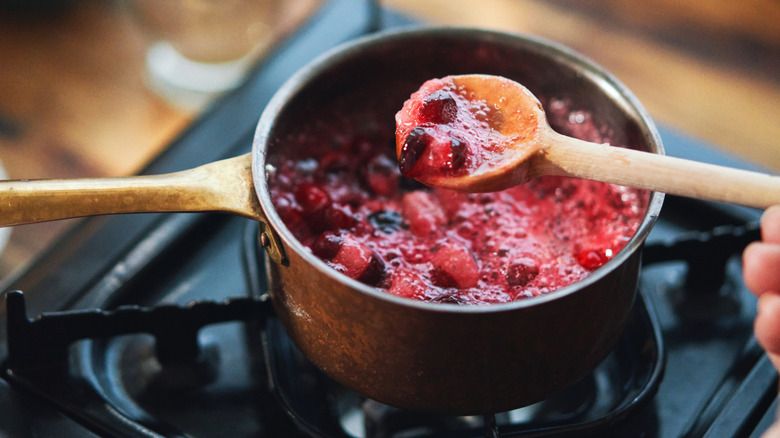
While Wisconsin leads the nation in cranberry production today thanks to modern agricultural techniques, the state's legacy stretches back well before it achieved statehood. Native Americans harvested cranberries for centuries before the arrival of Europeans in the area. In the 19th century, the Ho-Chunk Indians traded cranberries with some of the early settlers in central Wisconsin. Until the arrival of automation in 1950s, cranberries were harvested by hand, with German prisoners of war used to gather the crop during World War II.
Although today's cranberry farming looks very different than 100 years ago, Wisconsin is still a great place to grow the fruit, and it all comes back to that soil. Cultivating cranberries requires acidic soil at a particular pH of 4.2 to 5.5, which farmers carefully monitor and manage. Sandy soil, which has plenty of water below the top layer, is key for cranberry marshes. Due to its glacial history, Wisconsin has plenty of the sandy, acidic soil needed for its native bogs – making farming a big enough industry to support multiple cranberry festivals across the state each year.