

Stop Throwing Away Green Onion Roots And Put Them To Work For A Future Meal
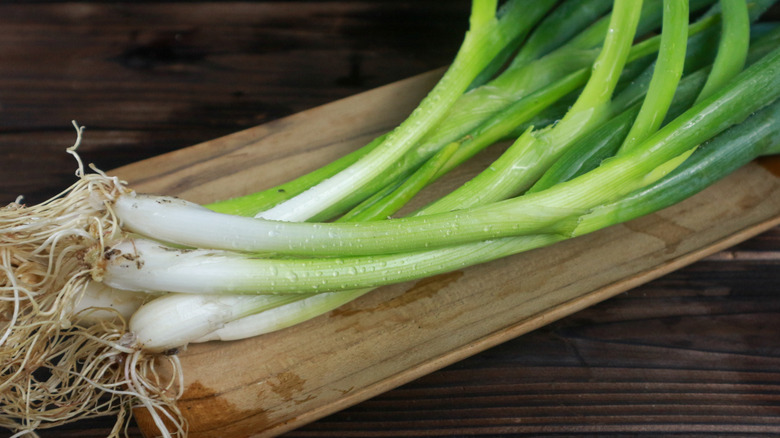
Green onions are a fantastic garnish for numerous dishes as well as a tangy main ingredient in some regional cuisines. While they're pretty easy to prepare, you may find you're often left with the root-covered bottoms which wind up in either the trash or compost. However, one mistake you are making with leftover food is letting those rooty little butt ends go to waste. Instead, you can use them to regrow a whole new green onion!
The method for this is incredibly simple. At the end of dinner prep, take your green onion bottoms and place them into a small bowl or cup with the cut sides up. Fill the cup with water until the roots are covered, but stop before they're completely submerged. Now, place them in an area that gets tons of sunlight, such as a windowsill. Alternatively, you can plant the roots directly into the soil. You won't notice regrowth as quickly, but it'll still work. While green onions and chives are not the same thing, you can also use this technique on those and other similar members of the onion family.
Once you have your green onion in some water, you'll notice regrowth almost immediately. You'll likely see new tips sprouting within a week as long as you change the water every few days. Once green onions are about five inches tall, you can plant them in your garden or in their own planter box. At six inches, you can begin clipping or harvesting from them as needed. You can even eat the flowers.
Why this method can save you time and money
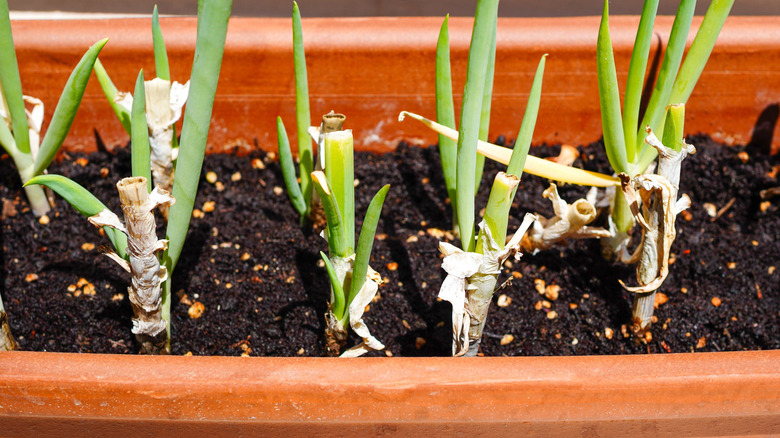
Now that you've decided it's a bad idea to throw out green onion (and scallion) whites, you should know the additional benefits you get with this fun little growing project. For one thing, you won't need to buy green onions from the store again. They grow fast and they keep growing even if you chop them off almost all the way down to the root every few weeks. From experience, green onions will continue to grow basically indefinitely if you keep cutting from them, and will sprout during all seasons if kept from freezing. I have green onions that are still producing six years after I regrew them from scraps. This will save you money at the grocery store, especially if you regularly use green onions as an accent or garnish with your meal. It also cuts down on food waste since you won't be throwing anything out.
This regular access to green onions means you can get more creative with your cooking. The green parts of the onion have a milder taste than the whites, so they work well in stir-fry, scrambles, and soups. Chop and mix them into sweet and sour chicken for a sharp little bite or grill the whole stock for use in tacos. Keep in mind that green onions are best stored with the white base intact, so you should use what you trim off immediately to avoid them getting soggy. Once you embark on this oniony adventure, it's easy to keep them healthy with just a little water and sunlight, so don't feel the need to use them sparingly.