

If Your Tuna Steak Smells Like Anything Other Than This, It's Probably Not Fresh
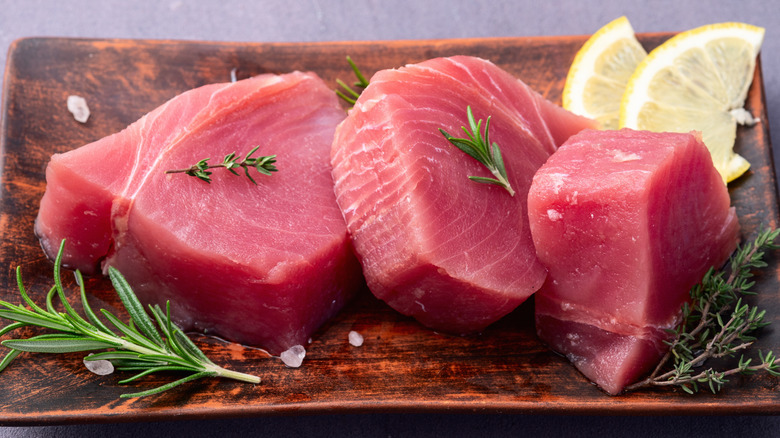
There's a common fear among consumers that the fish they pick up from the store isn't fresh and could thus be dangerous to eat. While we can try to ensure that we're consuming fresh fish by shopping at grocery stores known for providing high-quality seafood, there's also a lot of merit in a good old-fashioned smell test to understand whether your tuna steak is exactly the quality you want it to be. The simple rule is that tuna fish is meant to have minimal smell to it, although a mild iron smell is often present and is perfectly acceptable under certain circumstances.
We discussed this iron smell in particular with Eric Fernandez, the associate director of culinary at The Culinary Edge, who explained that smelling iron in tuna steak is generally considered commonplace but can be alarming if it's an especially strong aroma. "An irony smell can be normal in fresh tuna because tuna is rich in myoglobin (the pigment in muscle that can read as metallic)," Fernandez explained. "It shouldn't be sharp or sour, and usually comes from the bloodline more than the edible protein if it is still attached." Similarly, a strong metallic smell from raw tuna at a restaurant can indicate that it has been stored in a metal container for a long period of time which will chemically interact with the fish in the process. This exposure (known as metal leaching) isn't inherently dangerous, but could negatively impact the fish's taste.
Why the freshness of tuna steak matters
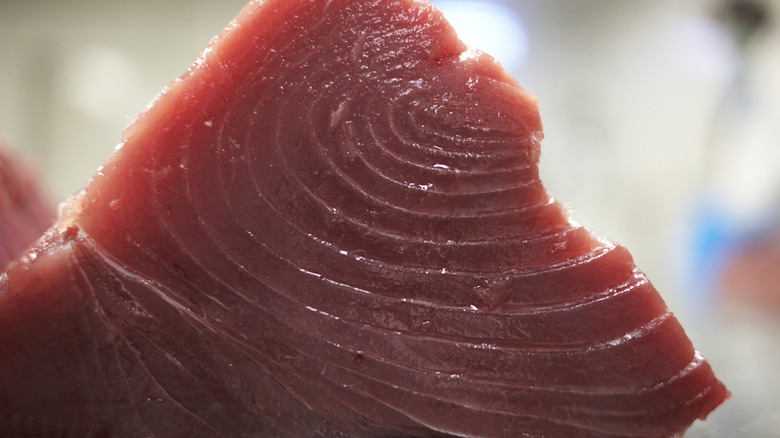
While an iron smell isn't necessarily indicative of an un-fresh tuna steak, knowing exactly why it's so imperative to cook fish when it's fresh can make that freshness even easier to look out for. For Fernandez, while safety is always important, flavor can also be diminished if your tuna isn't completely fresh. "As tuna oxidizes and gets older, the clean umami flavors can get covered up by the sour or fishy flavors," Fernandez reminded. Thus, while we aren't always against the use of frozen fish in recipes, it's smart to be able to analyze what makes fresh tuna fresh so you can enjoy the best version of these dishes possible.
With this in mind, there are some major red flags to look out for upon your next visit to the seafood section. When it comes to smells, a sour, eggy, or generally fishy smell makes the fish a total no-go. Similarly, the smell of ammonia should only be found in highly fermented fish like Hakarl (a delicacy even Anthony Bourdain couldn't stomach) and is otherwise one of the clearest signs of fish being spoiled.
If you've found the perfect fresh fish but need to store it after you've bought it, ensure you do so at optimal temperatures to prevent a noticeable decrease in quality. Fernandez recommends wrapping tuna steak tightly and storing it on ice for no more than two days before using it.