

11 Best Comfort Foods From Around The World
"Oui!" "Si!" "Ja!" One of the few rare things the world seems to be able to agree upon, is that comfort food is a universal "yes," no matter what language you speak. Where that across-the-board 100% agreement ends is what exactly comfort food is. Depending on where one lives, just like the languages we speak, our ideas of what earns a place in the comfort food category looks a little different. To be sure, everywhere, comfort food tends to have the same "ingredients" of warmth and familiarity, but the actual recipes for dishes that define the category vary, sometimes widely.
After spending time digging into America's best comfort foods, and even getting super specific to pinpoint the must-try comfort foods in the Midwest, we couldn't help but keep going, expanding our research further afield. Beyond borders, throughout countries and cultures near and far, there are dishes people grow up with, learn to adore, and crave when they want something satisfying, familiar, nostalgic, and grounding, that tastes like home. We found them, and are excited to share.
So, consider this an open invitation to pull up a chair and dig in with us. Have your fork, spoon, or chopsticks ready — whatever the dish calls for — and prepare to have your appetite whet and your horizons broadened. These are the 11 best comfort foods from around the world, each beloved for the same reason ... they just feel like home, wherever that is.
1. Poutine (Canada)
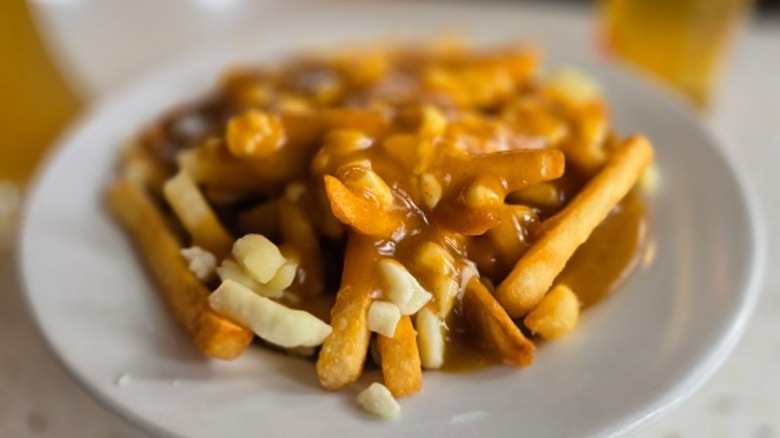
It all started with one big old mess (allegedly). We are talking about poutine, one of Canada's most iconic comfort foods. Although its origins are contested, the majority believe that way back in 1957, a cafe owner, when asked by a customer to add cheese curds to their fries and gravy plate, bellowed in reply, "Ça va faire une maudite poutine(it'll make a da*n mess)."
Regardless of whether or not this is the exact accurate origin, we can confirm in full confidence it can be traced back to mid-century Quebec, somewhere along the line cheese curds were added to gravy and fries, and it certainly did make one mess indeed. A deliciously mouthwatering mess. Consisting of just those three aforementioned ingredients (piping hot, crispy french fries, fresh, squeaky-on-your-teeth cheese curds, and a generous slathering of savory brown gravy), this classic version is the standard measuring stick for all poutine purists.
Modern versions may try to mix things up with extras (looking at you, toppings-laden monstrosities on TikTok), and that is all well and good, but Canadians will absolutely side-eye anything that forgets the unspoken rule (poutine is best eaten hot and fast, before the fries get hit by the gravy train and go all soggy). That brief window is where the Canadian curd-gravy-tater magic lives. As you can see, poutine is far more than just fancy loaded fries.
2. Macaroni and cheese (US)
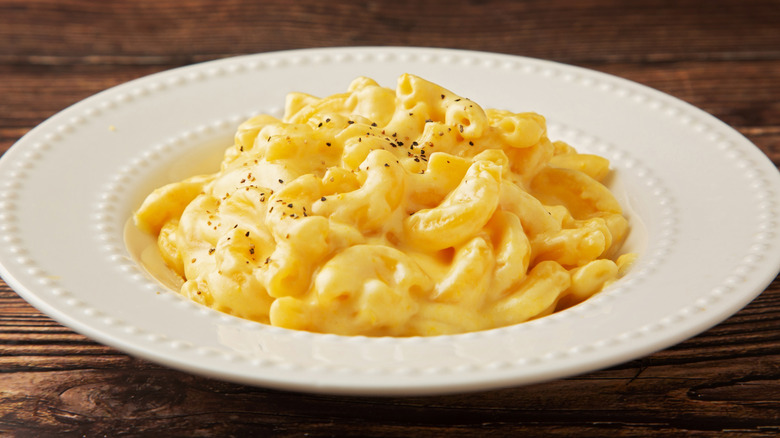
If Americans are asked, "What's your favorite comfort food?" chances are many will share the same "Mac and cheese!" reply. Few dishes are as instantly recognizable (or as intensely beloved) as macaroni and cheese. In the U.S., it's America's unofficial (but basically we can all agree it should be the official) comfort food favorite.
The dish has just a few staple ingredients and is simple to prepare (pasta cooked al dente, then coated in a yummy, cheesy sauce). This simplicity may be the very reason why, for many Americans, it was one of the first meals we were ever "allowed" to make on our own growing up. Fond memories are often shared of pushing the stool over so we could reach the counter, stirring the pot and draining the water, then having that oh-so-satisfying chance to put in the cheese and watch as it melted into velvety, edible joy. Younger generations even had the ease of being able to pop their mac and cheese in the microwave.
However we made it, each cheesy mac recipe always ended with a smile (and still does). From stovetop versions to baked casseroles bubbling-as-they-brown, mac and cheese is pretty much as American as a slice of apple pie. It's served at family dinners, potlucks, and even makes its creamy presence known on restaurant menus across the nation (often in unique, "elevated" versions with fancy add-ins like lobster or truffle oil). Basic or blinged-out, it's a go.
3. Pierogi (Poland)
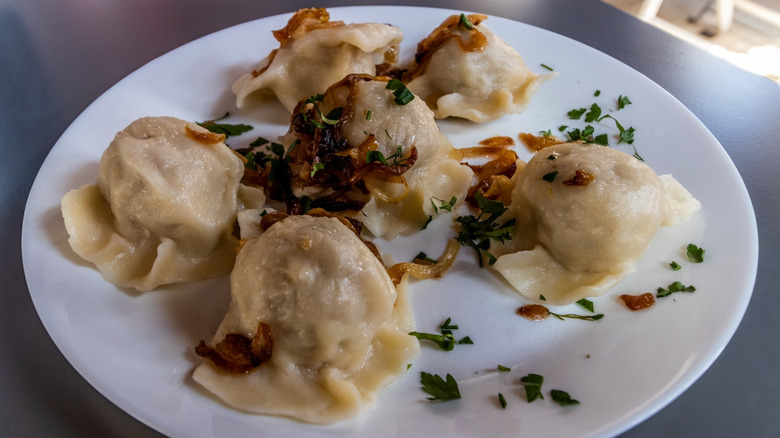
It doesn't get much more comforting than a good dumpling. And if any country knows its dumplings, it's Poland. Made from dough that is folded into half-moon crescents, boiled (sometimes pan-fried), and filled with various savory fillings, Polish chefs call these delicacies pierogi. These little pastry pouches are a core comfort food classic and source of extreme national pride in Poland. You will find them everywhere, from cafes to milk bars, and of course, often gracing family dinner tables.
But more about those fillings. There are many different variations of pierogi, but perhaps the most well-known iteration in Poland is the pierogi ruskie, which is served warm, paired with sour cream, and easily recognized by its trademark filing that mixes together the winning combination of cottage cheese, potato, and onion. And while many mistakenly assume its moniker points to Russian roots, Poles will have you know they absolutely can lay claim to this adored comfort food, which actually has roots tied to the nation's Ruthenia region.
Other pierogi varieties feature sauerkraut-filled or meat-laden versions, but whichever iteration you choose (good luck deciding, because debates over the best fillings get heated almost as fast as the pierogi itself), you can be sure you are getting a hearty, handheld Polish classic that any Pole would highly recommend for those seeking a quintessential taste of real down-home national cuisine.
4. Moussaka (Greece)
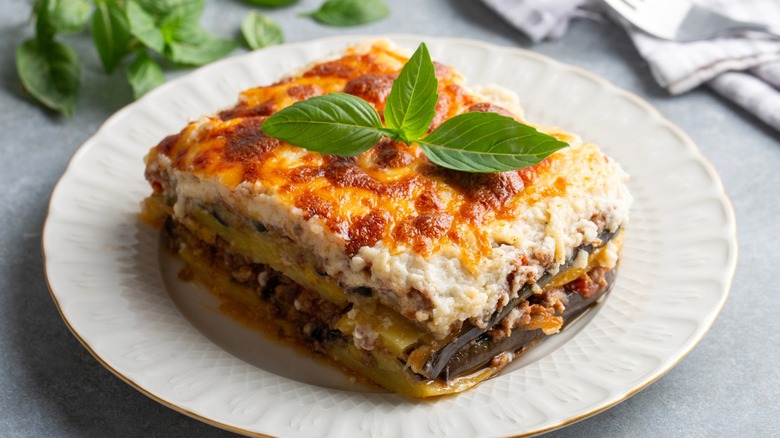
If you've seen the movie "My Big Fat Greek Wedding," you're already familiar with one of the funniest "moussaka" moments in pop culture. But jokes aside, this iconic Greek dish deserves mad props ... or at least some serious respect. While it may not have shown up in school lunchboxes beside Wonder Bread sammies, moussaka has long been a core component of Greek cuisine. Consider this your intro to Greek food.
What could be seen as a Greek-style lasagna (a description that aims to clarify, but does such a disservice to this special dish), moussaka is a layered casserole that is baked in the oven and overwhelmingly adored in Greece. Traditionally, the base tier is comprised of sliced potato, followed by eggplant slices, then a layer of minced meat (usually lamb) that has been seasoned then cooked to sublime perfection. The final layer takes this Greek comfort food to the next level, featuring a generous slathering of béchamel sauce that forms a golden brown "crust" as it bakes.
Moussaka is the basic starting point for a proper intro to Greek food, so it's truly crazy how few people have tried it. Just be warned: One bite of that velvety béchamel and spiced meat will have you begging for an invite to the Portokalos family dinner table (if it actually existed).
5. Congee (China)
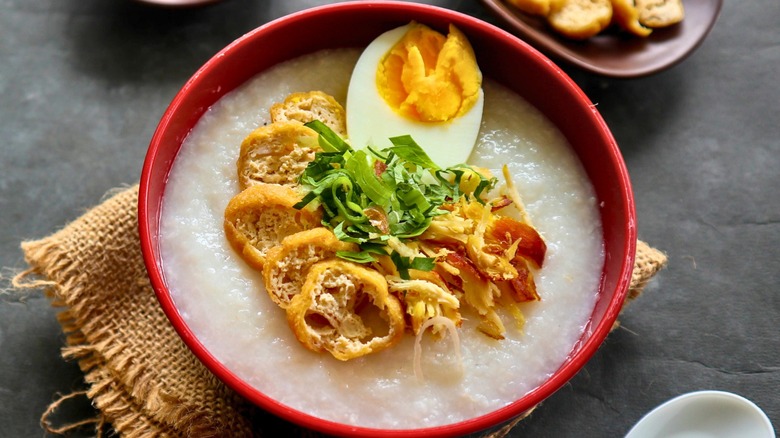
Congee is one of those unassuming dishes that seems destined to be underestimated. But as the saying goes, "Never judge a book by its cover," one should not judge Chinese congee by the look of its bowl. What may appear at first glance to be a soupy mix of cooked rice and water, will surprise you.
To say it's popular across the country (even the continent), would be an understatement, as the rice porridge appears often on breakfast tables across all of Asia. Depending on where you enjoy it, the name may differ, but what remains the same is the fact that congee is a comfort food that Asians keep reaching for ... when they're wanting a taste of home, or even when looking for a tried-and-true remedy to heal what ails them.
Congee is often served plain, then customized with preferred toppings (think ginger, scallions, pork, chicken, century eggs, or crisp fried dough). Home chefs frequently use leftover rice to whip this recipe up, simmering it in water or broth. There is even a historical sentimentality to congee, as it once played an important role as a survival food, helping stretch rice during lean times. It makes sense, then, why so many associate this porridge with nourishment, comfort, and care.
6. Wiener schnitzel (Austria)
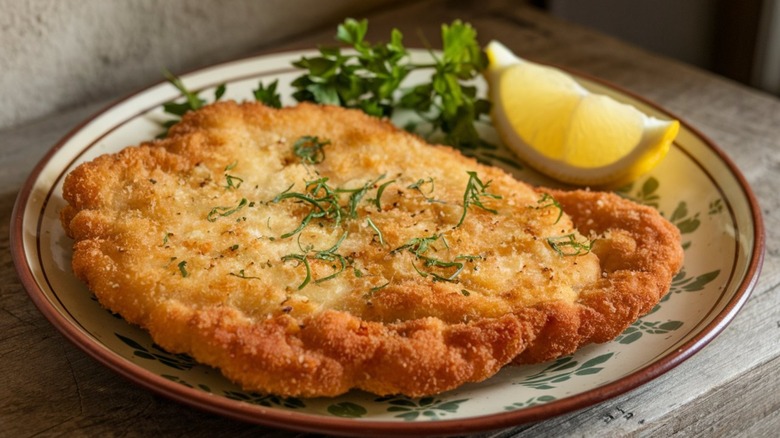
Wiener schnitzel is a dish that feels quintessentially Viennese. This classic Austrian comfort food is comprised of a veal cutlet that has been pounded thin and tender, lightly coated in flour, egg, and breadcrumbs, then fried to a mouthwatering, silence-shattering-with-that-first-bite crunch. Visitors to Austria can look forward to seeing this mainstay on pretty much any and every menu worth its salt, and not much is usually added alongside wiener schnitzel when it is brought to the table, save for perhaps a sprig of parsley or slice of lemon.
This is probably because it is so hearty, it doesn't need a single sidekick to seize attention, or satisfy. The dish also makes regular appearances in Austrian home kitchens, often described as a family favorite from those recalling fond memories growing up enjoying the comforting veal cutlet.
It is important to note that while veal is the classic choice for wiener schnitzel recipes, pork is often seen as a common cutlet swap. When in doubt, at restaurants, just check the fine print, as menus clearly note if anything other than the standard veal will arrive on your plate. Suffice to say, it's easy to see why schnitzel made the list of "favorite things" Fräulein Maria sang about in "The Sound of Music" (although hardcore fans will say her noodle version pales in comparison to the OG described here).
7. Fish and chips (United Kingdom)
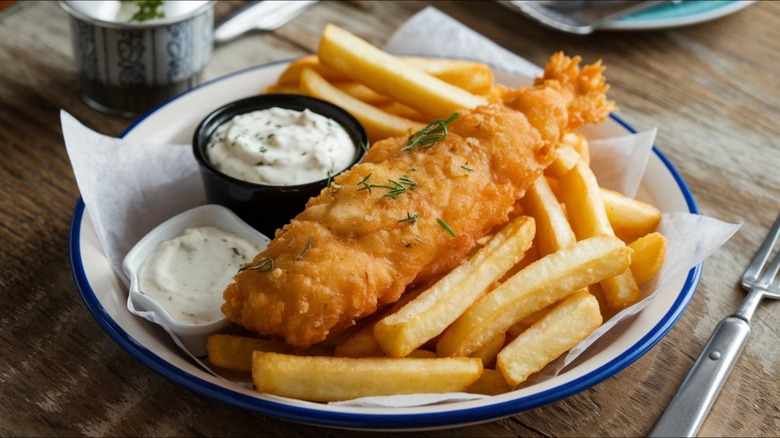
Fish and chips has surprised many an unsuspecting visitor, as many quickly learn that "chips" are defined differently in good old Great Britain. No Doritos on the side or Lay's will be served here, because these "chips" refer to hearty, thick, fried potatoes (don't you dare call them french fries, either). And while this iconic British dish has thrown many a traveler for a loop, locals know it like the back of their hand, having grown up with it gracing their family tables and showing up as a reliable mainstay on nearly every menu ... perfect for raising spirits after a long day.
So, what is it exactly? This beloved seafood favorite? Fish and chips takes battered white fish, (traditionally cod or haddock) and matches it with thick-cut fried potatoes (again, not french fries) for a marriage that is one that has actually lasted for more than a century now ... with not one bit of love lost. The duo is usually gussied up only with a sprinkle of salt, a splash of vinegar, and maybe a hodgepodge of peas, or dollop of mayo.
The simplicity fits. After all, Brits aren't out here ordering fish and chips at some fussy five-star affair. They're heading to their local pub or corner chippy, enjoying a taste of home elbow-to-elbow with their neighbor. That's comfort, and Brits do it best.
8. Butter chicken (India)
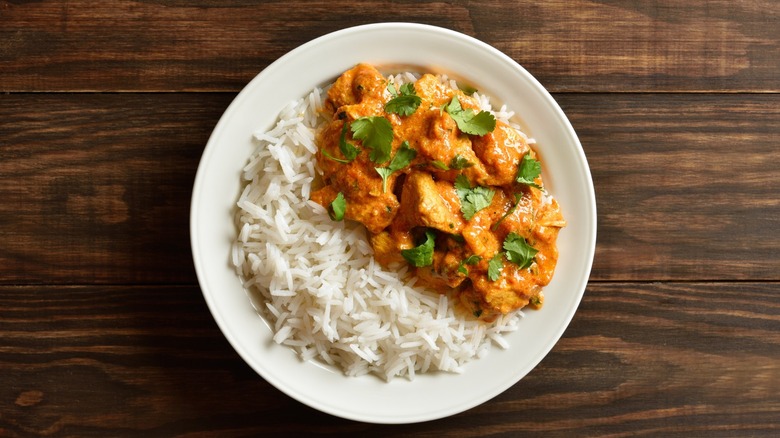
Butter chicken is one of the rare dishes that actually earns the high praise. India is equally enthusiastic about its most beloved comfort food, which is also known as Murgh Makhani. Butter chicken cuts no corners, which is patience that can be clearly tasted (and appreciated) when that dish hits the plate. It all starts with tender chicken being marinated in yogurt and spices (that's where the patience comes into play). Once all the goodness has soaked into the poultry, it is then tucked into a tomato-based sauce that's so rich and satisfying, yet somehow manages not to feel too heavy. And did we mention how smooth it is?
One reason why India may cherish this dish so much (besides the amazing taste) is due to its origins being a direct representation of the national spirit of ingenuity and pragmatism (with panache, of course). It arose from chefs looking for a way to salvage too-dry, leftover tandoori chicken. One genius decided that the fix to their conundrum was a sauce that would take that sad, dry chicken and make it appealing.
9. Goulash (Hungary)
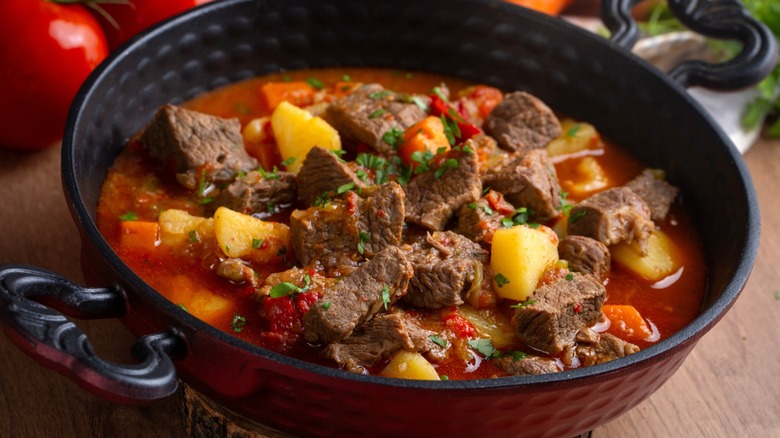
There is a reason why goulash is the official Hungarian national dish. Ghoulash is a hearty, paprika-laden beef stew. We eschew to use the word stew here, because many Hungarians spell the word with four letters (they really don't love anyone mislabeling their baby).
So, bear with us as we muddle on, waxing eloquent about this decidedly non-stew that more than warrants the national dish title. But let's go back a bit. Way before it earned its status as the symbol of Hungarian cuisine, goulash was the relied-upon dish that provided sustenance for herdsmen tending cattle. To say the original recipe was rudimentary doesn't quite cut it. In those days, beef was cooked over an open fire, paired with onions and pork fat, maybe eaten with bread if they had it.
Once paprika hit the scene, though, things changed. There was something about that infusion of bold spice that transformed the herdsmen brew into a culinary darling beloved across all of Hungary, and beyond. While paprika seems to be the non-negotiable ingredient to modern ghoulash recipes, a hearty mixture of beef and veggies (think potatoes, carrots, and sweet peppers) come together to create a slow-cooked (non-stew) that firmly lands in Hungarian comfort food territory.
10. Fairy bread (Australia)
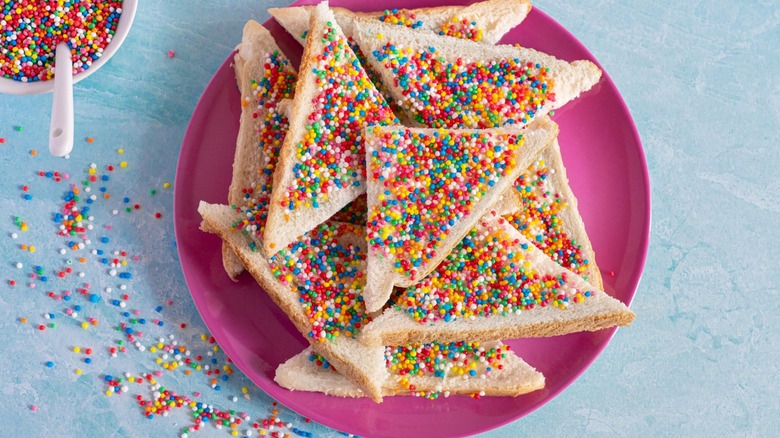
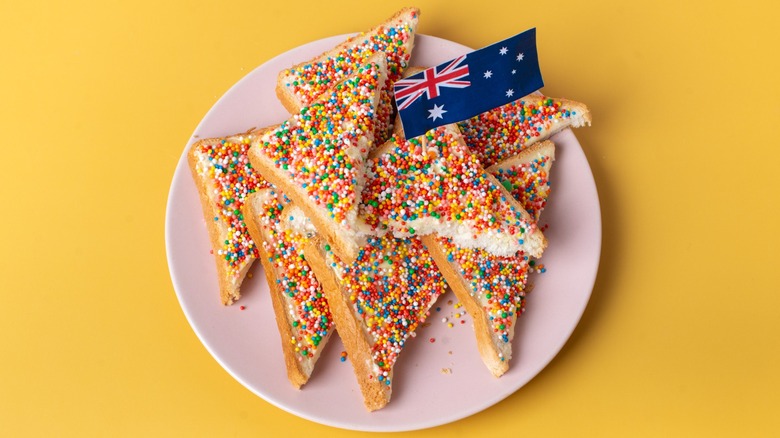
If you ever need one more reason to adore Australia, look no further than fairy bread, one of Down Under's most iconic comfort foods. While we know there are actual ingredients to discuss), you cannot fool us into believing this rainbow treat is anything less than edible pixie dust on magic toast. Just looking at it brings a smile, and the taste? That may garner a giggle. But we know you like details, so let's get down to it. Most often enjoyed at birthday parties or other celebrations, fairy bread has cast its spell over Australia's children and adults alike.
The recipe calls for just three necessities. First, you must journey to seek out the cheapest white bread you can find. Once you've secured your loot, take some butter and spread this secret elixir on (don't overdo it, for it's potent, and not much is needed to work its magic).
Finally, you must do a little happy dance and give a joyful whoop (if desired ... but please, desire). And then? Release an absolute rain(bow) storm of sprinkles (called "hundreds and thousands" in Oz) over it all. One crunchy, squishy bite, and poof! All the nostalgia and comfort of childhood comes rushing back. Fairy toast is magic.
11. Fritule (Croatia)
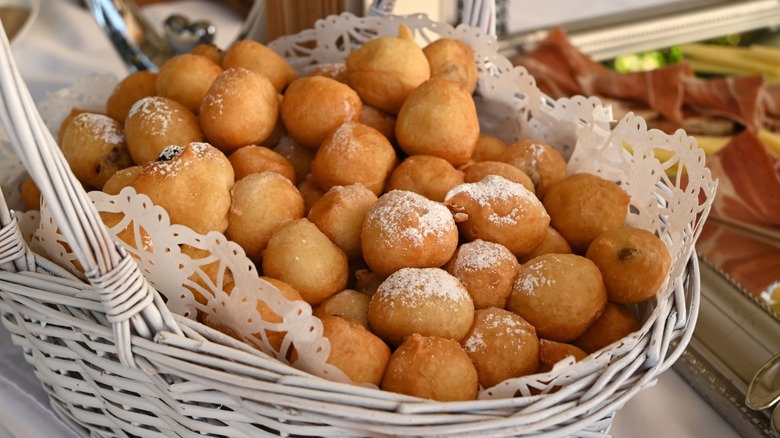
While many might fall into the trap of calling Croatian fritule "donuts," this would be a sad faux pas indeed. These bite-sized, fried dough balls are traditionally enjoyed in Croatia during the holidays, in Carnival season, or at weddings and other festive events. So, pretty much any time comfort and joy is making its presence known, you can bet fritule won't be far behind.
And though they are often compared to mini donuts, Croats will let it be known that fritule has its own distinct flavor profile, and personality. Perhaps the most noticeable difference is that, unlike American or other donut iterations (known to be smothered in chocolate and heavy frostings), fritule is often lighter, flavored with citrus zest, raisins, and sometimes even a bit of rum or brandy.
As for the prep, the dough is dropped into hot oil in small spoonfuls, soon frying into fistfuls of bliss, nailing that ideal pairing of crisp edges with soft centers. You'd think the perfection has peaked, but Croats keep going, finishing the non-donuts with a sprinkling of powdered sugar. Best eaten warm and always welcomed, fritule varies by region, but its role as Croatia's preferred comfort food treat remains a constant.