

What's In Coca-Cola's Secret Recipe? This YouTuber Claims To Have Cracked The Code
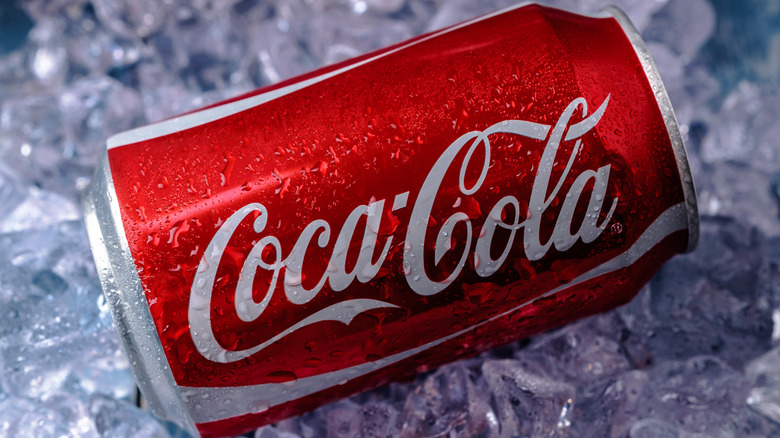
The YouTuber named LabCoatz has shaken the soda world with claims that he cracked the code on the flavor of original Coca-Cola. Using a mass spectrometer and a whole lot of science, LabCoatz — real name Zach Armstrong — and two other YouTubers mapped out the recipe of the iconic soda by recording the chemical signature of each flavor. Then, they replicated those flavors in a laboratory-made drink that testers said tastes like the real thing.
In a 25-minute video posted on January 8, LabCoatz took viewers on the long journey involved in naming the flavors in Coca-Cola. The result certainly wasn't concocted as easily as mixing a couple of drinks, like you'd do for a two-ingredient maple dirty soda. Ultimately, the recreation was made with a complex combination of Shank's caramel color, phosphoric acid, glycerin, wine tannins, and caffeine — plus the essential oils of lemon and lime, tea tree, cassia cinnamon, nutmeg, orange, coriander, and fenchol. LabCoatz also included a how-to in the YouTube video, so anyone with a bit of gumption can make their own version at home.
Equipment and essential oils for LabCoatz' Coca-Cola dupe
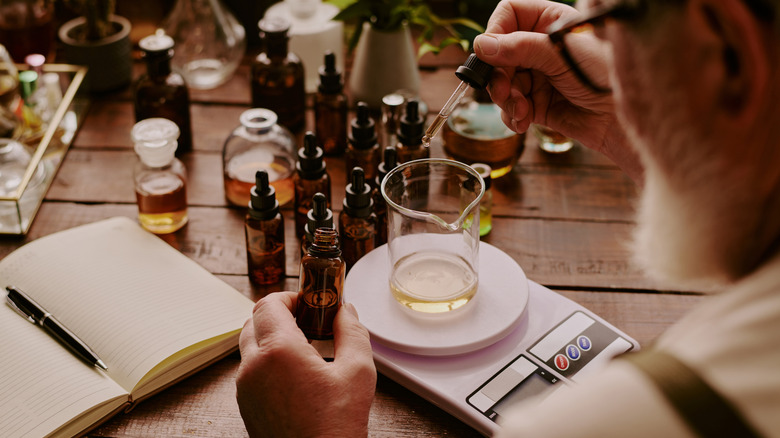
According to LabCoatz YouTuber Zach Armstrong, there's a bit of an investment involved in making your own batch of Coca-Cola using his recipe. The essential oils themselves cost between $5 and $15 per bottle. You'll also need equipment — beyond just the kitchen gadgets that pro chefs say are worth the counter space. To make LabCoatz' Coca-Cola, you'll need a mass scale, an adjustable micro-pipette, a 50-milliliter graduated cylinder, a few glass storage bottles, and heat-resistant glassware for syrup-making. The whole process will feel more like a science experiment than whipping up a summery Tom Collins cocktail, and your kitchen will probably look like a laboratory. But you'll end up with enough of your own homemade Coca-Cola solution for years' worth of sodas, according to LabCoatz, and for mere pennies per serving.
Avoid using any kind of metal cookware for this homemade Coca-Cola project, since, as LabCoatz advised, the phosphoric acid you'll use in the process can dissolve metals. While Armstrong wrapped up the video with hopes for college graduation in the future, a few users in the comments section put a dark twist on the release, posting suggestions like "I've seen people disappear for less," and "Bro released the Coke files," highlighting concern for the chemistry wiz who may have just released Coke's best-kept secret.