

The Crispiest Smashed Potatoes Aren't Made With Russets — Grab These Taters Instead
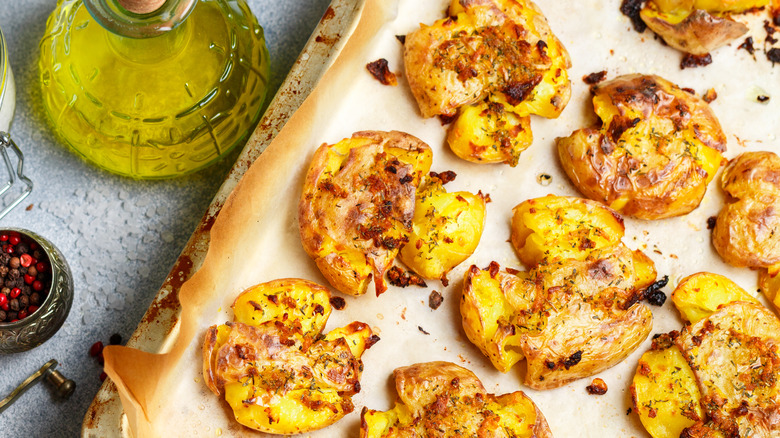
Potato, potahto, right? Wrong. While it doesn't matter how you pronounce the name of the starchy vegetable that's a staple food in many countries, there are a million and one ways to cook it. Take smashed potatoes (not to be confused with mashed potatoes), for instance. The dish calls for boiling, smashing, and baking potatoes. While it sounds fairly simple, using the wrong type of potato might ruin the whole dish. It's not that any potato is better than others but that some are better suited for specific dishes. When making smashed potatoes, you'll want to stay away from russet potatoes.
"Russet potatoes are too starchy to make good smashed potatoes as they will be too dry," says Erin Fletter, founder and CEO of Sticky Fingers Cooking. Instead, she recommends going for another type. "In my experience, baby potatoes–Yukon gold or red–make the crispiest smashed potatoes because of their thin skins and creamier middles." Fletter claims Yukon gold potatoes have less starch which "makes them ideal for smashing as they maintain some creaminess inside with that touch of crisp on the outside."
As for russets, this doesn't mean you should completely forget about them. Fletter likes using them for baked potato recipes, since their starchiness provides a perfect texture for the popular side dish. In fact, not choosing russets is one of the most common mistakes you can make when preparing baked potatoes.
How to make crispy smashed potatoes
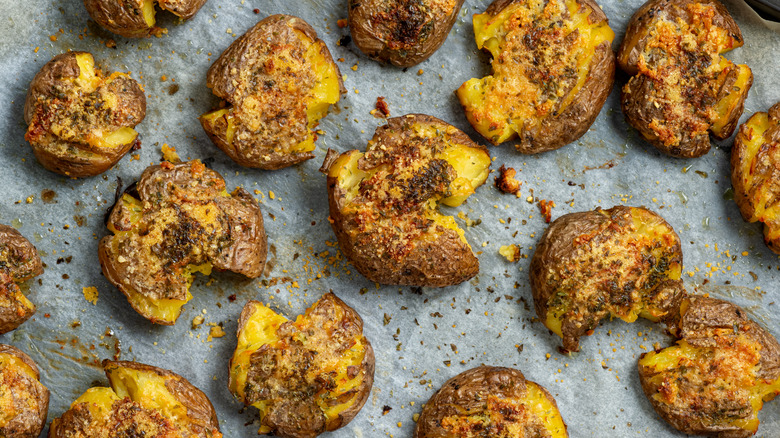
Crispiness is the key to a good smashed potato. If done right, the dish will come out with a beautifully crispy exterior that gives way to a soft center. So, how do you achieve this effect?
According to Fletter, the first step is to "get your potatoes fork tender by parboiling them in salted water." This step is very important, since you want the potatoes to be soft enough but not soft that they'll disintegrate easily. (Here's a guide to getting them perfectly al dente.) Once that's done, "dry [the potatoes] before smashing them and putting [them] into the oven set at 425 to 450 degrees Fahrenheit. Fletter also advises "preheating the pan to get that sizzle." Finally, "Generously add your preferred oil or butter and smash again. You can flip the potatoes over to have even crispiness, then remove before adding seasoning or cheese for flavor while still hot."
Fletter encourages her students to experiment in the kitchen as part of the fun. You can use her simple recipe for some deliciously crispy mashed potatoes or follow her advice and experiment with exciting ways to modify the recipe exactly to your taste.