

Take A Bite Out Of History At The Oldest Food Hall In Boston
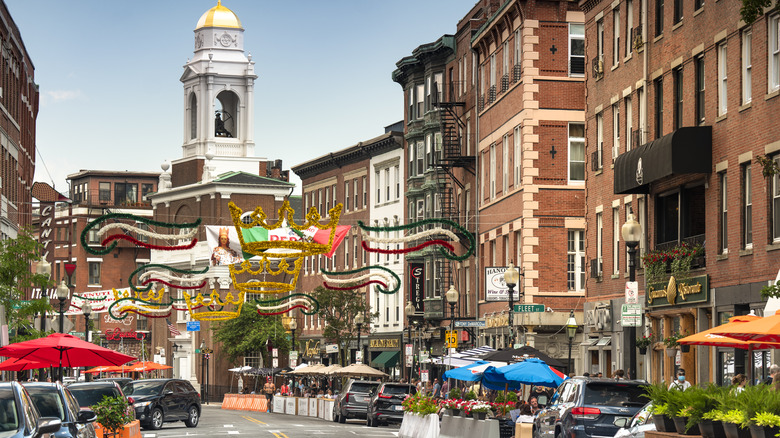
There's a marketplace in the heart of Boston that has been in operation since before the American Revolutionary War. It witnessed the famous tea party of 1773 and housed meetings where the seeds of revolution for freedom and equality were planted. You can have a meal within those same walls, today. The Faneuil Hall Marketplace is a dizzying array of 80 businesses including an ever-changing list of eateries, pubs, snack vendors, and sweets shops. At Faneuil Hall Marketplace, anything you could want to eat is at your fingertips –- Ben & Jerry's, New England-style chowder (what's the difference between Maine and Rhode Island Clam chowder, anyway?), small bakeries, oyster bars, pizza dives, and so much more.
The history of Faneuil Hall Marketplace is just as captivating as the food and there's no better setting for a walk. Stretch your legs on the cobblestone promenades that surround and connect the various Colonial-style brick buildings with their pillared entrances. Time it right, and you'll catch street performers or events in the promenade. If you want to take on a 2.5-mile walk you can continue on to the rest of Boston's Freedom Trail, a loop that features 15 other historically significant sites in the city. Make a detour to visit the world's smallest Trader Joe's, while you're at it.
Faneuil Hall Marketplace's foodie past begins in 1742 Colonial America
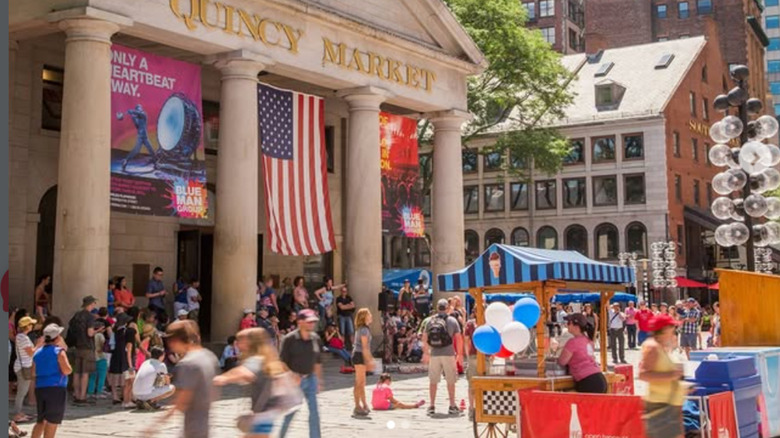
Faneuil Hall has always been a place for the community to gather, trade, and eat together. A gift to the community from one of the town's richest residents, the hall once served as the center of Boston's government and housed a marketplace where people could buy and sell. Back in the 1700s, you'd go to Faneuil Hall for dinner ingredients like fresh fish, meat from the butcher, and maybe a trinket or two. There's a good chance you'd pass by someone in the promenade making speeches about freedom and equality; figures like American Revolutionary Sam Adams, abolitionist Fredrick Douglass, and even America's first president, George Washington.
Fast forward a few years to 1827, when Faneuil Hall was bursting at the seams with vendors and politicians, causing it to expand to include two more buildings: the South Market and the North Market, collectively known as Quincy Market. More merchants, farmers, fishermen, and butchers filled up the new spaces in Quincy Market and the whole compound is still a center of bustling pubs and busy shops. It's a great place to grab a lobster roll (here's where the lobster roll actually comes from) with a dose of American history on the side.