

Why Some Snacks Just Don't Make You Feel Full
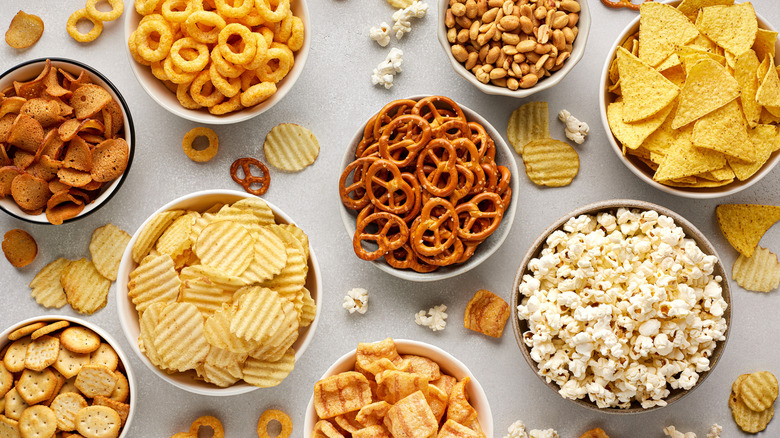
All snack lovers have experienced the monotonous cycle of eating a treat, not feeling the impact, and thus eating more. In reality, there are numerous scientific reasons why you're not fully satiated by a bag of chips or an underwhelming chocolate bar — most of which boil down to the nutrients (or lack thereof). Many snacks fall under the category of "ultra-processed foods," which the World Public Health Nutrition Association classifies as foods that have been so dramatically altered that they do not resemble their original ingredients in taste or appearance whatsoever.
Food satiety is heavily dependent on two things: caloric intake and nutrient density. Yes, it's true that highly caloric foods can make you feel stuffed, but only briefly if those foods lack nutrients and are of low quality. Consuming ultra-processed snacks and meals — most of which are deficient in nutrients such as protein and fiber — prevents us from achieving prolonged, sustainable energy. If we're only attaining bursts of energy, our bodies will continue sending hunger cues, perpetuating the same boring cycle.
It can be hard to deny ourselves these snack foods. For one, they're readily available. You are constantly faced with ultra-processed foods of some sort. This physical accessibility comes with financial accessibility as well — snack foods are typically cheaper than healthier alternatives. Knowing which foods to limit can help you make healthier, more satisfying choices.
Foods and drinks to indulge in moderation
It can honestly be excruciating to look at your diet — I know this firsthand as someone who, until recently, woke up each morning and drove to Starbucks for a Trenta-sized, sugar-filled refresher. However, what may be a mindless, fun choice now could have devastating effects on your short- and long-term health. Some short-term effects include binge eating, spikes in blood sugar, and fatigue, while long-term effects include heart disease, obesity, and Type 2 diabetes.
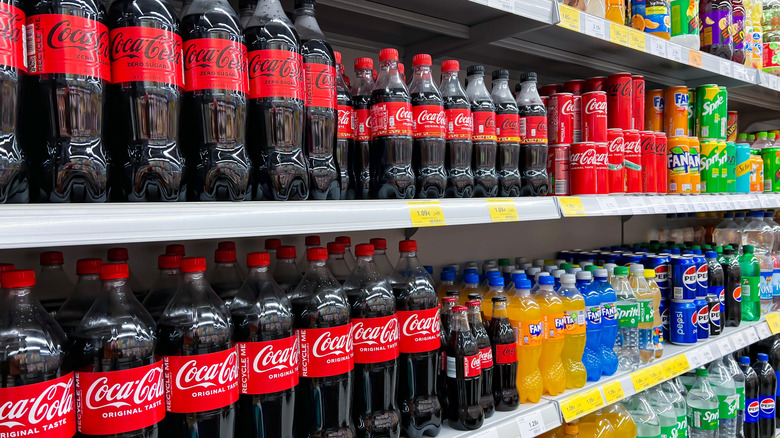
My Trenta Starbucks refresher is one of many sugar-filled treats to indulge in only sparingly. In fact, this goes for many drinks – sodas, sports drinks, specialty coffees, and other sugary sips contain hundreds of calories. These drinks sneakily supply large amounts of calories without satiating your appetite. According to Healthline, a summary of 32 studies found that participants gained ¼ to ½ pounds over one year for every serving of sugary beverage regularly consumed. Without having a hold on your sugary-beverage intake, this can add up to multiple pounds across several years.
Examples of ultra-processed foods that may satisfy your cravings in the short-term, but won't make you feel full, include flavored potato chips, fried chicken, sweetened breakfast cereals, and anything with a super long ingredients list filled with words you can't pronounce easily. These are relatively easy to spot, but there are other ultra-processed foods that hide in the shadows. Food producers will sometimes market a food as being seemingly healthy, yet in actuality, it is just as bad for you as the blatant alternative — a concept known as the health halo effect. "Gluten-free," "low-sugar," and "natural" are all examples of health halos commonly found in grocery stores — they often don't contain enough fiber or protein to fill you up, either.