

How Waffle House's Hashbrown Code Became A Fixture At The Breakfast Chain
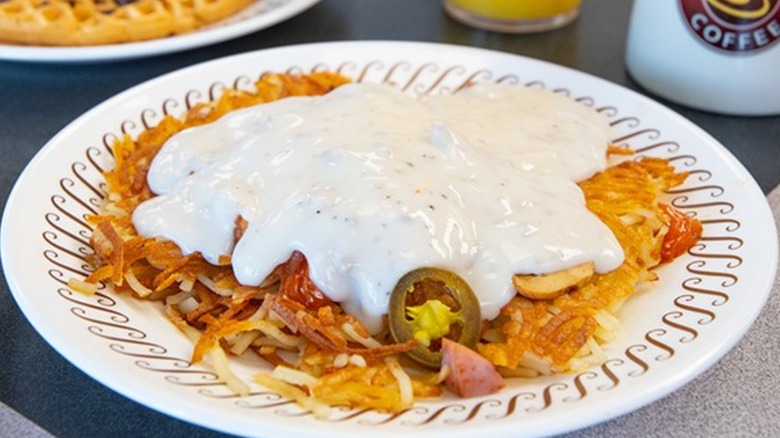
For some, it's a weekend breakfast staple, a treat to enjoy on road trips, or a late-night hangout, but one thing is clear: Waffle House is iconic. The breakfast chain has won over hearts and minds across the United States, particularly in the South, for its affordable breakfasts and nearly 24/7 service. But beyond those things, one of the signatures of Waffle House is its hefty portions of topped hash browns. Ordering hash browns at Waffle House means choosing if you want them "smothered" with sauteed onions, "capped" with grilled mushrooms, or "chunked" with grilled ham since the 1980s.
Waffle House was initially founded in Avondale Estates, Georgia, in the 1950s, but it wasn't until 1984 that the chain debuted its signature ordering lingo. "Smothered" hash brown options set the stage, followed by "covered" (with American cheese), and "chunked" hash browns, to wild success. The list of possible toppings only grew, sometimes based on customer requests. Everything from gravy to peppers to chili has made its way onto a hash brown bowl. Today, you can choose from over half a dozen toppings, and the Waffle House menu will helpfully list the relevant lingo for you.
Waffle House hash browns any time, any way
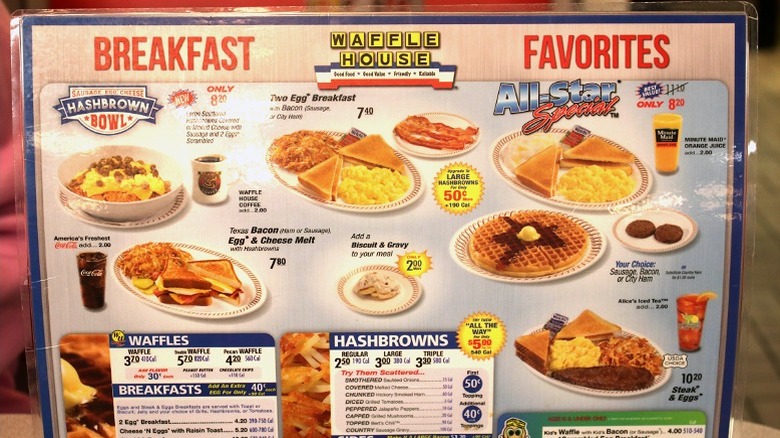
Whether you have a go-to hash brown order at your local Waffle House, want to try every variety out there, or have yet to order a plate of them for yourself, you can order them any way you like. This is because Waffle House offers highly customizable menu options and an "anything goes" attitude that permeates the chain. The "hash brown code" at Waffle House is an example of how the restaurant will let customers do as they please, as is the all-day breakfast menu, which includes build-your-own options (although maybe hold off on the Waffle House TikTok hacks).
Use your freedom of choice wisely, since some pretty wild events have gone down at Waffle House, from weddings to fights between customers and staff. Believe it or not, the restaurant is even used to measure the impacts of natural disasters. FEMA uses a color-coded system, dubbed the "Waffle House Index," to assess whether locations in areas affected by natural disasters are still open and serving the full menu. Waffle House is famously open 24/7, meaning that if it's forced to shut, conditions require immediate attention. Hazardous occasions aside, you can count on a smothered, covered, and chunked hash brown bowl at any time.