

The Best Tips For Navigating A Restaurant Menu With Too Many Options

You sit down at a restaurant and are handed a tome of a menu and suddenly you're lost. Faced with page after page containing multiple sections and headings like "Chef's Specials," "Seasonal Plates," and "Guest Favorites," it's no wonder that you start panicking.
Before you order the same thing you always do or just jab at a column and hope for the best, you must understand, the problem is not you. Rather, the menu's design and development can influence diners' selections. Oversized menus aren't only about offering something for everyone. Buried somewhere in all the apparent chaos are plates that could potentially be a great value that the kitchen actually loves making. Most diners don't know how to find them, but chefs do.
After years of working behind the scenes as a chef — from writing menus, costing dishes, watching what actually sells, and seeing what guests keep returning for — I've learned that all big menus follow patterns that are pretty predictable. Once you understand how those patterns work, I promise you, the overwhelm disappears. So, whether you're dining solo or ordering for a group, keep these tips in mind and you will leave the restaurant thinking, "That was an awesome meal!"
Read through the menu ahead of time
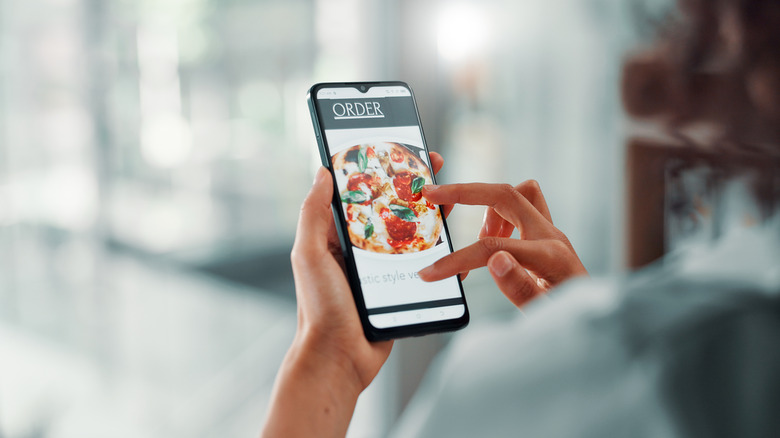
Maneuvering an extra large menu is not only confusing but also takes a whole lot of unnecessary time. When you are seated at your table, you are either hungry or distracted. This can make you feel the subtle pressure to order quickly, which means good decision-making goes out the window. What happens next is that most people default to the safest, tried-and-tested option or rush into a choice that they may later regret.
With the online presence of most restaurants nowadays, studying the menu ahead of time is not a difficult task. Sure, sometimes online menus may not be updated or are missing seasonal specials, but most will give you a fair enough idea of what to expect. Skimming the entire menu in advance rather than reading every description closely, which can be too time consuming, is a good route to go. Once you get a sense of the restaurant's identity and range, you can begin to narrow down your choices more effectively.
Another helpful tip is to look for patterns, like what kind of food the restaurant focuses on. If the same ingredient or sauces appear across several sections, it may be a sign of the kitchen's strength. And, finally, checking prices in advance also helps budget the overall meal and quietly shapes your choices at the table. Once you've perused the menu, identify a few potential options while still keeping an open mind when you finally sit down to eat.
Check for house specials and signature dishes

There are two types of people, the ones who assume that "specials" on a menu are just a way to move excess ingredients and others who treat them as signature dishes that exist for a reason. If the restaurant has a reputation for creativity and for using peak seasonal produce, then specials are rarely treated as filler meals. This is the way chefs tell you where to look if you want to try something unique. In other words, specials are where kitchen's confidence shows up.
Whether it's a dish based around tomatoes in early summer or the catch of the day from local fishermen, signature dishes are usually included because those ingredients are at their best. From a chef's perspective, signature specials are often where younger cooks experiment and creativity and boldness are given an opportunity to shine through, and that is exactly why choosing them is a no-brainer.
Once you identify what the restaurant is known for, do not waste time on some generic item. For example, if you are in a barbecue joint, order the barbecue not a pasta dish. Next, scan the specials for anything seasonal, local, or unfamiliar. When in doubt, ask your server what excites them the most from the menu. Even professional chefs love to do this when ordering a meal at a restaurant, knowing full well that's where the kitchen's magic lies.
Pay attention to menu structure and layout
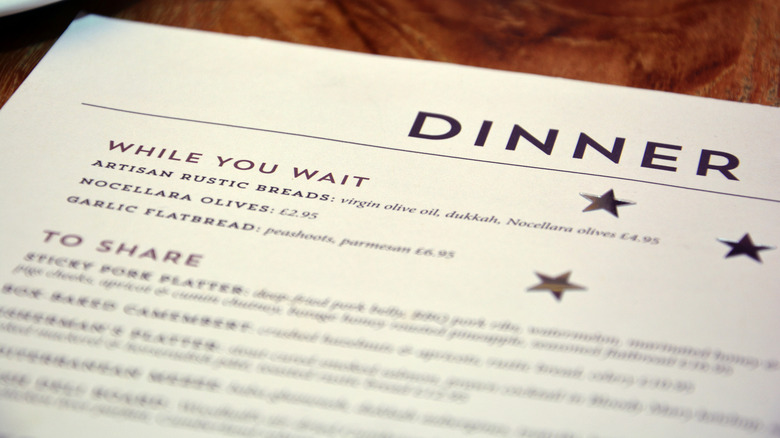
While we agree that a long menu can feel chaotic, there's usually a method to the madness. Unbeknownst to you, a good restaurant will quietly guide you through the sections to help you decide faster. This structure is built in to reduce confusion, but only if you use it intentionally. Let's take the broad sections in a menu, for example. Not in the mood for fish? Simply skip that page.
Next up is the psychology behind reading and designing a menu. Most of us believe we read menus logically, top to bottom and left to right. However, the eyes fall on certain spots time and again and menu designers are well aware of this. That is why certain areas carry more weight than others. On a double page menu spread, your eyes to tend to land on the upper right corner first. This is usually where restaurants place their higher-priced dishes, tempting diners to order them.
Similarly, if you spot a moderately-priced option in the middle of a long list, you might feel clever for choosing a reasonable, not too indulgent item. However, restaurants often place their most profitable dish right there, so it pays to be aware of boxes, bold text, or icons like "Chef's Recommendations," which are deliberate interruptions meant to capture your attention. Understanding the way menus work makes you a smarter diner and one who relies less on impulse and overwhelm.
Ask questions and don't be shy

Walking into a restaurant is never a test. No one is out to check if you know all the ingredients or are up to date with the latest culinary techniques. But some lengthy menus do tend to sound like encyclopedias that, in turn, need a dictionary to decipher, which may cause hesitation and making safe menu choices that could leave you disappointed. What most people get wrong is staying silent because they think they should already know what an ingredient or dish is. They worry about sounding inexperienced or slowing things down. But a simple question or clarification could save time and improve service. More importantly, ask your questions using language you are comfortable with. If something is unclear, ask again. A calm tone and a smile go a long way.
If you are unsure where to start, narrow your focus. Instead of "What's good here?" try "I'm deciding between these two dishes, which would you choose tonight?" Next, ask about factors what would affect your overall enjoyment of the meal. These could include spice levels, allergen information, portion size, and richness of the dish. Do not apologize for clarifying your stance from the get-go. From the kitchen's perspective, these questions are helpful and reduce the chance of plates coming back untouched. And, finally, look around. If a dish from another table catches your eye, ask what it is and go ahead and order the same.
Check online reviews

Online reviews are often a double-edged sword. Helpful and informative when done right and downright harmful if created with maliciousness. The best way to approach online reviews is to not take them at face value. These are never the final word for or against an establishment. A single bad review does not doom a restaurant, and a handful of glowing ones do not guarantee a great meal. Remember, people are far more motivated to complain than to praise, and many reviews have nothing to do with the food at all. Sometimes it could just be a bad day that has skewed opinions. Context is always important and hard to assess.
The best thing to do is start looking at reviews with filters. Always read the most recent reviews first. Restaurants change quickly. Chefs move on, menus shift, standards rise and fall. Reviews from two years ago are rarely useful. Next, make a note of singular opinions versus multiple complaints. Repetition is more telling than one glowing or scathing review. If the review includes photos, even better. Customer images give a realistic sense of portion sizes, plating, and whether the food actually resembles the menu description, something that carefully curated restaurant photographs may cover up. And, finally, trust your own instincts. If you feel a place is worth a visit, we say go for it, even if reviews or recommendations are scarce.
Prioritize dishes you can't make at home
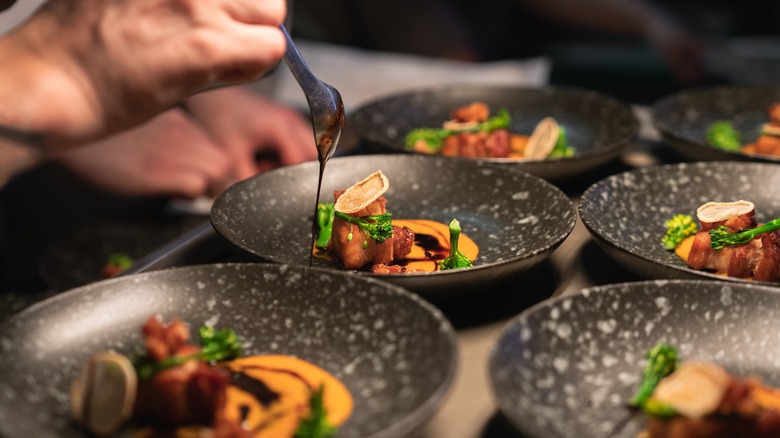
When eating out, order what the restaurant is built to do. Not prioritizing meals that focus on what a restaurant can do better than a home cook is often how diners end up disappointed. If you're in a steakhouse, order steak, not because it's obvious, but because the restaurant is designed to handle cooking steak to perfection. This includes investing in the right cuts, possessing state-of-the-art aging equipment, and having the culinary talent to cook the meat properly. Similarly, a seafood restaurant will always handle fish better than you ever could at home. This is because it has access to freshly-caught seafood and it staffs chefs who work with those ingredients consistently.
Menus are basically designed around a chef's strengths. Any dishes that exhibit skill, timing, or specialization are usually where the kitchen shines and where your attention should focus. Dining out at such establishments gives you indirect access to equipment you don't own, techniques you haven't mastered, and flavors that are difficult or impractical to recreate in a home kitchen. This should guide how and what you order. People often default to familiar choices because big menus create decision fatigue. The smartest way around it is by narrowing your focus. One way of doing so is by asking yourself if you could make this at home. If the answer is yes, skip it. If the answer is no, you're probably on the right track.
Scan for price ranges and value indicators

Large restaurant menus tend to have items with big price variations. This can leave you even more confused about what to order, which makes decoding the menu even more crucial. As noted, all menus are structured to gently push you toward higher-priced choices. On large menus, the restaurant's most profitable items are often given the most space on the page. This doesn't mean these dishes won't live up to expectations and be worth the higher price point, but it is worth being aware of the fact that the menu is designed to get your attention and to convince you spend more.
Scan the menu top to bottom and note the full price range, then identify where most of the dishes are placed. The best deals tend to be items that sit just under the menu's average price. Think braised meats, slow-cooked sauces, pastas, vegetable-forward plates, or crowd-pleasing chicken and fish dishes. They cost the restaurant less to produce but usually deliver big on flavor. Finally, use the price range to guide how you build your meal. On a big menu, it may be beneficial to choose one slightly higher-priced item and then balance it with smarter, mid-range choices elsewhere. This approach lets you enjoy the experience without feeling overwhelmed or taken for a ride.
Start with small plates to get the most variety
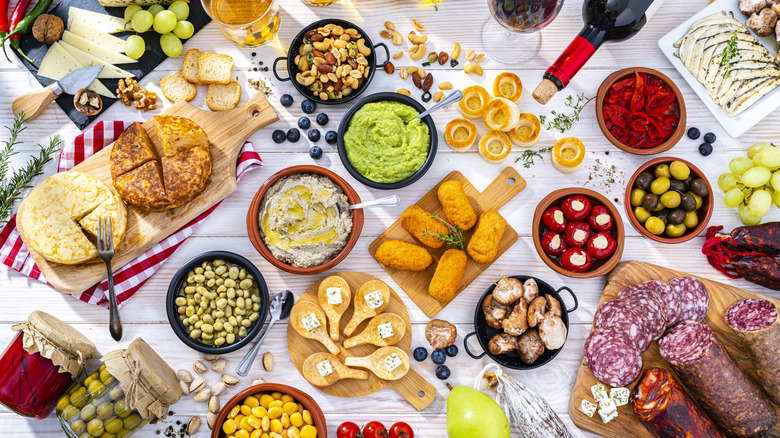
There's a reason that tapas culture has risen in popularity. Small plate menus now dominate modern dining because they are social by design. When plates are shared, the energy changes around a table. Conversation flows, drinks are ordered, and the menu takes life — all music to the ears of a restaurant. So, when you are staring at a large restaurant menu and don't know where to begin, small plates are your best friend.
Ordering a bunch of small plates reduces the pressure of making that one perfect choice. Instead of deliberating over one main dish, ordering a variety of smaller plates can be an easy solution. This also allows you to order something familiar and comforting as well as experiment with new flavors and combinations. Seasonal variations and daily specials on a small-plate listing almost feel like a self-directed tasting menu. Only here, you get to choose the flow of the meal rather than having it dictated to you. From a practical standpoint, small plates let you adjust as you go. Still hungry? Order another. Want to pivot flavors? Easy. Didn't love something? It's a minor detour, not a full meal regret.
Match your drinks to your food
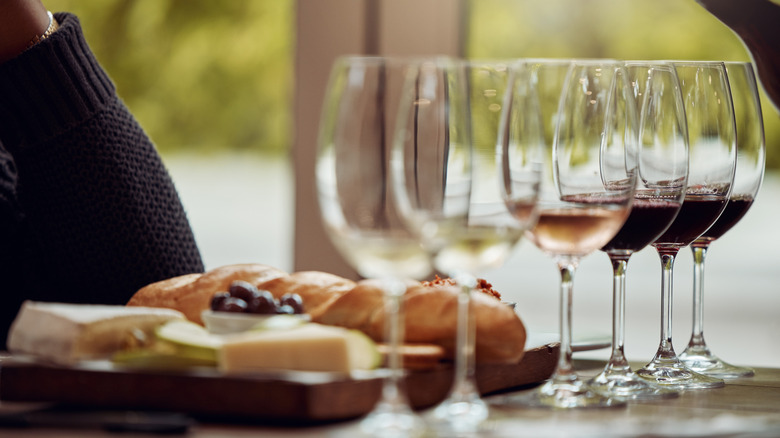
A lot of people avoid the concept of pairing drinks with their food because they think it's complicated. But think about it, every time you season a dish or add ice cream to a brownie or berries to a smoothie, you are thinking about what flavors work together. Choosing a drink to complement your meal is no different. Pairing your beverage to your menu is a simple way of making your food taste better and your overall meal feel more well-rounded and complete.
Now is the time to be strategic. The timing, the dish, and the context all matter. There are some rules that always work. When it comes to pairing a meal with a beverage, you can either mirror the flavors on your plate or contrast them. Mirroring means matching similar notes, like chocolate cake with a dark stout, nutty desserts with coffee, or citrus-driven dishes with a crisp, acidic wine. Contrasting, on the other hand, brings a balance to your meal. This is why rich dishes benefit from a more acidic wine or fatty foods go better with bubbles. Weight and body matter too. For example, a fragrant, delicate salad would be swamped with a heavy red wine or a warm comforting casserole recipe wouldn't be well-balanced with a light beer. Pairing your drinks is a fun way to enhance your dining experience and possibly lead you down a path of discovery and culinary curiosity.
Don't complicate matters with too much customization
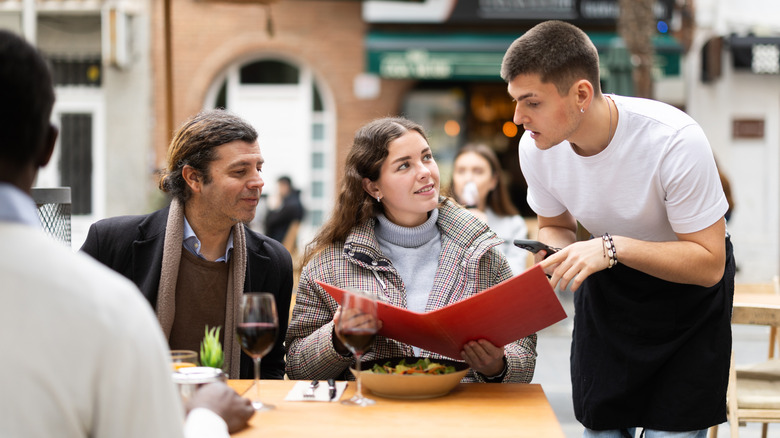
Asking for a few adjustments to your dish is understandable and usually accommodated easily at most restaurants. Requesting the dressing on the side or wanting to swap for a different type of fromage on a grilled cheese sandwich are everyday queries and rarely cause issues. However, things start to get messy when customizations turn into a complete redesign of a dish. Nowadays, it is not impossible to hear of diners requesting multiple changes that include off-menu ingredients or even new cooking methods.
Here's the part that diners rarely see. Kitchens are built to operate like assembly lines. When requests for customizations occur, especially during a busy service, the kitchen slows down considerably. Your server is forced to translate your request accurately and the kitchen has to interpret and adhere to it, all while under considerable pressure. Is it any surprise then that asking for a highly-customized dish is statistically far more likely to fail and disappoint?
In restaurants with large menus and multiple choices to begin with, such requests become cumbersome. The cheaper and faster the restaurant, the less flexible it can be. Higher-end restaurants do have a wider berth when it comes to personalizing a menu, but at the end of the day, the responsibility sits with you to choose restaurants that can easily accommodate you, rather than forcing every kitchen to bend.
Check the menu for your group's dietary needs

When choosing a restaurant for a group, chances are your dining companions have varied tastes. Eating out can become a minefield when it comes to catering to different likes, opinions, budgets, and restrictions. A large menu can tackle all of those problems by offering something for everyone.
Keep in mind that your goal is to make sure everyone at the table can eat comfortably and enjoy themselves. Before booking, check to see if the restaurant can accommodate vegetarians, pescatarians, allergies, or intolerances. Most restaurants today will do so, except perhaps a casual spot or a fast food joint, as these menus are generally more limited in scope. By contrast, full service and fine dining restaurants often have the flexibility to create something off the menu. If you know someone in your group has restrictions, calling ahead can give the kitchen time to plan in advance. This is a great tip for dining out safely with food allergies.
Spice levels are another silent dealbreaker. You may love heat, but spice tolerance varies wildly, and one extra spicy dish can ruin someone's experience. When ordering for a table, default to mild or medium spice and request that hotter condiments be on the side. Balance matters too. Not everyone wants to eat heavy, fried food but not everyone is counting calories either. A mix of lighter options, vegetables, and richer items ensures everyone is considered without feeling judged.