

Is Your Metal Mixing Bowl Stainless Steel Or Aluminum? (Yes, It Matters)
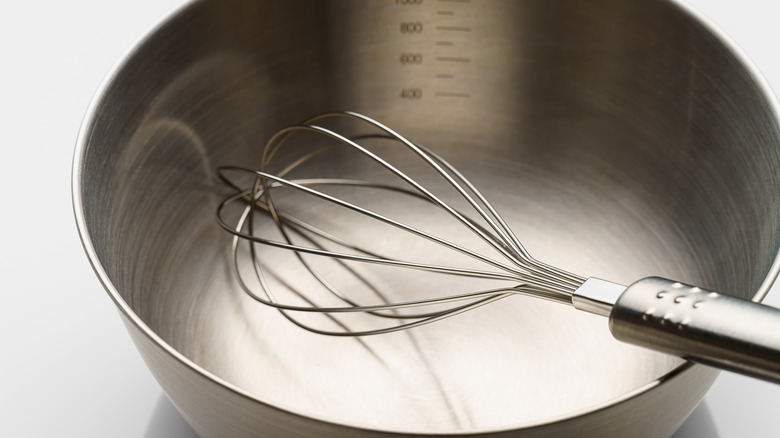
Whether it holds snack foods, baking mixtures, or ingredients for a refreshing salad, the mixing bowl is a kitchen superstar. It's a mainstay on the list of items you need in your first home kitchen, and while you can find them nearly anywhere, the type of mixing bowl you purchase matters. If the mixing bowls stacked in your cupboard are a shiny silver color and you aren't sure whether they're made of aluminum or stainless steel, you might want to find out because, depending on what you're making, aluminum may not be the best choice.
Aluminum mixing bowls aren't ideal for foods with a high salt content or that are highly acidic, like tomatoes, vinegar, or citrus fruits. These ingredients react with aluminum, causing it to leach into the food. This can create a metallic taste and cause possible discoloration of the bowl. While this isn't likely after a single exposure to salt or acidic foods, repeated contact can gradually break down the surface of the aluminum. On the other hand, stainless steel mixing bowls resist this type of corrosion thanks to a protective chromium oxide layer on the surface that extends their lifespan compared to aluminum. So it's true, every kitchen needs at least one gigantic mixing bowl, but how can you tell which material you own, or which one you're buying?
How to tell the difference between aluminum and stainless steel
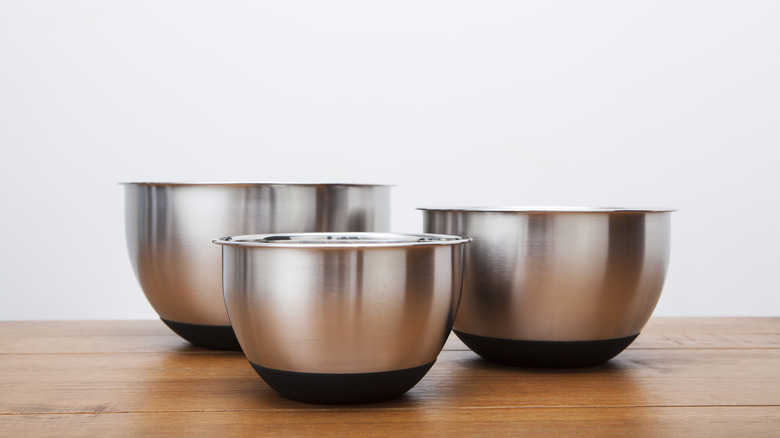
If you've already got perfectly good mixing bowls, don't run out and buy a whole new set. Instead, find out what material they're made of and use them accordingly. There are several ways to distinguish between aluminum and stainless steel. The first method may be a little tricky if you aren't familiar with both metals, or don't have the two side by side. Give the bowl a little tap with your knuckles and listen to the sound it makes. Aluminum will sound duller than stainless steel. Another way to spot the difference between aluminum and stainless steel is to inspect the surface. Aluminum scratches more easily than stainless steel and loses much of its shine over time after washing. Stainless steel likely won't acquire as many scratches and won't lose its shine (as long as you know how to clean cloudy stainless steel the right way).
Aside from scratching and other wear and tear, there's a slight color difference between stainless steel and aluminum. Aluminum's appearance is gray with a muted texture, while stainless steel is more silver due to its shine. If you thought there wasn't a difference between gray and silver, compare the two metals side by side. The easiest and fastest way to tell what your mixing bowls are made with, though, is to try sticking a strong magnet to the side. If the magnet takes hold — even a little bit — you've got yourself some stainless steel bowls.