

The Rise And Fall Of The Magic Pan, America's 1970s Crêpe Restaurant Chain
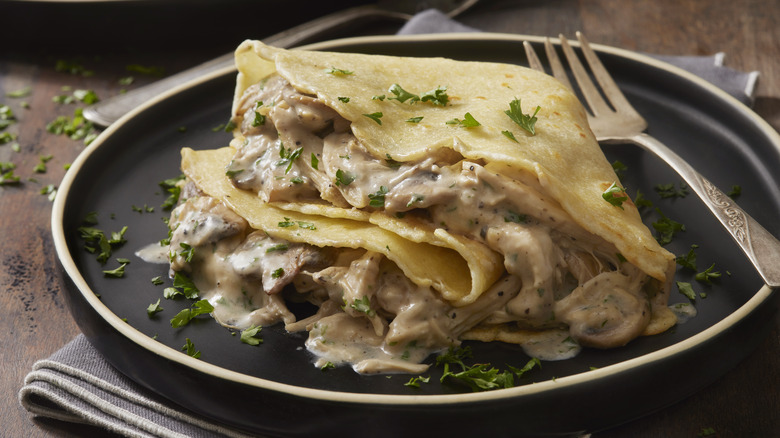
The '70s were notorious for polarizing fashion trends and music (bell-bottoms and disco, love them or loathe them), but also contributed quite a lot to culinary history. There was a pudding-based retro dessert named for movie star Robert Redford as well as Bicentennial Baskin-Robbins flavors called Valley Forge Fudge and Yankee Doodle Strudel. We also had a POTUS who breakfasted on cottage cheese and ketchup and a greenish glop named for a scandal featuring that same president. (Namely, Watergate salad, as recently re-discovered by TikTok.) One restaurant that was all the rage back then has completely disappeared from the dining scene: The Magic Pan, a chain devoted to crêpes.
Crêpes are pancakes' thinner, chic-er French cousin and in mid-century America they were seen as a luxury found only at fine dining establishments. The first Magic Pan opened in San Francisco in 1965, taking its name from a multi-pan crêpe maker invented by Hungarian immigrant Laszlo Fono. In 1969, he and his wife, Paulette, sold what was then a two-location mini-chain to Quaker Oats. The company took it national, and at its peak there were over 100 restaurants throughout the United States and Canada.
By the '80s, the crêpe fad was beginning to die out possibly because electric crêpe pans introduced in 1976 were allowing people to make the dish at home. Quaker Oats sold the chain to a company called Bay Bottlers, which apparently considered crêpes too prissy and tried to revamp the menu with meatier entrées. Needless to say, this didn't pan out (so to speak), and the last Magic Pan closed in 1995.
What was it like to eat at The Magic Pan?
In the early to mid-'70s, The Magic Pan was considered a fairly upscale dining experience, albeit still relatively affordable. (According to a 1977 menu, a luncheon entrée crêpe plus salad would run you $3 to $4 which is $16 to $20 today.) It also had that fun entertainment element since you got to watch the crêpes being cooked right in front of you.
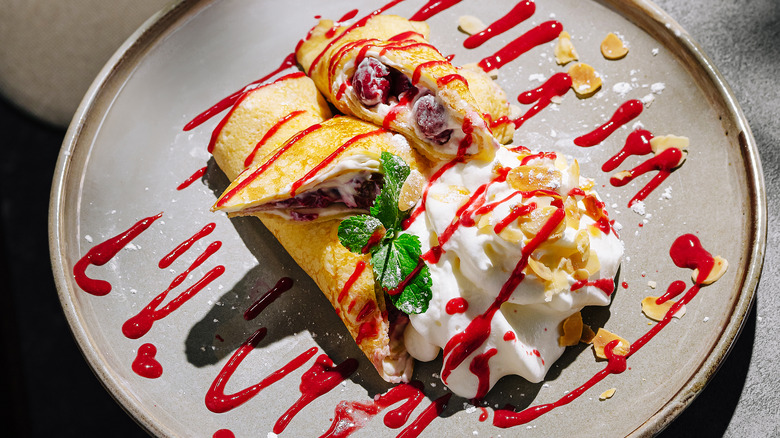
Among the entrées were a beef Bourguignon crêpe; a vegetarian ratatouille crêpe; and a crêpe St. Jacques with scallops, shrimp, and mushrooms in sherry-spiked gruyere sauce. You'd usually get two crêpes per order which you could mix and match. Some dinner options paired crêpes with soups, salads, or beef brochette (aka shish kebab). There were also brunch crêpes like ham with apples or eggs benedict. Of course, no meal would be complete without dessert. These included a chocolate mint crêpe with vanilla ice cream, mint chocolate sauce, and crème de menthe; a Chantilly crêpe with sliced bananas in brown sugar sauce, whipped cream, and almonds; and a chocolate coconut fantasy with vanilla ice cream, chocolate-coconut sauce, chocolate shavings, whipped cream, almonds, and toasted coconut.
Facebook users were recently reminiscing about childhood visits to the Magic Pan, as did members of the Fodor's Travel Forum. One member of the latter snarked that after eating crêpes in Paris they called the chain "The Tragic Pan." Another shot back: "I've had crêpes in France, too, but thought the Magic Pan did a superior job with varieties for one thing."
Crêpe restaurants are still around today
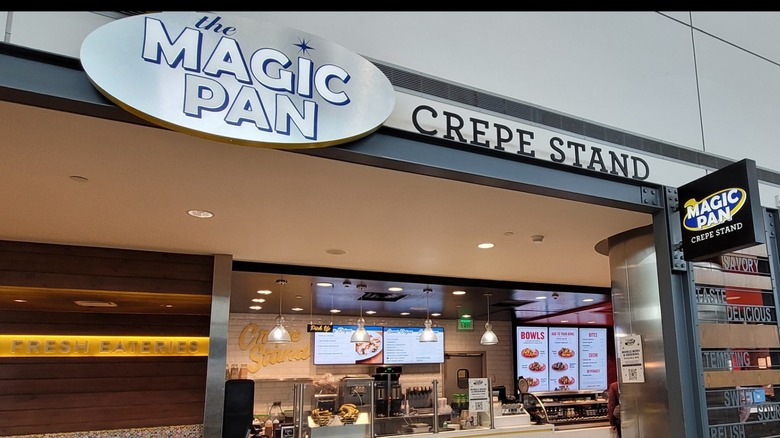
If you Google "The Magic Pan," you may come across a restaurant located in the Denver International Airport, but it's not a lost outpost of the beloved chain. Instead, it appears to be an independent food stand offering a small selection of grab-and-go crêpes (both sweet and savory) as well as ice cream. Some other single-location crêpe restaurants provide more of a full-service, sit-down dining experience, including New York's Village Crêperie, Chicago's La Crêperie, and Crêperie Saint Germain in San Francisco.
There are a few crêpe chains sure to appeal to nostalgic Magic Pan fans. Sweet Paris, which offers both dessert and entrée crepes, has locations throughout the United States and two in Mexico. Crêpe Delicious, which sells sweet and savory crêpes and gelato, operates in mall food courts in both the United States and Canada. T-swirl Crepe specializes in Japanese-style filled crêpe "cones" and has about 50 locations stretching from Arizona all the way to the East Coast. There are a few mini-chains, too, like Creperie NYC with its two Manhattan outposts and Seven Swans Crêperie which has restaurants in Kansas City and Milwaukee. Even if crepes are no longer the fad they were back in the '70s, it seems they're still delighting 21st century diners.