

The Controversial Role Federal Prisons Play In The US Food Chain
The food supply chain in the U.S. consists of a complex web of private companies that grow, raise, manufacture, and distribute various goods throughout the country. Between agriculture, grocery stores, and the food service sector, around 22 million people are employed by companies that contribute in one way or another to producing food for Americans and folks overseas. And as it turns out, a significant portion of those jobs are worked by inmates serving time in federal prison.
From pantry staples like paper bags of Gold Medal flour to Frosted Flakes cereal, many commodities people in the U.S. purchase regularly are, at least in part, produced via the labor of people in federal lockup. Russell Stover chocolates from Kansas, potatoes from Idaho, and beef from various states, such as Kentucky, Montana, Texas, and Virginia, are just a few of the foods inmates have a hand in producing. Some affordable Costco groceries come to the discount warehouse by way of prison labor. Stores like Aldi, Kroger, Target, Walmart, and Whole Foods likewise benefit from the work of federal prisoners, despite some of them indicating they don't allow food supplied by inmates to be sold in their establishments.
As for the detainees, they don't get much out of the deal. It's estimated that roughly 30,000 inmates are involved in farm work or other areas of the food production sector, and oftentimes, the work is mandatory. If compensated for their labor, which is not always the case, it is generally in cents per hour, not dollars. Advocates of utilizing prisoners for affordable labor contend that it gives inmates on-the-job training and opportunities to complete community service requirements. Critics, on the other hand, decry the practice as akin to slavery.
How federal prisons can provide cheap labor
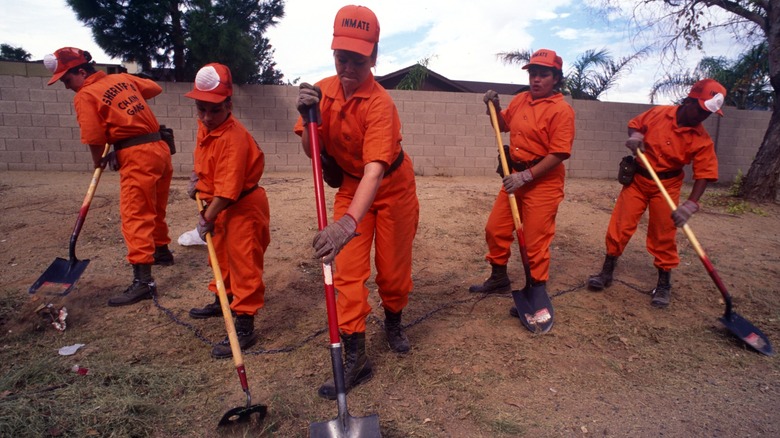
Some may wonder how forcing someone, even a person in federal prison, to work for free doesn't violate the 13th Amendment of the U.S. Constitution, given that it was that very document that abolished slavery. It did do that, but with a sneaky little catch hidden in plain sight. While it outlaws involuntary servitude in general, there is an exception written into the amendment that allows it as a form of punishment for people convicted of crimes. Some states have worked to curb the practice of forcing inmates to perform free or nearly free labor within their jurisdictions, but many states continue to profit from the routine.
Companies such as PepsiCo and Jimmy Dean also benefit. Fast food joints like Burger King, Domino's, and Papa John's also have goods show up at their stores that may have been produced by inmates. Some of McDonald's best-selling foods arrive in part via the labor of federal prisoners.
As if making pennies on the dollar for working in sometimes brutal conditions on farms and in factories wasn't bad enough, the prisoners rarely get to enjoy the fruits of their labor. Food produced by inmates is only used to feed the prison population in about 20 states. In comparison, about 46 states utilize incarcerated individuals in the agriculture sector.
Still, some current and former detainees aren't completely appalled by the practice. They assert that it functions as a welcome distraction from the dreary, repetitive routine of prison life. However, the meager compensation for that work is not lost on them. Some suggest allowing federal prison inmates to unionize, but organizations that benefit from the cheap labor are sure to push back on any reforms of that nature.