

The 16th Century Marketing Gimmick Behind Orange Cheese
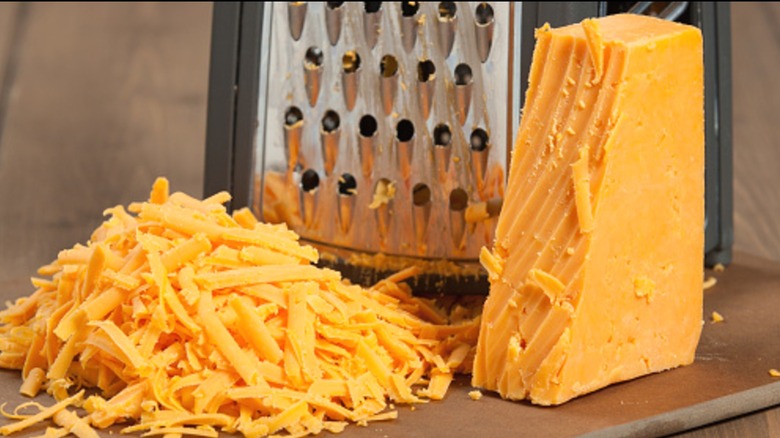
It may surprise you to learn that cheese does not naturally come in the color orange. Surely, the makers of certain kinds of cheddar cheese and most brands of cheese puff snacks wouldn't lie to us, right? But it's true: in its natural state, most cheese is white or yellow, not that brilliant shade of orange. The color comes from a food additive, usually a substance called annatto. But when, exactly, did the practice start? Well, it first began several hundred years ago in England, and depending on who you ask, it was either a way to compensate for changing seasons or an act of bold-faced fraud.
You see, the cows of such common cattle-raising areas of England as Jersey and Guernsey would frequently graze on grass that was rich in beta carotene, giving their milk a distinctive yellow-orange color. But the trouble with that was that the coloring was only really pronounced in the warm months, as that was when cows grazed most often; in the winter, cows stayed in their barns and ate feed, resulting in white milk — and by extension, white cheese. So to keep things consistent at every time of year, cheesemakers took to adding coloring agents so that their cheese was nice and sunny, even when the weather wasn't.
The trend may have started as a way to skim cream (and profits)
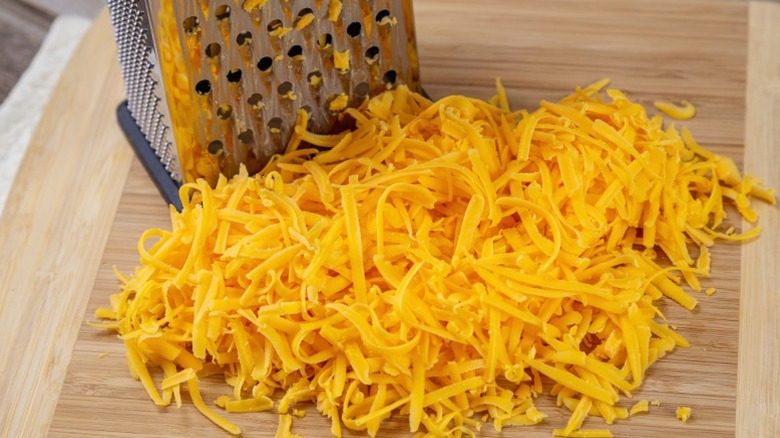
There's another possible origin for orange cheese, one that involves some good old-fashioned capitalist chicanery. Using the same logic as modern ice cream makers who fluff their ice cream full of air to stretch their ingredients as far as possible (like Friendly's with its strawberry ice cream, our least favorite), English cheesemakers realized they could run a higher profit if they skimmed the cream off during the cheesemaking process. That way, they could sell more cheese and use the cream for other purposes.
But oh no! By skimming off the cream, you take away some of that beautiful color, resulting in a pale block of cheese that must have been pretty unsightly to customers spoiled with the good stuff. So to ensure they could keep the racket going, the cheesemakers would dye the cheese using a few different agents: a little carrot juice, a little turmeric (which makes an excellent addition to your chicken noodle soup), and maybe a little saffron if they were feeling fancy. Today, the additive of choice is annatto, which comes from the seeds of the tropical achiote tree — and the motive is a little less sinister. Since we already expect cheeses like cheddar or red Leicester to be orange, cheesemakers ensure that they still are.