

Here's Why It's Never Safe To Leave Soda Cans In Your Car During Winter
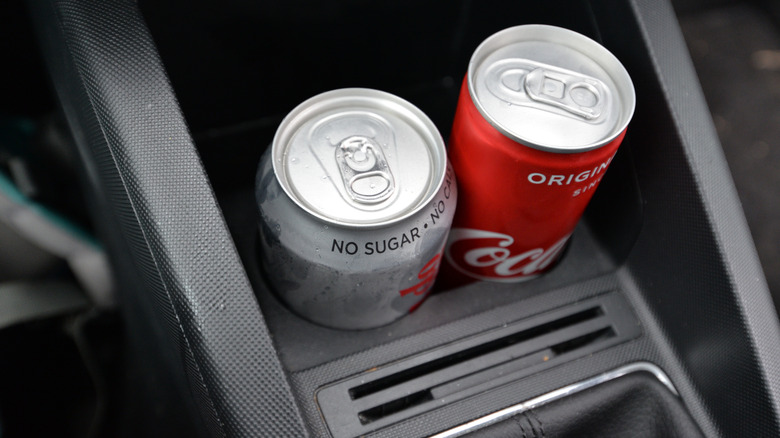
News flash: Canned sodas may explode when you leave them inside the car during winter. This is exactly why you should never store them there when temperatures start to drop. We can't blame people for leaving sodas in the trunk or center console — sometimes it's an accident, and other times, folks do it for the sake of convenience if they get thirsty during the drive, but that canned beverage can turn into a ticking time bomb. Water-based liquids expand when they freeze as cold weather takes over, which can damage the container and cause leaks. Once the can bursts, you are left with a sticky, slushy mess inside the car.
However, such expansion also puts pressure on the pockets of carbon dioxide in the can, which can reach extreme levels that can make it pop at any moment. When the cans can no longer handle the internal pressure of their frozen contents, they can literally explode. Aside from creating a messy explosion that may stain the seats, upholstery, and the trunk, there is the danger of the can's sharp edges causing injuries.
Though rare, there have been reports of injury. In 2012, for example, there was a case in China where a child was injured on the cheek by metal shrapnel after a frozen soda burst in his hands (per CBS News). Now, imagine what might happen if you are inside your car parked in subfreezing temperatures as a canned soda unexpectedly explodes.
Other items that can explode when left in the car during winter
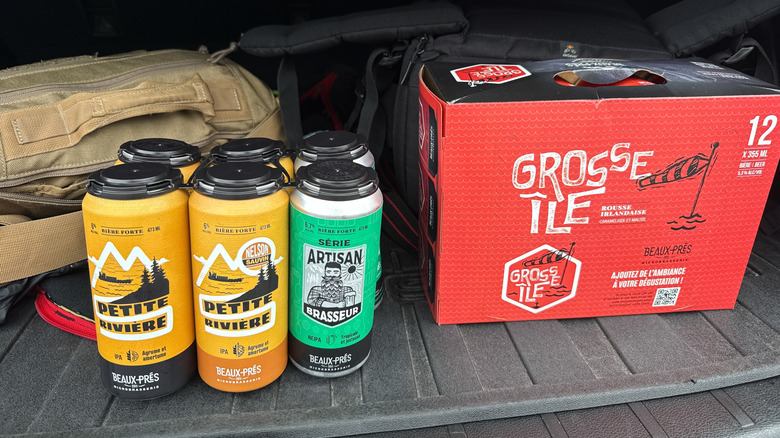
Do note that different sodas freeze at varying temperatures, but even a mild winter night can create a recipe for an icy mess. Zero sugar and diet sodas freeze at about 32 degrees Fahrenheit, while regular sodas with more sugar content freeze at around 30 degrees Fahrenheit. Both types can burst when left inside a freezing vehicle, as can many other items we may leave inside the car. Take, for example, alcoholic beverages. While high-proof spirits will remain stable even in the face of the biting cold, beer and wine freeze more readily due to their lower alcohol content. A standard 5% ABV beer can freeze at around 27 degrees Fahrenheit, while wine freezes somewhere between 15 and 20 degrees Fahrenheit.
Canned food is another item that has the potential of becoming a safety hazard inside the car during the winter months. Canned soups and those with substantial liquid content, such as canned vegetables in broth, can freeze and randomly rupture in the middle of a cold winter night or day. If not burst, the cans may warp or crack, making the food unsafe for consumption. Non-liquid canned goods may be somewhat safer, but they are not immune to structural damage when the blistering cold strikes. However, if the can remains intact and properly sealed, canned food that's been frozen is likely safe to eat. Aside from cans, it's also a big no-no to leave glass jars with liquid inside in your car during winter, as the freezing liquid can cause the glass container to shatter completely.