

If You've Ever Eaten 'Bologna With Variety Meats,' This Is What You've Actually Consumed
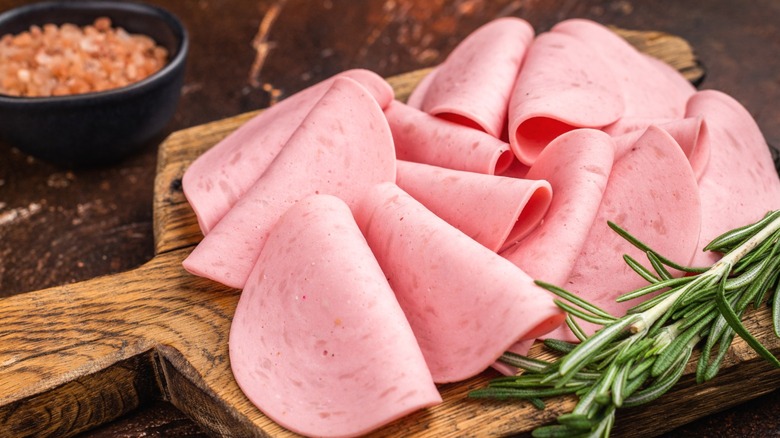
Depending on what brand of bologna you buy, you may or may not have seen this curious statement on the package: "made with variety meats." What a curious little phrase that is, right? You'd be forgiven for thinking that it means bologna was made from a variety of different meats, such as beef, pork, chicken, etc. Or, if you're a little more whimsical, maybe you'd assume it means it's made from a different, surprise animal in every package — maybe you'll get beef bologna, maybe you'll get chicken. In truth, "bologna with variety meats" means it was made in part from offal, or animal organs.
Contrary to the horror stories and myths you've probably heard about bologna, most of it does not contain offal. There are some kinds of "ring bologna" — a smaller, sausage-shaped bologna that's a regional delicacy in Pennsylvania — which include variety meats, but these are far from the norm. Like most kinds of lunch meat, bologna is made by grinding a whole bunch of meat into a paste, then forming it into that familiar tube shape. Would it look particularly appetizing if you were to watch lunch meat get made? No, but that doesn't mean it's some sinister process.
Variety meats aren't so scary
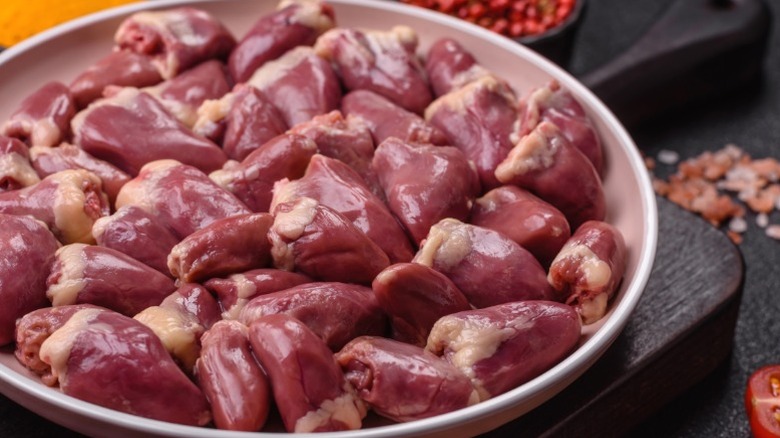
Maybe you found yourself breathing a sigh of relief when we told you most bologna doesn't contain variety meats. It's one of those things where you kind of assume you're eating something unsavory, so it may be heartening to know there's (probably) no heart in your bologna. But let's push back on the belief that offal is somehow unsavory because that is not the case. In fact, most parts of the world make use of variety meats in their cooking, from the chicken feet you'll eat at a dim sum restaurant to Mexican beef tongue tacos. For a number of reasons (or a variety of reasons, some might say), Americans have resisted eating variety meats.
Offal first entered many American kitchens during World War II. Due to meat rationing, the government encouraged the use of offal because it was cheaper and less in-demand than the prime cuts of meat being sent over to the soldiers. The idea was that home cooks could try these unfamiliar dishes for "variety," if nothing else. And believe it or not, it worked (at least until the war ended and Americans could happily eat steak once more). Still, the phrase "variety meats" lives on as a handy euphemism — on packages of bologna or otherwise.