

Instead Of Throwing Them Away, Put Your Cheese Rinds To Good Use
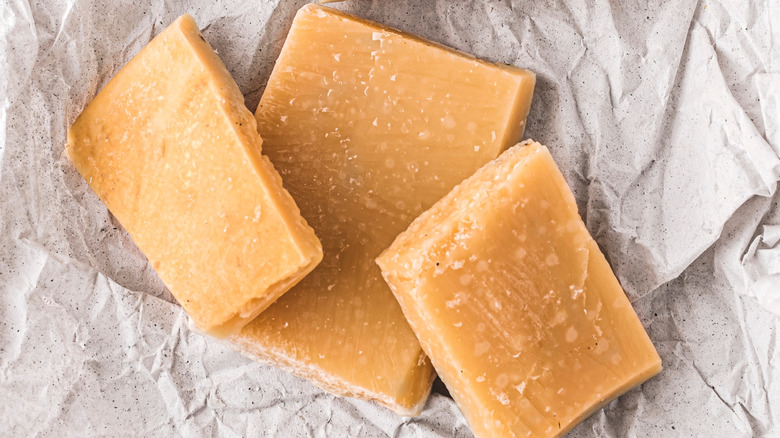
Even if food scraps don't always look appealing, sometimes you can eke a little more life out of an ingredient before it's destined for the trash. One thing you definitely want to hang on to are cheese rinds — but not just any of them. We spoke to Molly Browne, education director at Dairy Farmers of Wisconsin, about which rinds you can continue using for cooking purposes, and which you should simply toss.
Browne told us, "The only rinds you should really be saving for future use are parmesan rinds. They can be saved in a Ziploc bag in your freezer until you're ready to pump up the umami in a stock or sauce." But while parmesan unlocks the secret power of umami, other rinds simply aren't as useful for multiple reasons. Browne says that cave-aged cheddar rinds will give your soup or stew a moldy note (not good), while the rind on cheeses like brie are completely edible and meant to be eaten. And though wax-coated cheeses technically use food-safe materials, we're guessing you probably don't want to be adding wax or plastic to your sauces.
How to use parmesan rinds in your cooking
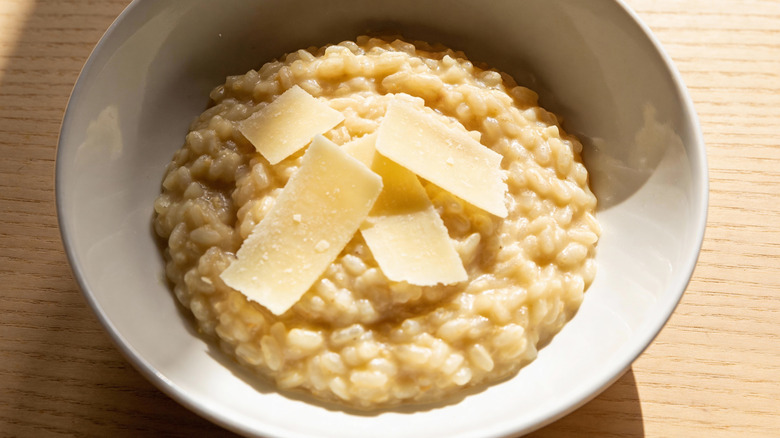
Fortunately, cooking with parmesan rinds is a fairly passive process. It's an ingredient you can simply toss into a pot to simmer with other ingredients; you can even turn parmesan rinds into a broth to drink your cheese, so to speak. Molly Browne explained, "Drop a parmesan rind into a pot of soup, stew, or broth while it simmers. This imparts a rich umami flavor to the dish. Pro tip: remove the softened rind before serving."
Browne also advised adding parmesan rinds into risotto, the cooking liquid for beans, and tomato sauces. They'll bolster your end result with coveted savory notes and rich flavor. It's as easy as saving your rinds when you finish a wedge, then storing them in a freezer bag; once you find a reason to use them, you'll be able to toss those portions into your dish as it cooks. As Browne mentions, just don't forget to fish that rind out, because eating it isn't necessarily that pleasant. You're just looking to take advantage of its flavor. Now that you know what to do with the ends of your cheese, you can clear up the difference between Parmigiano Reggiano and parmesan, so you know which rind you're saving from the trash.