

It's A Red Flag If Your Butcher Won't Answer Your Questions. Here's Why
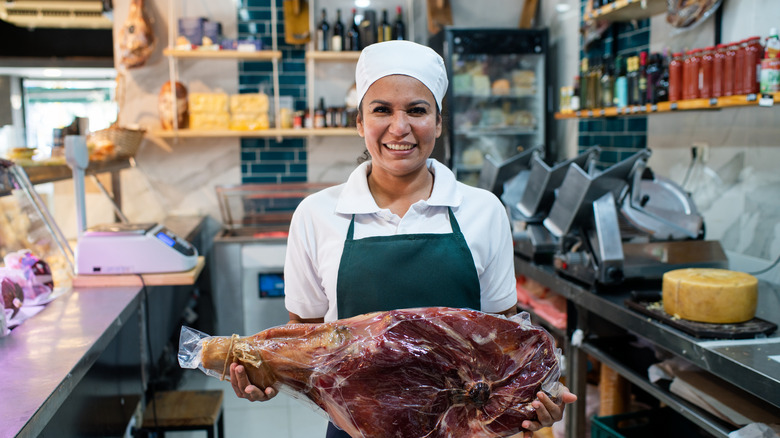
I made my first-ever trip to a butcher's shop last week. I'd been craving black pudding: I hadn't had the rich, flavorful blood sausage since studying abroad in Ireland. Plus, I wanted to show my fiancé what he was missing. Somehow, he just couldn't understand why I loved heavily-seasoned hockey pucks made from blood, fat, and oatmeal. I figured the butcher would be my best bet.
The trip was a success. The shop didn't have black pudding, but I left with the next best thing — French-style blood sausage, or boudin noir — and several links of andouille. It wasn't just the selection that won me over, though. It was my conversation with the owner. We chatted about our mutual love of Ireland, her time in a Swiss culinary school, and her philosophy on running a business. According to Aubrey Gallegos, that open attitude is a sign of a good butcher. Gallegos is the program manager for the Good Meat Project, a nonprofit that teaches farmers, butchers, and consumers about ethical meat. "A good butcher (which is most butchers) will be excited to answer customer questions," she says. "This isn't a chore or an annoyance; sharing knowledge is part of the craft and trade they love."
Most pride themselves on quality and customer service, giving butcher shops an edge over grocery stores while keeping the trade alive. If your butcher won't answer your questions, it's a red flag. "Butcher shops know that they compete with the one-stop-shop convenience of grocery stores," Gallegos says. "Their edge is their expertise and personal customer service. Use it!"
How to use your butcher as a resource
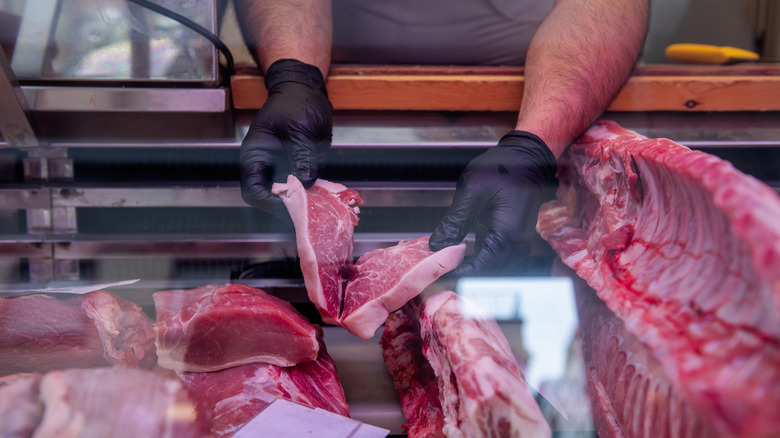
Think of your butcher as a resource for learning more about meat. A good butcher can tell you everything you need to know about cuts, varieties, and cooking techniques. "There's only so much you can get from Google or ChatGPT — there's no substitute for real and personal expertise," Aubrey Gallegos says. "Asking questions helps you build a relationship with your local butcher — the kind of connection they love to have with their customers."
Butchers aren't just close to their customers — they're close to farmers, too. A good butcher can tell you more about how an animal was raised than the "certified organic" or "grass-fed" labels at the grocery store. If you're shopping for ethically-sourced meat, ask your butcher for details. Trust them if they supply plenty of info — even if they can't back it up with certifications. Certifications are expensive, so small farmers can't always afford them.
"Butchers have historically been central to communities, and it used to be normal to have a personal relationship with your local butcher. Any butcher working today is committed to keeping that tradition alive," says Gallegos. That's true even if the shop is swamped with customers. Still, Gallegos advises patience during the holidays or the height of the summer grilling season. "Just give yourself a little extra time and stay flexible so that, if they're slammed, you can either wait for a lull or find out when would be a good time to come back," she recommended.
What should you ask your butcher?
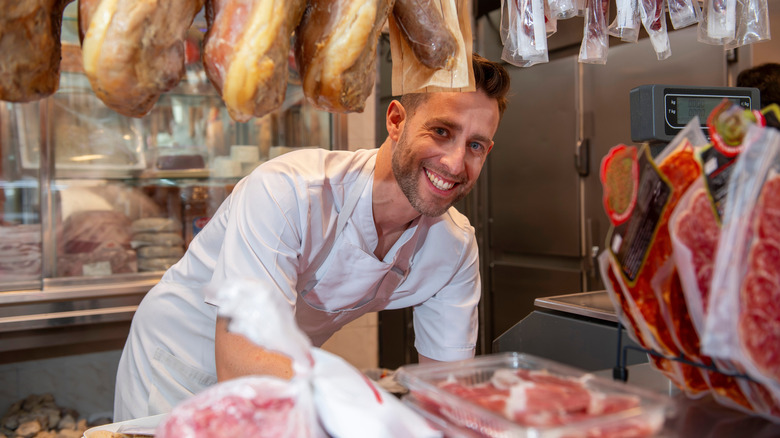
Finding yourself tongue-tied at the sight of a case full of tongue? "Start by giving them some basic info," Aubrey Gallegos recommends. "How many people are you cooking for? Are you following a specific recipe?" Suppose you're making homemade pho for the first time. Give your butcher the deets: You're looking for beef bones, plus some meat to add to the soup. You prioritize ethically-sourced meat, but you're sticking to a budget. You've heard oxtail is best, but ethical oxtail is pricey. A good butcher should be able to help you find alternatives. There's no shame in admitting that you're just browsing, though. "If you're not sure where to start, don't be afraid to say so. They'll be happy to guide you," says Gallegos.
You don't have to limit the conversation to dinner, either. "Throw in a fun question ... What's something that I may not have heard of before but should try? What's your personal favorite cut or recipe?" says Gallegos. She also recommends giving your butcher a chance to sell you on something new. "Ask about shop-specific products," she says. "Many butchers offer unique, creative, and seasonal items you won't find at a typical grocery store."
Get advice from your butcher before taking a whole goat's head or package of Rocky Mountain oysters home for the first time, though. Your kitchen fails are bad for business. "Butchers want you to succeed with new cuts and recipes, because when you enjoy it, you'll keep coming back," Gallegos said.