

The Secret To The Best Prime Rib Is A Thick Coating Of This Seasoning
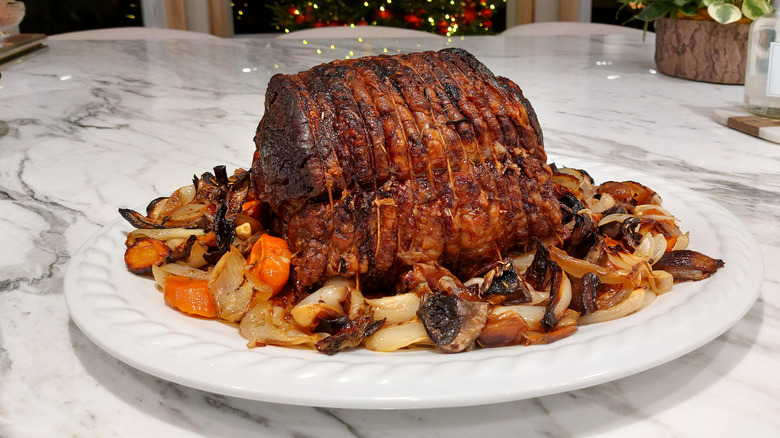
Prime rib is a dish that many of us only order at restaurants. For one thing, it tends to taste better there. For another, when spending a small fortune on such a pricey cut of beef, you want to make sure there's an expert cooking it. If you do dare to DIY it, though, it all starts with shopping for the best cut of beef and implementing the right technique to cook it, especially if you want a juicy prime rib at high altitude. Aside from choosing the beef and determining how to cook it, there's one extra step that can ensure the best results. According to Steven Chiappetti, executive chef at Chicago restaurant the Albert, you should really add an exterior layer of salt crust to "keep in flavor and create a savory bite."
Chiappetti told The Takeout how exactly this thick coating of seasoning works. "The salt gives it ... a flavor that opens up your palate and lets you taste the protein," he shared. "Kosher salt is the best for seasoning a prime rib roast. The larger, coarse crystals provide texture to the crust and release a salt edge to the meat when it is being enjoyed."
He also likes to blend some herbs and spices with the salt to make the dry rub flavorful, primarily using a mixture of black pepper, granulated garlic, granulated onion, rosemary, and thyme. And don't worry, the salt crust won't make the meat taste way too salty. "Using the larger flakes and not using iodized salt avoids an overly salty experience," Chiappetti explained.
How to cook salt-crusted prime rib
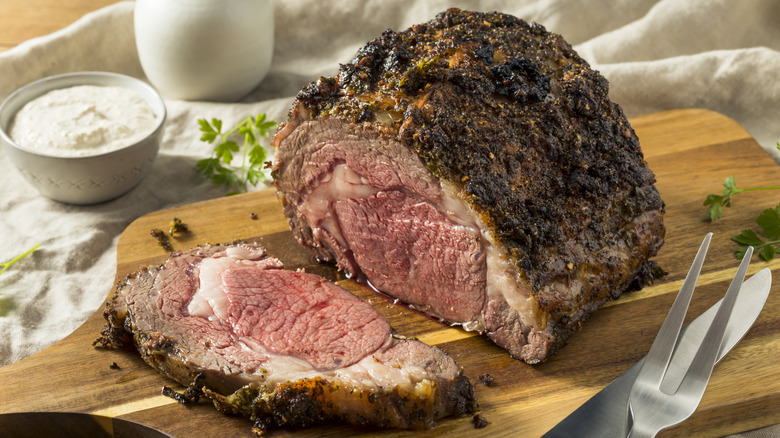
Though the dry rub is simple to create, you should allocate enough time to coat the meat with the seasoned salt and allow it to sit in the refrigerator overnight. As it rests, Steven Chiappetti said, "The crust helps draw out moisture and adds flavor to the beef."
When it's time to cook the meat, Chiappetti recommended preheating the oven to 475 degrees Fahrenheit so the prime rib can sear for 10 minutes at high heat. He'd then turn the temperature down to 350 degrees Fahrenheit and roast the meat to an internal temperature of 125 degrees Fahrenheit. This will result in medium-cooked meat since the temperature will rise about 10 degrees as the meat rests. (Chiappetti recommends letting it do so for at least 15 minutes.) If you prefer medium-rare, you can pull the prime rib out of the oven when the temperature hits 115 to 120 degrees Fahrenheit.
For an instant side dish, you can also add some vegetables to the pan to roast along with the meat. Chiappetti likes using carrots, celery, and onions, and he also adds garlic, rosemary, and thyme to the mix. If you don't have fresh herbs on hand, it's okay, since the dried ones you used in the salt rub will still add plenty of flavor.