

A Few Easy Knife Cuts Mean More Chicken Breast Flavor In Every Bite
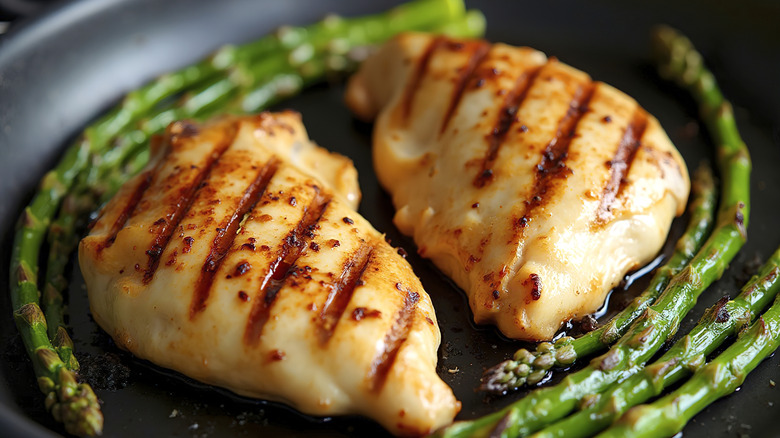
It's relatively common knowledge that, while chicken breasts will accumulate plenty of flavor on their own in some recipes, such as those made in the slow cooker, giving them the chance to soak in a good meat marinade can often make them taste better. However, if you want your boneless chicken breast to truly benefit from your marinade, using proper cutting techniques beforehand can prove consequential to the end product.
We discussed the impact of cutting your chicken breasts before marinating them with Shanna Jantz Kemp, a knifemaking pro at knifemaking.com, who noted that there is some value to crosshatching the poultry to enhance the impact of a marinade. "Lightly crosshatching chicken breasts does help marinade work more effectively, but not because liquid soaks deep into the meat," Kemp clarified. "What it really does is increase surface area and create small channels, so more marinade clings to the chicken and seasons it more evenly."
Crosshatching – scoring the chicken just slightly in a diamond pattern — does more than increase the surface area. "Those shallow cuts also shorten the distance between the surface and the center of the meat," Kemp added, "As the chicken cooks, seasoning moves inward with moisture, which is why crosshatched pieces tend to taste more flavourful throughout, even if the marinade itself doesn't travel very far."
How butterflying your chicken breast can also warrant great results
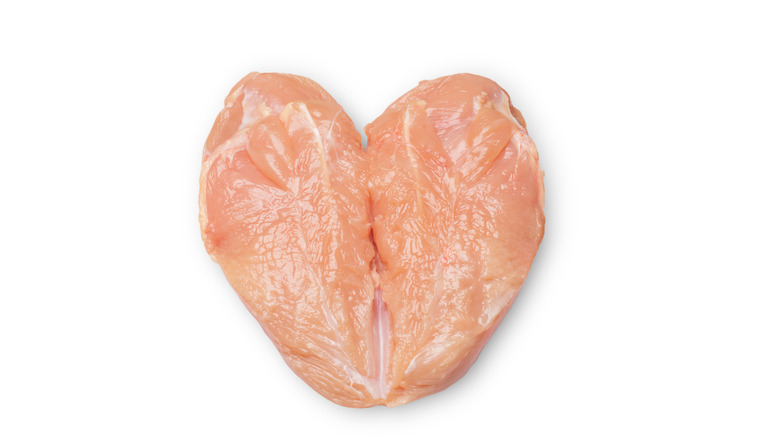
Now, if you want to take things a step further when it comes to slicing your chicken breast, butterflying the poultry before adding it to your marinade can be similarly beneficial to the crosshatching method. For those uninitiated, to butterfly a piece of meat means to split it almost entirely in half, but keeping it intact as you do so to make it thinner and wider at the same time. This butterflying method is sometimes used for hot dogs, but can be great for chicken breast before they soak in a marinade, partially due to the benefits of the poultry cut having an expanded surface area. "Butterflying chicken is one of the most effective techniques," Shanna Jantz Kemp explained, "By opening the breast into a thinner, even piece, you dramatically reduce thickness, which allows salt and flavor to reach the center faster and more reliably."
Furthermore, while these two cutting techniques aren't quite as pivotal to the chicken breast marinating process as using the right ingredients and soaking them for the appropriate amount of time, they are also optimal since neither outright pierces through the chicken itself, something that Kemp recommends avoiding when slicing the meat. "Marinades mostly season the surface, so the goal is to make that surface work harder rather than trying to force liquid deep into the meat," Kemp concluded.