

11 Iconic Junk Foods From The 1960s That Are Still Around Today
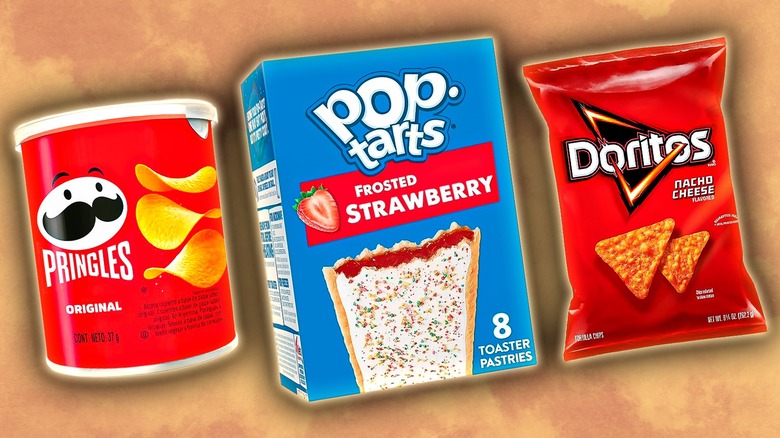
Back before snacks were expected to be protein-packed or purely organic, and long before anyone felt the need to side-eye a neon-colored ingredient list that few could actually pronounce, there was the glorious 1960s. This was a kind of golden age when junk food didn't apologize for being just tasty and fun to eat. Think TV dinners in their own iconic trays, drive-in movie nights complete with sugar-laden, greasy-spoon snacks, and grocery aisles filled to bursting with the furthest things from fat-free we could find. Convenience was king, and flavor came first.
The '60s gave us snacks and treats designed for pure joy, groovy munchies meant to be enjoyed while sitting on shag carpets, shared at backyard barbecues, or absolutely inhaled while watching Saturday morning cartoons on a wood-paneled TV (maybe even one with an antenna). Macros or mindfulness were not in the snack vocabulary, and the only "requirements" for the ideal 1960s snacks were that they had plenty of crunch, sugar, and salt to make you smile.
Today, while many of our favorite vintage junk foods have vanished, a select few are still holding strong. These 11 iconic bites and sips have outlived bell-bottoms and run circles around rotary phones to stand the test of time and refuse to fade into obscurity.
Pop-Tarts
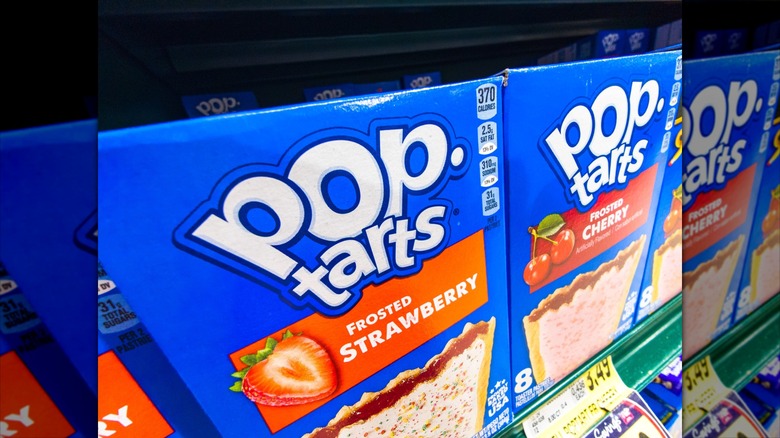
In the early 1960s, Kellogg's introduced a little silver-wrapped rectangle that would change the breakfast game forever. The Pop-Tart was revolutionary, and people dug it, man. This pastry was so far out, it basically stood alone — as in, it literally needed nothing. No milk, no bowl, no stove, and if you didn't mind eating it cold (some honestly prefer it to this day), a toaster wasn't required either.
Many readers may not remember that the earliest Pop-Tarts were actually unfrosted, which may sound tragic now, but worked way back when. Frosting entered the picture in 1967, with enthusiasm only growing for the iconic toaster pastry. Breakfast became a no-holds-barred, rule-breaking morning ritual. You could toast one, eat it cold straight from the foil as you flew out the door, or even butter your Pop-Tart if you preferred. Pop-Tarts certainly didn't care, as long as consumers just kept scarfing them down (and we sure did).
Now, decades later, we are still eating every single iteration Pop-Tarts is serving up. With dozens of impressive flavors in the current rotating lineup, Pop-Tarts has more than proven that the brand has the stuff to survive. These sugar bombs blew past health crazes, diet fads, and the endless reinvention of breakfast itself over the years, remaining largely — and proudly — unchanged.
Doritos
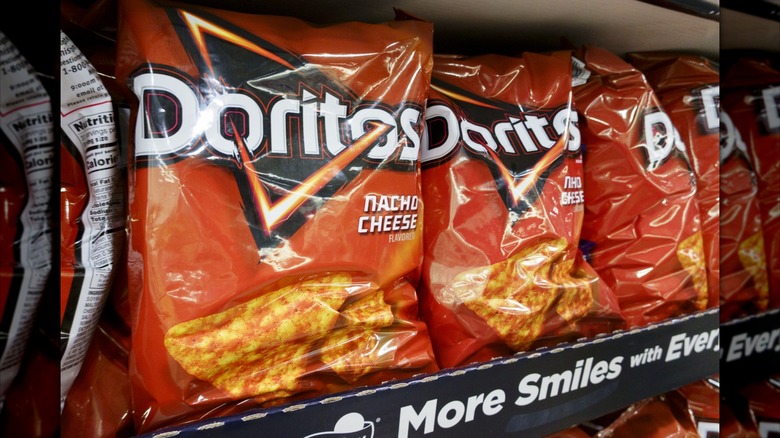
Move over, Mickey Mouse, because the real enchantment at Disneyland in the 1960s was actually a pile of discarded tortillas at a restaurant (Casa de Fritos, now Rancho del Zócalo) inside the iconic Anaheim amusement park. One day, instead of tossing out the stale tortillas, the workers decided to get creative and fry them up instead. What happened next was the accidental creation of a big ol' snack revolution now known as Doritos.
By 1966, Frito-Lay took its original Doritos flavor, Toasted Corn, national. That made Doritos the first-ever tortilla chip to take America by storm. But let's be real, the original version was pretty basic. She was practically naked, y'all. It wasn't until 1967 that things got spicy with taco seasoning thrown in the mix. Then, in 1972, our world finally met the legendary cheesy flavor that remains first in so many hearts today (although we do understand that there is a fiery Doritos debate that still rages between Nacho Cheese and Cool Ranch). Suddenly, fingers across the country were stained a glorious, radioactive orange, and we haven't looked back since.
Doritos didn't just quietly take a seat on the snack shelf. These chips crashed into the quick bite party and stole the entire show. From Super Bowl commercials to new flavor iterations that taste like a late-night cheeseburger, these chips have morphed into the ultimate loud, crunchy, and most beloved bold bites of all Americans, whether they remember them from the 1960s or not.
Pringles
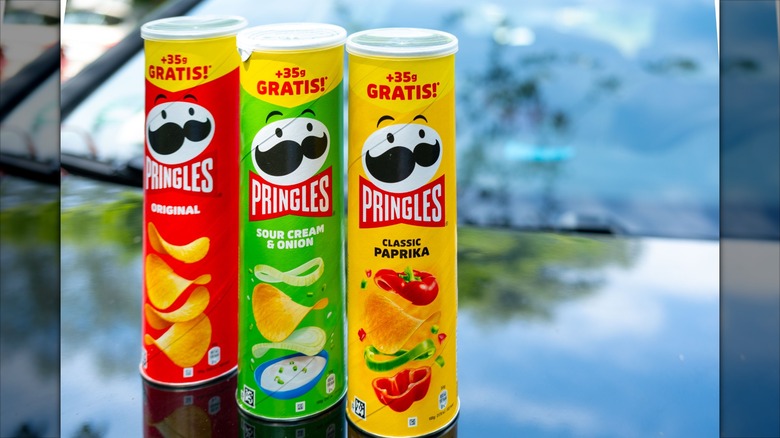
Launched in the late 1960s after more than a decade of development, Pringles were actually first created as a practical solution to solve very real problems (at least, in the snack world). We are talking about broken chips, greasy fingers, and sad bags full of far too many crumbs. What became of this wildly successful scientific experiment was a perfectly uniform, stackable snack. And let us tell you, that iconic curve was no accident. It was painstakingly planned and ingeniously engineered to fit neatly inside a tall can, making it yet another Pringles signature characteristic that changed how snacks were packaged forever.
The origin story behind Pringles is pretty wild. Once upon a time, there was a chemist who designed the shape and the can. Then, a researcher fixed the flavor, and the machine that makes them was developed by a man who later became a science fiction author. That same author also happens to resemble Julius Pringles, the mustachioed mascot staring back at you from the Pringles can today. Even wilder? The inventor of the can was so proud of it that he had some of his ashes buried in one after his death. No joke, fam.
It took a while for the general public to catch on to the magic of Pringles. It also took a while to conclude whether Pringles are real potato chips or something else entirely. By the 1980s, Pringles had stacked up serious fans, and today these snacks are sold worldwide, come in creative flavors, and remain instantly recognizable (especially when you make the duck bill by pairing two in your lips. If you know, you know).
Starburst
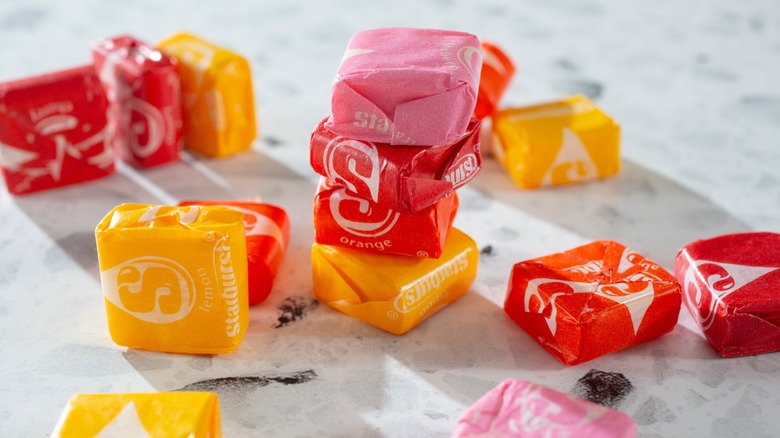
Talk about unwrapping a burst of pure joy! We are absolutely obsessed with Starburst, the little legendary square treats that have been making taste buds dance since they first debuted in the U.K. in 1960. Did you know these juicy gems were originally called Opal Fruits? It's true. A clever copywriter named Peter Pfeffer won a contest with that name, but when these sweet, chewy treats crossed the pond to the United States in 1967, they rebranded first to M&M'S Fruit Chews, then to the iconic, punchy name of Starburst that we know and love today.
The OG Starburst lineup consisted of strawberry, lemon, orange, and lime flavors, with cherry later replacing the latter in the U.S. While we adore the whole flavor family, let's be real – most of us are living for the pink strawberry ones. In fact, at one point, fans were so loud about their particular love for the pink Starburst that Mars released All Pink Starburst packs in 2017 just to satisfy our cravings.
That first foray into flavor flips opened Pandora's Box. Since then, new Starburst flavors have come and gone (think mango-melon and kiwi-banana adventures, and beyond). The brand has also announced plans to remove artificial colors from the candy. One last pro-tip for our global travelers to keep in mind. While the U.K. version is vegan-friendly, the U.S. formula is a bit different, so always check the label!
Swedish Fish
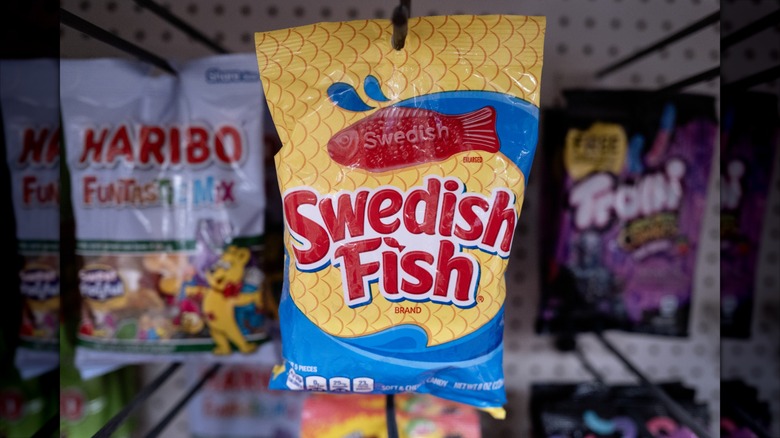
Ready to dive into the sweetest catch of the day? We are absolutely still hooked on Swedish Fish, the iconic chewy treats that officially first "swam" their way into the North American market in the late 1950s before establishing themselves as a major player in the candy game in the 1960s. The name rings true, as these little candy swimmers really are from Sweden! The candy mastermind Malaco initially created the candies to honor Sweden's massive fishing industry.
While we Americans may know them as the ultimate movie theater snack or lunchbox bites, back in their homeland, these cheery red lovelies go by the fancy name pastellfiskar (which translates to "pale-colored fish"). So, why do we love them so much? Unlike many gummies, these jellies don't actually use gelatin. While the classic red flavor (which gives off a mysterious yet delicious, vaguely cherry-esque vibe, but is said to actually be lingonberry) is the leader of the school, you can also find these fish swimming in shades of green, orange, and yellow. And far be it from ever risking inhaling counterfeit candies, as every single one of these bites has the word "Swedish" branded right on its side, so you know it's the real deal.
In Sweden, they even have a salmiak-flavored version with a dark hue, but here in the States, we've seen the flavor explode into iterations of Italian ice, gum, and even Oreos! Today, Mondelez keeps the school swimming in the U.S., ensuring these friendly fish remain a beloved staple of our candy aisles.
100 Grand Bar
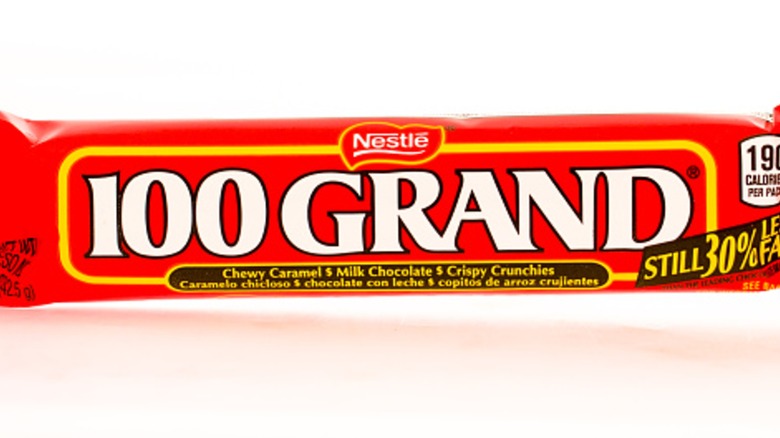
Who wants to experience extreme decadence for the price of a tiny snack? Well, look no further than the 100 Grand Bar. This crunchy, chewy candy bar queen bee officially burst onto the scene in 1966, and it has ruled the snack scene and conquered our taste buds ever since. Originally, the 100 Grand Bar went by a much longer name: the $100,000 Candy Bar. This moniker was actually a cheeky nod to the high-stakes game shows that were popular back in its heyday, like "The Big Surprise," where contestants could win a similar fortune. It went on to change its name to 100 Grand in the '80s, but luckily for us, that "fortune" of flavor remains rich as ever, tempting our taste buds exactly the same today.
So, what exactly makes this nostalgic snack such a superstar that it's still around today? It's all about that winning texture trio. Think gooey, buttery caramel, hugged by crispy rice that is smothered in a coating of mouthwatering milk chocolate. It brings pure joy to those who crave a candy that isn't just another boring chocolate bar. While it may not get the top billing in the candy aisle today alongside more known names (looking at you, Snickers and Hershey's), enough people clearly think it's a hidden treasure that deserves way more clout, because we're still buying it! So, whenever you crave a taste of the good life, thank goodness you can still treat yourself to a 100 Grand today.
SpaghettiOs
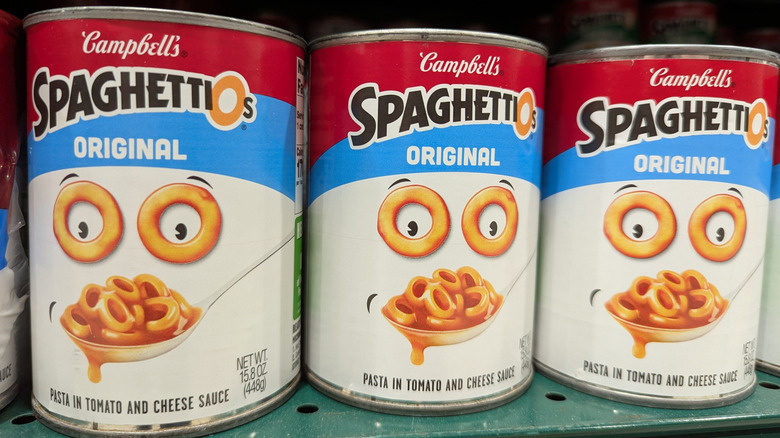
"Uh-oh, SpaghettiOs!" Can you even hear those words without smiling to this day? Childhood memories were filled with this 1965 classic that turned the messy world of pasta upside down. Before these neat little pasta rings arrived on the convenience food scene, eating spaghetti was quite the circus. From the effort of preparing it (you actually had to boil the noodles, then go to the effort of finding some sauce to pair with it just to make some semblance of a real meal) to the frustrating battle of trying to wrangle the long, floppy strands with each forkful, it was enough to make some four-letter words escape our lips, right along with those rogue noodles practically leaping from the utensils.
Luckily, Campbell's saved the day when marketing executive Donald Goerke had a pretty dang revolutionary idea. Why not bypass all the drama and misery by making a small, stable, circular pasta that fits perfectly on a spoon? Marketed as "the greatest invention since the napkin," it was an instant hit (via YouTube). While 1960s food purists like Julia Child were busy whisking eggs by hand, SpaghettiOs became the ultimate champion of convenience.
Over the decades, we've seen fun mascots like the Wizard of O's and the puppet Mr. O come and go, but the real star has remained that spoonable magic awaiting us in every can. Though they started under the Franco-American label, these pasta snacks officially became Campbell's SpaghettiOs in 2004, and remain a favorite to this day.
Bugles
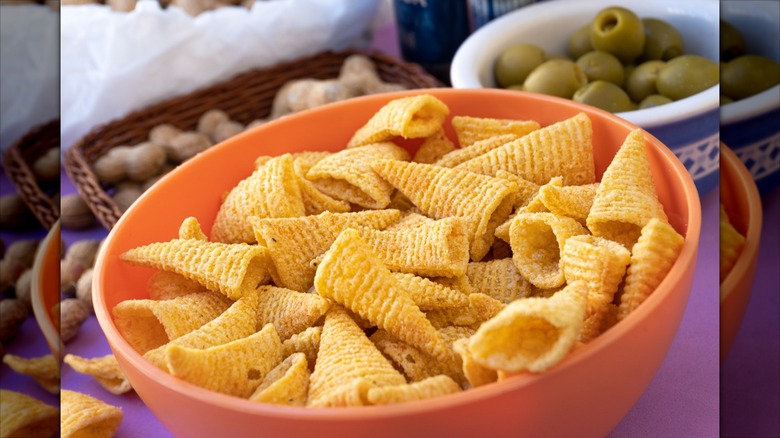
As Bugles hit its impressive 60th anniversary in 2024, and continues to fly high in the snack scene to this day, we are still singing hallelujah praises of the horn-shaped snack that started a whole new sub-genre of good eats. Initially launched by General Mills in 1964, Bugles arrived on the scene with two snack sidekicks (Whistles and Daisys). While those other shapes failed to stand the test of time and eventually disappeared from store shelves, Bugles' crispy, roasted corn crunch not only survived the snack scourge but also went on to become a global snack sensation.
Let's talk facts, because we all know the absolute best part of eating Bugles isn't just the fantastic flavor. It's the fashion! Who hasn't spent a lunch hour transforming their fingernails into manicured, munchable, crunchy claws, or pretending to be a corn-chip witch with delicious daggers to boot? Somehow, putting those tasty little cones on the top of our fingertips was a universal childhood ritual that, personally, we never seemed to actually outgrow.
Fast forward to today, and not only has the brand said goodbye to its original boxes and switched to foil bags, but Bugles have also evolved in the flavor realm, from its original flavor to more bold options like nacho cheese (a 1984 icon), ranch, and even chocolate peanut butter. Thanks to those manicured tips, you could safely say Bugles truly are the most iconic "finger food" in history.
Cap'n Crunch Cereal
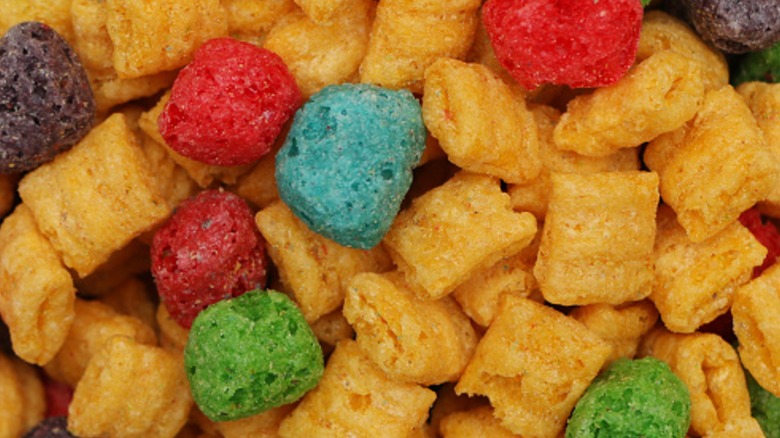
Get ready to set sail for a breakfast adventure, because we are officially launching into a full-on explanation of our love affair with the legendary Cap'n Crunch cereal. First making its grand debut in 1963, this corn and oat kids' treasure was the brainchild of flavorist Pamela Low, who wanted to recreate her grandmother's recipe that involved butter and brown sugar. The result was a triumph of uniquely sweet and crunchy cereal bliss that really did manage to capture that taste Low was going for (think a delicious blend of vanilla and caramel that is such a vibe).
Our favorite adventurous sea captain, Horatio Magellan Crunch, commands the Guppy and hails from the magical Crunch Island (located in the Sea of Milk off the coast of Ohio). This cereal mascot was created by "The Munsters" co-creator Allan Burns and brought to life by Jay Ward, the animation genius behind "The Adventures of Rocky and Bullwinkle and Friends." Thanks to Ward, every commercial for good old Cap'n Crunch felt like a Saturday morning cartoon in itself.
Now, let's address the scandalous naval mystery some really lose sleep over. Is Crunch really a captain? Eagle-eyed fans point to his uniform only showing up to three bars, which technically would only earn him the highest ranking of Commander Crunch. But whether he's a lieutenant or a captain, we aren't complaining as long as he keeps the spoonfuls coming.
Lucky Charms Cereal
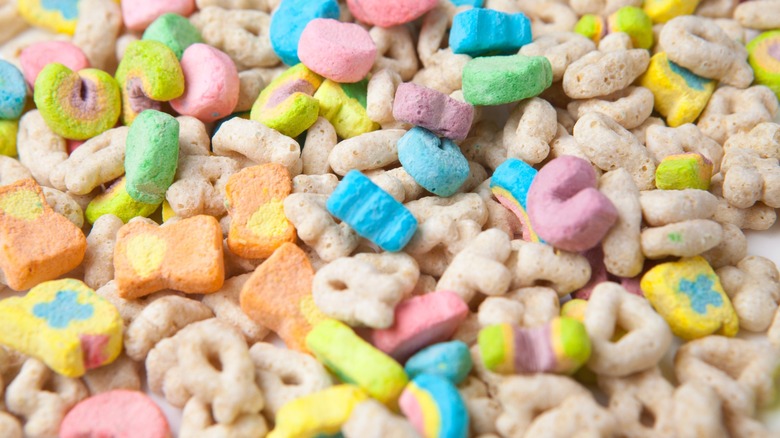
Lucky Charms didn't just arrive on the scene in 1964. It practically danced onto breakfast tables, complete with marshmallow magic to boot. Born from the brain of product developer John Holahan's candy-fueled inspiration (remember Circus Peanuts, anyone?), the cereal became the first to mix oat pieces with colorful marshmallow morsels. That dynamic duo itself drew a cult-like fan following, but then came the fantastical marshmallow shapes (bells, fish, clovers, moons, stars, and hearts) swimming together in milk like the most beautiful breakfast confetti you could possibly imagine.
To further cement the snack cereal in all our fond memories forever, General Mills introduced Lucky the Leprechaun on St. Patrick's Day in 1964. Suddenly, what could otherwise be a nondescript cereal had become infused with Irish-inspired lore. Lucky wasn't just a cartoon mascot, but a mischievous little imp-like hero constantly chasing his charms. It was like the equivalent of a cereal underdog that you just really want to root for. Maybe, one day, Lucky really will get to that pot of gold! Either way, you knew you would be busy happily munching on his marshmallows as you cheered him on, spoon in hand.
For a blip of a moment in 1975, Waldo the Wizard attempted to take over mascot duties, but fans of Lucky quickly put the kibosh on that. And while the oat pieces have stayed mostly the same, the marshmallows (lovingly known as marbits) have kept evolving, with over 60 shapes having appeared over the decades. We say keep 'em coming!
Peanut M&M's
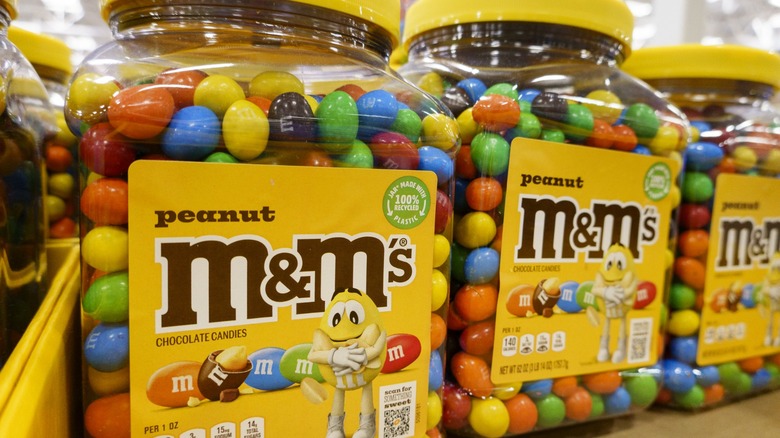
Peanut M&M's may have debuted in 1954, but they truly came into their own during the snack-craze boom of a decade that was the 1960s. The formula was simple and brilliant, taking a crunchy peanut center, coating it with smooth milk chocolate, then encasing it all in a candy shell that famously melts in the mouth. Add to that the now-iconic white "M" stamped on every candy disc, and you had a snack that felt special. After all, it even had its own imprint!
The Peanut M&M's origin story is pretty wild. The candies were created by Forrest E. Mars, a candy genius who just so happened to be allergic to peanuts. Despite never tasting his own invention, Mars was obsessed with quality control, even demanding recalls if the "M" wasn't printed to his high standard. Perfectionism aside, one has to admit the man's instincts were right on. Peanut M&M's hit the bullseye when it came to beloved snack icons, making the nutty candies a near instant worldwide hit. Today, the brand is undeniably a cultural staple that screams American spirit.
By the 1980s, M&M's had gone global and reached peak pop culture status, including becoming the first candy eaten in space aboard NASA missions. Not bad for a snack originally designed with the most lofty goal of simply surviving pockets, hands, and heat without melting.