

The Smooth Korean Spirit Gen Z Brought Into The Mainstream
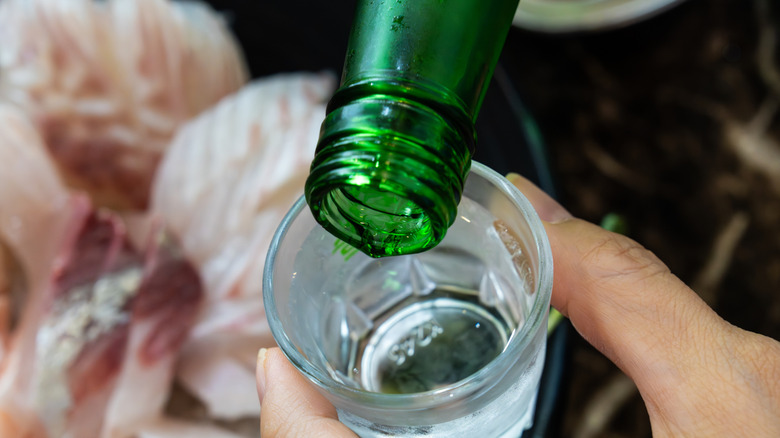
If anyone can make anything trendy, it's Gen Zers — and that's exactly what they've done for one Asian aperitif. Soju, Korea's most popular spirit, has taken off in the American markets in recent years, especially thanks to younger generations, and it's no surprise why. From K-pop to K-dramas to delicious Korean barbecue, Americans are increasingly interested in Korean culture, giving it respect and recognition. In data gathered by Instacart in March 2025, legal Gen Z drinkers' fifth most-ordered alcoholic subcategory is soju, ordering 345% more soju than millennials, 1,044 % more soju than Gen X, and 2,277% more soju than boomers.
Younger generations like Gen Z have shown appreciation for cocktails and spirits with low alcohol content. In the same Instacart data, legal Gen Z drinkers' top Instacart alcoholic orders were canned cocktails and hard seltzers, which both can have lower ABV than standard liquor. Soju has a typical ABV ranging anywhere between 12 and 20%, giving consumers the ability to sip easily (while, of course, sipping responsibly).
The sipping becomes easier with soju's mellow yet crisp taste. Commonly referred to as an easier-to-sip Korean vodka, soju serves well as a stand-alone, ready-to-drink spirit to sip. Gen Zers also love a good flavored drink — I attest to this firsthand — and soju can come in a variety of flavors, such as strawberry (my favorite), green grape, lemon, and yogurt.
Traditional and contemporary soju bringing community together
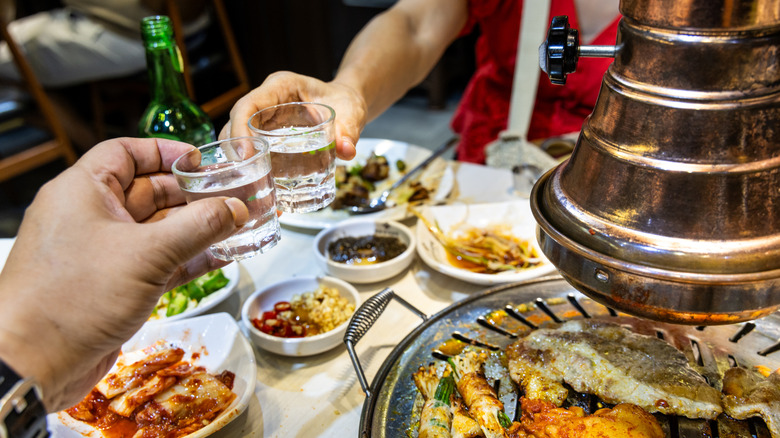
Hailing since the Gyreo dynasty in the 13th century, soju is conventionally made with a rice base. Traditionally, Korean soju crafters combine rice, water, and nuruk (a Korean fermentation enzyme), yet globally, today's soju is also made with other grains such as wheat, barley, and tapioca. Modern soju is also commonly produced with several sweeteners, giving soju its alluring, sweet, clean taste. Combining traditional and contemporary methods of soju production gives the spirit diversity, opulence, and mass appeal. Soju is best enjoyed when refrigerated and poured into a glass, and it can be diluted with beer — creating the Korean drink somaek – if desired.
Korean culture celebrates community, and when Koreans drink soju together, they cheer throughout the entire night. This not only encourages others to drink, but it also emphasizes the camaraderie and spirit (no pun intended) of togetherness they feel. With others at the forefront of their minds, Koreans always offer food to each other when drinking alcohol to balance out flavors and preserve everyone's safety. Referred to as anju, these foods vary from small sides to large entrees. Anju encapsulates Korean cuisine's bold flavors made from spicy, salty, and umami ingredients and pairs seamlessly with the mild soju. For this reason, soju is not commonly flavored in Korea — despite its popularity with Gen Z Americans — because Koreans don't want the sweet flavors to detract from the taste of the anju.