

Say Goodbye To Soggy Pie Crusts With This Bakery-Worthy Pan Trick
We may receive a commission on purchases made from links.
The ideal pie is flaky on the outside and juicy on the inside, but you don't want the crust and fillings to mix so much that it creates that dreaded soggy bottom on a pie. You'll definitely notice when a pie crust has gone damp. When it does, it means the pie didn't get hot enough while baking and all the moisture swimming around inside seeped into the flaky crust (or what should've been a flaky crust). For help on keeping pie crusts appetizingly dry, we spoke to Mimi Council, recipe developer behind Mimi's Organic Eats, a former bake shop owner, and a serial cookbook author whose works include "The Mountain Baker."
We initially asked Council where in the oven we should cook the pie to fix this issue, but she said we were looking at things the wrong way. Instead, we should be thinking about the pans we're baking with. Council isn't a fan of ceramic or glass pie pans. She recommends going with a metal pan made from cast iron, aluminum, or stainless steel. According to Council, "These pie pans all conduct heat incredibly well (cast iron being my top choice) and will give you a buttery, flaky pie crust with the least worry of a soggy bottom because these pans can heat your crust evenly." Metal heats much faster than other common pan materials and it can evenly distribute heat across the crust, ensuring no hidden corners grow damp.
Stick with plain metal pie pans for baking
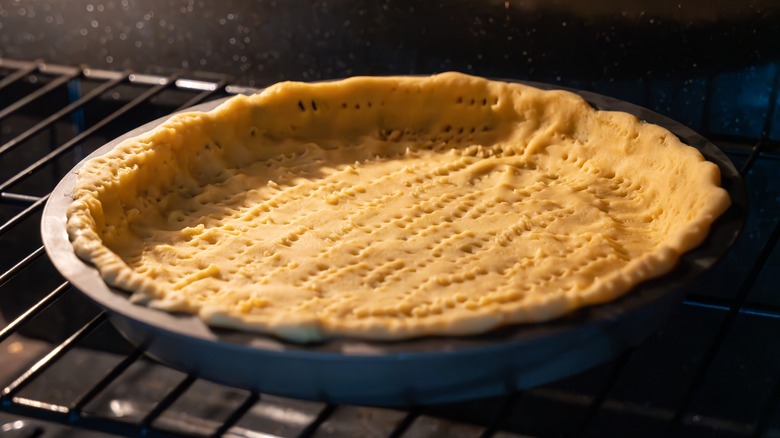
The big problem with glass and ceramic pans is they're less efficient despite often looking nicer. "Most home bakers use ceramic or glass pie pans, as these pie pans are heavily marketed to home bakers thanks to Anthropologie and Staub making adorable pie pans that everyone wants," said Council. However, they're mostly useful for graham cracker crusts or cookie crusts. For standard pie crusts, they often leave pie unevenly baked because of how slowly they conduct heat. It's hard to go wrong with metal, just keep in mind that darker metal pans will brown crusts more quickly. If you've got one on hand, metal pizza stones are unexpectedly good tools for preventing soggy pie bottoms. Like metal pie pans, they're good at conducting heat and they're often recommended for fruit pies due to how liquid-heavy those can get.
Avoiding a soggy crust doesn't just come down to your tray, of course. Council explained that using warm butter instead of cold butter is another culprit for soggy pies. You might try a blind bake (which involves baking the crust alone first without any fillings) to avoid turning a delicious pumpkin pie instantly gross due to texture. However, the bakeware you use is a good place to start; pulling out some metal baking pans should be the first step in almost any pie bake.