

If You See This On Your Tuna Steak, Toss It Immediately
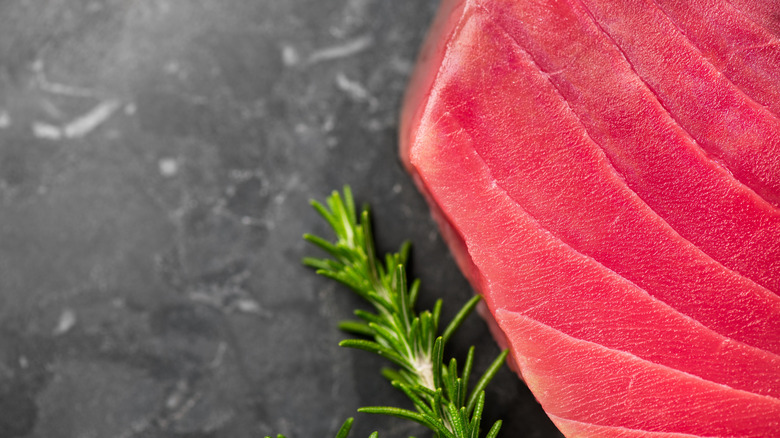
There are plenty of common mistakes to avoid when cooking fish, and some of these can be dodged by simply checking your filets before buying or cooking. With tuna steaks, however, it can be tricky to know what to look for in quality. One key thing to watch for is the meat's color. If you spot brown streaks that look like patches, stripes, or little lines, that's a tuna steak to avoid or toss immediately.
However, not all brown streaks mean the same thing. A large, deep brown patch is likely the bloodline, or the part of the tuna that's closest to the spine. It's nutrient-rich but can go bad quickly, so it is often removed in nicer cuts of tuna. Brown streaks may signal that oxidation has occurred, which means that the red proteins in the fish have been exposed to air. This causes the myoglobin in tuna to change color and can alter the texture of the tuna unpleasantly. Any dark, thin, hair-like brown streaks or spots in tuna are probably burst blood vessels and veins. Their presence may indicate that the tuna wasn't properly bled or stored after being caught.
Why brown lines should be avoided but likely aren't dangerous
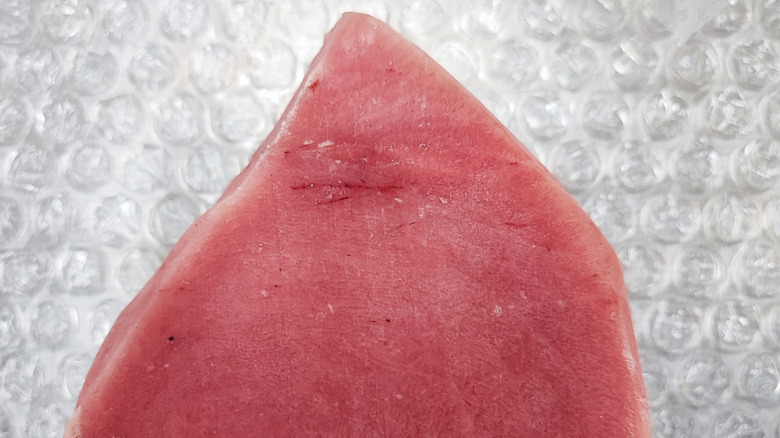
Now, let's be clear — you can safely eat tuna steaks with these features, but you probably shouldn't if you're looking for high-grade fish. These discolorations may indicate that the steak has been frozen and thawed. Before you attempt to sear tuna steaks with a torch or in a pan, check for these imperfections.
These discolorings may seem icky, but in truth, they are unlikely to harm you. The blood veins and spots are completely edible, and the bloodline patches are oily and odd in texture, but aren't toxic. None of these signs indicates that the fish has gone bad or is rotting – unless there's also an acrid or fruity smell and slimy texture. The brown streaks can make the flavors of your tuna taste completely wrong, however. Tuna blood has a strong fishy flavor, which can overpower the steak's natural richness. The innate umami in tuna is what makes it so savory and craveable. Not to mention, when blood veins are cooked, they become hard and thread-like, creating an unpleasant texture. Some people mistake them for parasites, as they do look wormlike, so it might cause a bit of a stir if you serve veiny tuna to dinner guests.
If you're looking for a good tuna steak, watch for a vibrant red color, though it can vary toward pink or maroon. A tuna steak shouldn't have irregular fat patterns and shouldn't have a rainbow sheen across the top. Its texture should be firm and a little springy, with a mild fish scent that isn't overwhelming. When in doubt, throw it away and eat out. After all, fish always tastes better at a restaurant, right?