

Why You Should Pass On Corn On The Cob Once Fall Comes Around
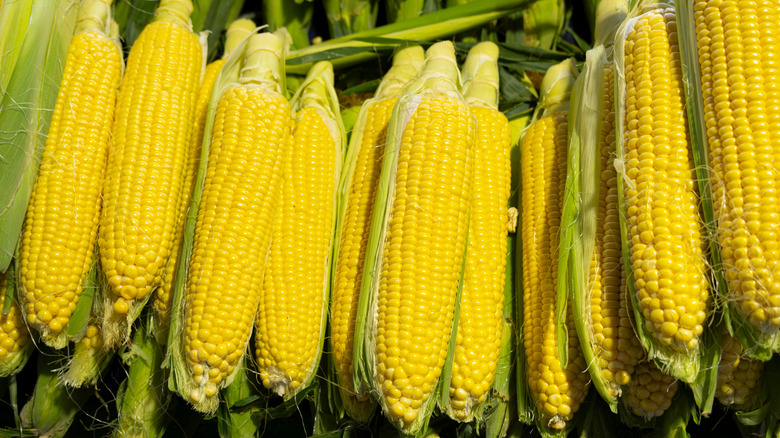
When you think of fall produce, corn comes to mind. Multicolored ears deck Thanksgiving centerpieces and corn mazes are a favorite fall activity. The irony? Corn is out of season by the time the leaves start to change. But is out-of-season corn really that bad? The Takeout talked to Franklin Becker, chef and owner of Point Seven, who says, yes, out-of-season corn really is that bad. "In-season corn has higher moisture content and residual sugar," he said. "In the fall, the weather impacts this. The sugar converts to starch and the corn is not as sweet or plump."
Flavor and texture aren't the only reasons to stick to in-season produce. It's also better for you and better for the planet. Out-of-season produce isn't as hardy, so it's less nutritious and more prone to pests and disease. Plus, off-season produce has to travel farther to get to the store, increasing carbon emissions and transport costs. "Choose responsibly sourced corn in season," says Becker
The caveat? If you live in a place where corn is grown year-round you may be able to find fresh ears in November — or even January. "There should be little difference in this case," says Becker. "Growers adapt the species of corn they plant to make up for this." But there aren't many places that can grow corn year-round, especially in the United States. Year-round production is mostly limited to the tropics.
How to enjoy corn off-season
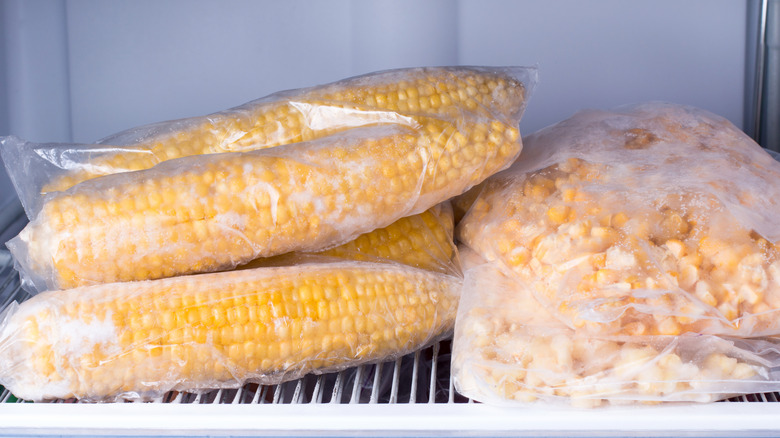
Colder weather doesn't mean you have to quit corn completely. Frozen corn on the cob is no substitute for the sweet, succulent ears you'll find in mid-July, but it's a good alternative in November. Sometimes, frozen corn is even healthier than fresh. The freezing process can help retain nutrients like carotenoids, which are antioxidants found in red, orange, and yellow foods. If you find yourself with a glut of corn on the cob in the summer months, try freezing it yourself. "Simply shuck the corn and blanch it before freezing it to preserve its sweetness," Becker explains. Don't skip blanching, though. Blanching veggies in water (otherwise known as flash-boiling food) before freezing them locks in color, flavor, and nutrients.
Canned vegetables aren't as nutritious as frozen, but they can still be a better option than fresh, off-season produce. Store-bought canned veggies are typically high in sodium, while the creamed corn sold by big brands tends to have added sugar. If you want control over your salt and sugar intake — and you're up for a challenge — you can try canning your own. "I like to make creamed corn and store it for use in the off-season," Becker says. This process can be tricky, though, so proceed with caution and avoid these mistakes when canning corn. Use recipes from reliable sources, don't make additions or substitutions, and always use a pressure canner when canning low-acid foods like corn.