

Why You Should Always Avoid Buying Pre-Shucked Corn
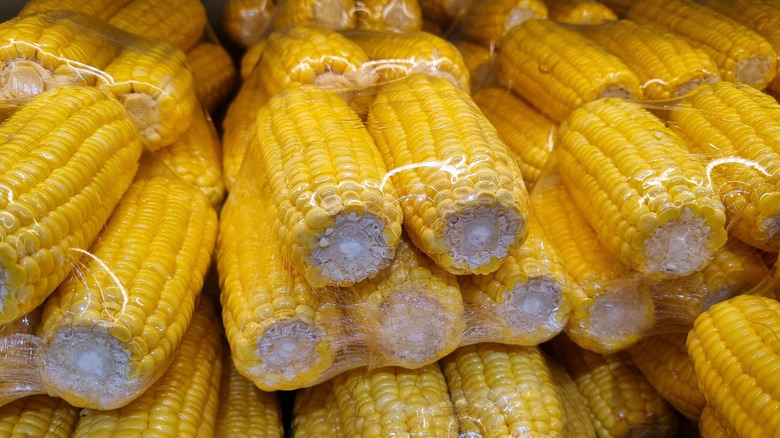
Shucking corn is simple in theory, but like many things that are simple in theory, it's irksome in practice; especially if you find yourself prepping for a crowd. All that clingy silk? The possibility of opening up a cob to find nothing but bugs and dried-up kernels? The tedium? Ugh.
That's why those packages of pre-shucked corn are so enticing. The corn looks succulent and fresh. You can tell right away there are no bugs or brown spots. Why not shell out a little more money for the sake of convenience?
Unfortunately, that convenience comes at a cost — and not just the extra money you're spending at checkout. "Pre-shucked corn loses its moisture quickly and becomes dried out. It also becomes starchier," Franklin Becker, chef and owner of Point Seven, told The Takeout. Corn keeps best in a cool, humid environment and husks provide just that. "Corn husks protect the corn kernels from drying out," Becker says. Plastic might keep some moisture in, but it's no match for the vegetable's natural packaging.
Plus, unlike shrink wrap and Styrofoam, corn husks are eco-friendly and biodegradable. There are plenty of hacks that make it easier to remove the husks, too, like zapping the ears in the microwave. You can even fold husks back into a convenient, all-natural handle for corn on the cob.
How to pick the best corn on the cob
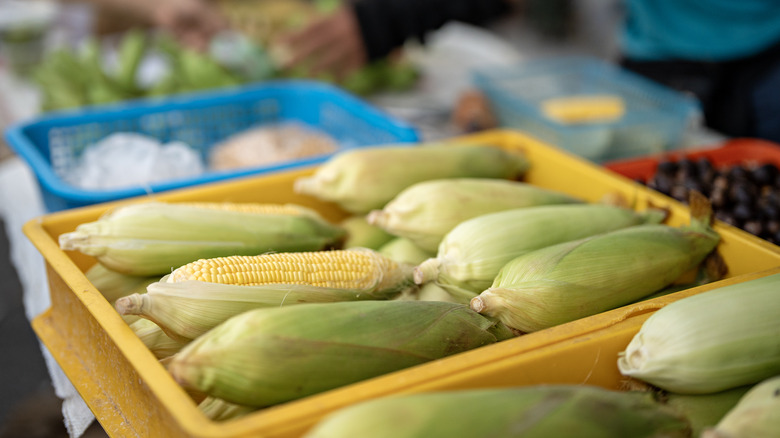
Okay, so corn on the cob tastes best when you buy it in the husk, but how do you know if an ear is any good if you can't see inside? Isn't a dried-out, pre-shucked ear preferable to finding rotten, bug-ridden corn hiding in a husk?
Some folks recommend shucking the corn in the store — a practice hotly debated by internet etiquette experts. Farmers and grocers say there's no question, though. Keep the corn in the cob. There are plenty of ways to gauge the quality of an ear of corn without opening it up. "Corn should feel heavy for its size, indicating high moisture content," says Becker. "Additionally, corn should have green, firmly attached husks and clean, dry silk protruding." If you want to take a peep at the kernels inside, peel back a small amount of husk. Remember: Shucked corn dries out quickly, so you're doing yourself a favor by keeping the cob covered up.
Refrigerate your corn as soon as you get home. "Keep fresh corn in the refrigerator inside the produce drawer or in a plastic bag," Becker recommends. Since corn likes moisture, adjust the settings on your crisper drawer to keep the humidity high. Eat the corn within a few days or freeze it for fresh flavor year-round.