

Is Frying Eggs In Water The Trick It's Cracked Up To Be?
We may receive a commission on purchases made from links.
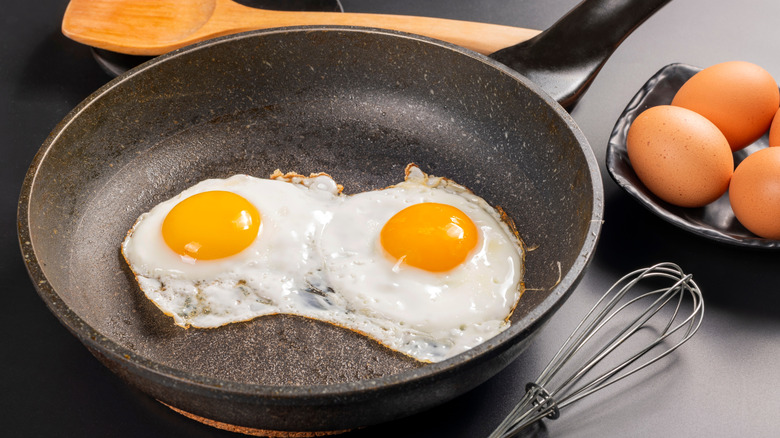
The term "fried" is usually applied to food that's cooked in fat of some sort (with the exception of "air fried" food, which is actually baked since air fryers are essentially smaller, faster convection ovens). Recently, however, you may have seen people touting the benefits of frying eggs in water. Is this really the life-changing hack it's cracked up to be, or is it just another shell game? Lisa Steele, a chicken-keeper who recently penned the cookbook "In Season: 125+ Sweet and Savory Recipes Celebrating Simple, Fresh Ingredients" (which will be out in May 2026) is dubious about the water-frying method. "You don't get the crisp browned edges that you get when you fry an egg in oil. Instead the whites are very soft. Technically, I guess it could be considered 'shallow-poaching' the eggs," she said.
Steele's main objection to water frying has to do with how the egg tastes. As she cautioned, "Frying in water won't add any additional flavor or richness to your egg, so it will be pretty bland." If you don't want to fry your egg in oil, butter, or bacon grease, she suggests using cream, stock, beer, or wine. (Pickle juice also makes a great fried egg addition.) "Those liquids will add flavor to your eggs," she explained.
How to make water-fried eggs
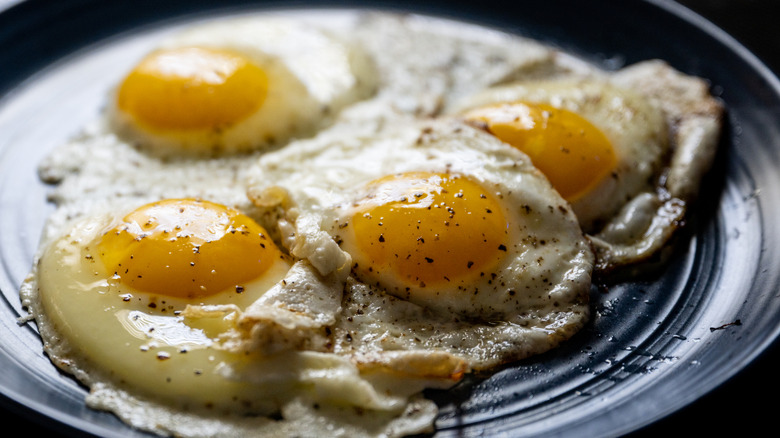
Water-fried eggs do have some advantages, however. For one thing, they have fewer calories and less fat. For another, they're cheap to make since they require no extra ingredients besides the egg. According to Steele, you can just crack the eggs into ⅛ inch of simmering water. "This will prevent the egg from sticking, but won't actually submerge the egg", she said. You then cook the egg until the whites are set and the yolk is as hard as you want it to be. "If you prefer a well-cooked yolk, you can tilt the pan and baste the yolk with some of the water to help it cook faster." When the egg is done, take a slotted spatula and remove it from the water, letting the excess liquid drip down into the pan.
To have the best of both worlds, there's another method you can use to fry an egg in water. This one does require a bit of grease for the pan, but only about half as much as you'd use if you were frying the egg in oil alone. (One tablespoon instead of two.) After the egg has cooked in the oil for 30 seconds, add hot water to the pan and use it to baste. You can also cover the pan and leave the egg alone, allowing it to steam-fry in moist heat. The result will be tender and tasty.