

What The Date On The Bottom Of Costco Price Tags Actually Means
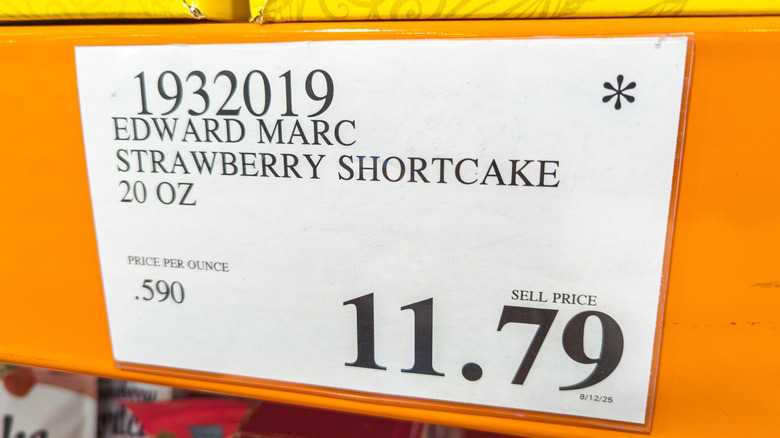
Costco emphasizes value, so it stands to reason that the store attracts savvy bargain shoppers. If you're a casual shopper, you may not be familiar with all of Costco's membership perks or know the secrets to finding the best deals. But Costco's hardcore fans know that a keen eye can clue you in to potential discounts. The internet abounds with Facebook groups and Reddit threads on which fans share tips. One common discussion topic? Costco's product price tags.
Costco's price tags hold clues to potential discounts. Before you buy a big ticket item, you should check the date in the bottom right corner of the tag, just under the price. That's the last time the price changed. If the price has stayed the same for a few weeks, you might want to wait — especially if there's still a lot of product on the shelves. That could be a sign that the item will get marked down again in the near future.
Costco knows that its target demographic — shoppers with disposable income and an eye for a bargain — loves to suss out deals. Ever stumbled across discounted designer duds or top-shelf liquor while stocking up on super-sized necessities? That's part of the corporate strategy. "It comes down to the treasure hunt," Claudine Adamo, Costco's Chief Operating Officer of Merchandising, told Fortune. And whether the price tags are part of the retailer's marketing ploy or not, they are a part of that treasure hunt.
How to find markdowns at Costco
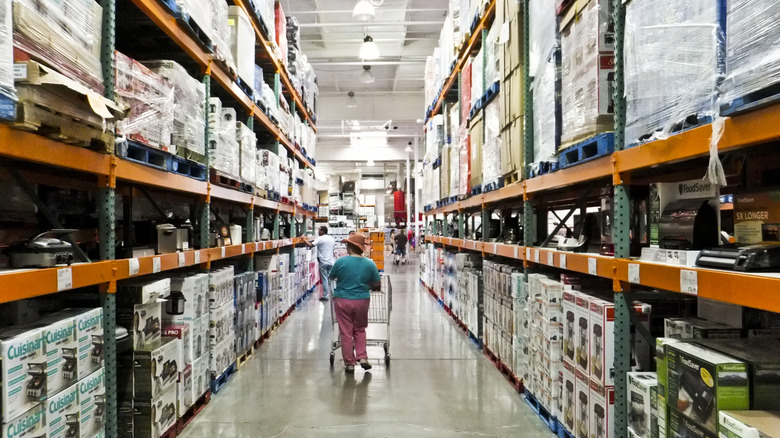
You can also use the date to help contextualize other info on the price tag. If the price ends in $0.99, the item doesn't have any special discounts. A price cut may be coming in the future, but you shouldn't always wait. If there's an asterisk on the price tag — the "death star," according to Costco fans — the product won't be restocked.
Also, older dates don't guarantee upcoming discounts. Any price ending in a 9 that isn't $0.99 represents a limited-time discount, so the product may go up in price. If you spot that $300 espresso machine you've been eyeing for $220.49, you'd better buy it now. The same goes for prices ending in $0.88. These indicate returned items, floor models, or lightly damaged products. Snatch them up while you can, since the price is a sure sign that stock is low — but check them over first for scratches and dents.
Be sure to also look out for prices ending in $0.97. That indicates a sale item, and often shows up when stores are trying to move inventory. Check the shelves to see how much the store has in stock: Plenty of items plus an older date could mean that another markdown is coming soon.
Another perk of the wait-and-see approach? It helps to curb impulse buys. It's easy to purchase things you don't need when you think you're getting a good deal. Are you really going to use a countertop ice maker? Maybe you should wait and see.