

The Science Behind Why Turmeric Stains Everything
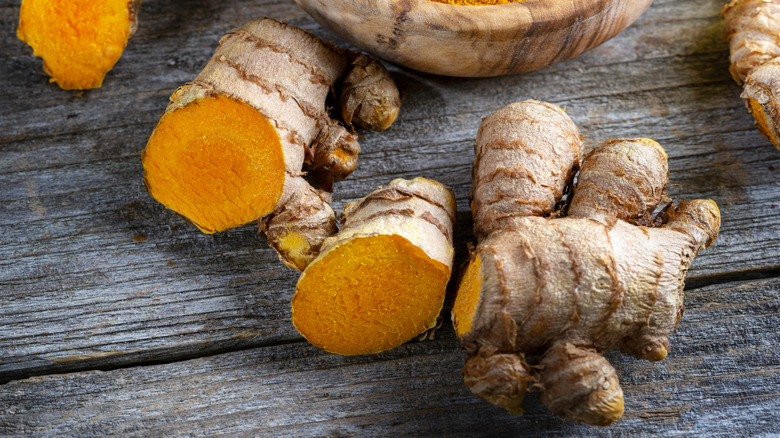
The other day I made golden milk, something I've been trying to add into my daily wellness routine thanks to turmeric's anti-inflammatory and antioxidant benefits. It's comforting in that soft, glowy way with warm milk, turmeric, (sometimes) cinnamon, ginger, and black pepper. It was a mug of sunshine until a splash hit my white T-shirt and bloomed into a yellow patch that refused to leave. Really, why does turmeric stain like this? The answer comes from science.
Turmeric contains curcumin, the pigment responsible for turmeric's color and staining power. Curcumin molecules bind to the fibers in clothes, instantly transferring their vivid color; and because turmeric particles are slightly oily, they slip into porous surfaces instead of washing off. Water doesn't dissolve curcumin, so wiping only spreads the mess. Curcumin attaches even faster when fat is involved, which is basically every time turmeric hits a pan. So, be extra cautious of splatter when simmering turmeric in ghee or oil when whipping up curry or dhal — or in dairy for golden milk. The trouble doesn't stop at clothing, either. Turmeric stains wood, silicone, plastic storage containers, cutting boards, and even light stone countertops which absorb oil quickly. Once color binds, heat and fat make it even tougher to remove.
How to clean turmeric stains before they become permanent
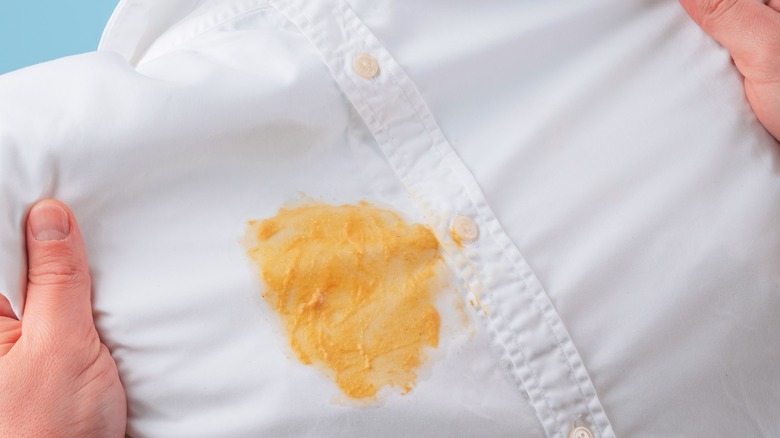
Once turmeric lands, scrubbing harder doesn't help; the goal is to break down curcumin, not smear it wider. Cleaning pros recommend starting with cold water and blotting, not hot water since heat locks the pigment into the surface. From there, vinegar becomes the real workhorse. Its acidity helps dismantle oily curcumin molecules that water can't dissolve which is why white vinegar applied generously is the best line of defense. For fabrics and dish towels, mixing dish soap with vinegar and letting it sit for 10 to 15 minutes before brushing lightly with a toothbrush usually does the trick. If the stain had time to settle, sprinkle baking soda for extra lift.
Hard surfaces like cutting boards and plastic containers respond to the same strategy: vinegar, baking soda, dish soap, and patience. After that, let sunlight finish the job. UV exposure gradually breaks down curcumin's bright pigment, softening stains over a few hours or days. So, if you ever spill mustard on your shirt (which gets its color from turmeric), the same stain science applies; cold water, acid, and sun, because a little strategy beats panic every time.
For dishes and storage containers, a paste of baking soda and dish soap works best, followed by vinegar to break up the remaining pigment. Wooden spoons need a quicker touch. Apply the paste, scrub, rinse, then dry immediately to avoid swelling. Natural stone counters require modification, as it's best to skip the vinegar. Instead, use a baking-soda-and-water paste, let it set, wipe clean, and repeat if needed.