

The Simple Store-Bought Pizza Dough Technique For The Best Pie Possible
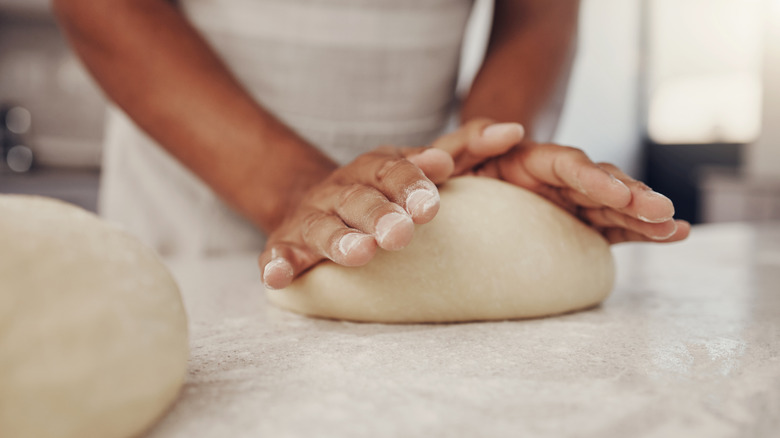
Making pizza at home can be an incredibly fulfilling and delicious endeavor to undertake even if you aren't making the pizza dough itself from scratch, which is a difficult task in its own right. Even when making pizza using store-bought dough, it's important to handle this key ingredient with care by knowing exactly what you're doing with it and when. For this reason, the most important piece of advice is to always allow your dough to reach room temperature before you begin the process of actually making the pizza, as the finished product will be significantly worse if the dough was either too hot or too cold when you threw it in the oven.
This important variable was reinforced for us during a discussion with Rob Gentile, the culinary director of Prince Street Pizza, who noted how important both timing and temperature are to making a great pizza with store-bought dough. "Make sure to pull the dough from the refrigerator at least one to two hours before stretching," Gentile advised. "You want the dough to come to room temperature before you cook it ... Cold dough fights you; warm dough works with you. Let it come fully to room temperature for the best texture, rise, and final bake."
Why you should rest your pizza dough at room temperature
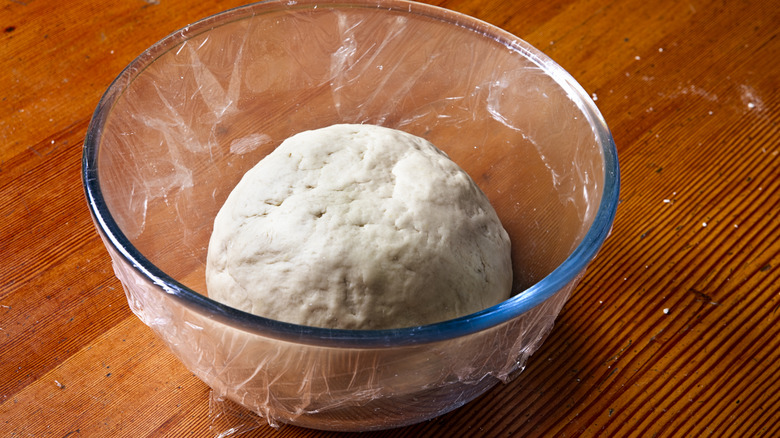
While there are many important lessons to be learned when it comes to making homemade pizza, not using cold dough is about as vital as they come. However, you also need to be careful not to rest the dough at too high a temperature as it can end up getting sticky, start to overproof, or even kill some of the dough's yeast cells. For this reason, resting your pizza dough (be it store-bought or homemade) between 67 and 70 degrees Fahrenheit is ultimately your key to victory.
Beyond just the temperature of the dough, make sure you rest it at room temperature after you've oiled it up but before you've begun stretching it. "Pre-resting dough will activate the yeast to its highest potential which will react with the oven stone quickly which is how you get a great result," Gentile revealed. "This simple step is the difference between an okay pizza and one that really mimics a professional bake." Our pizza expert also noted that rested dough is much more versatile and controllable. "A properly rested dough will stretch evenly without tearing, giving you full control over the shape and thickness of your crust," Gentile added.